Tag Archives: Italy

22Oct/26

Why Machiavelli Believed Rulers Need Dirty Hands

Power, Virtù, and Human Nature: A Multidisciplinary Synthesis of Machiavellian Pragmatism

Thu Oct. 22, 2026 /Mpelembe Media/ — Niccolò Machiavelli’s foundational political thought, articulated in The Prince (1513) and the Discourses on Livy (1517), marks a radical shift from classical teleological ethics and medieval Christian scholasticism toward empirical political realism. Rejecting idealized imaginary republics, Machiavelli sought the “effectual truth” of human behavior, asserting that effective governance must be guided by strategic necessity (necessità) and the preservation of state stability (ragione di stato) rather than abstract moral pieties. He redefined virtù not as moral goodness, but as the dynamic capability, drive, and tactical agility—symbolized by combining the courage of the lion with the cunning of the fox—required to master unpredictable circumstances (fortuna). Although critics historically viewed The Prince as an autocratic handbook and the Discourses as a defence of republican liberty, scholars emphasize that these works are complementary: princely authority is often necessary to establish order in a corrupted state, whereas a mixed republican constitution preserves long-term security, popular freedom, and civic vitality. Continue reading →
17Oct/26

Why America Is Losing Global Talent

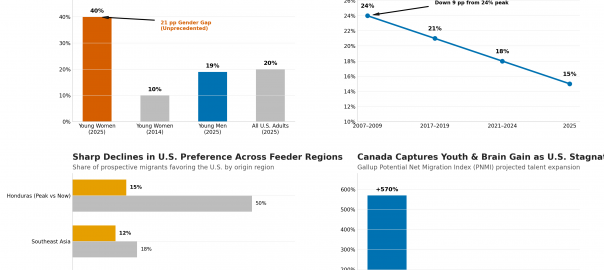
America’s Gendered Exit: Why 40% of Young Women Want to Leave the U.S.

Sat Oct. 16, 2026 /Mpelembe Media/ — Global migration aspirations have entered a period of structural recalibration, as the proportion of adults worldwide desiring to relocate permanently dipped to 15% in 2025 after sustaining a record peak of 16% between 2021 and 2024. Although the United States remains the single most desired destination globally, its attraction has fallen to a nearly two-decade low of 15% in 2025, down from 24% in the 2007–2009 period. This cooling demand is particularly striking in traditional feeder corridors such as Latin America and the Caribbean (dropping from 33% to 28%) and Southeast Asia (falling from 18% to 12%), with Honduras recording a dramatic 35-percentage-point collapse in U.S. preference. Instead of defaulting to North America, potential migrants are turning toward multipolar regional networks—favoring Japan in Southeast Asia, Germany in the Middle East, and Spain in Europe—while Canada solidly maintains its position as the second most preferred global destination at 9% (representing ~85 million adults). Continue reading →

27Jul/26

Record Wildfires Paralyze France and Spain

The July 2026 Western European Wildfire Crisis

Mon, July 27 2026 /Mpelembe Media/ — The extreme wildfire emergency that swept across France and Spain in July 2026 represents a historic escalation of climate-driven natural disasters in Western Europe, displacing nearly 300,000 people in some of the largest peacetime evacuations in modern European history. Fueled by successive record-breaking heatwaves, dry vegetation, low relative humidity, and a deep hydrological drought, the concurrent megablazes overwhelmed national containment strategies and prompted massive international mobilization. Continue reading →

23Jul/26

Your Passport Is a Geopolitical Weapon

The 20-Year Global Mobility Shift

Thu, July 23 2026 /Mpelembe Media/ — The 20-year retrospective analysis of global mobility reveals a profound geopolitical realignment, characterized by the expansion of average travel freedom alongside a starkly polarizing divide between the world’s most and least mobile populations.

Continue reading →

17Jun/26

The Tactics and Mythos of England’s 1966 World Cup Victory

The Mythos of 1966: Sir Alf Ramsey, the Fire Horse, and the 60-Year Wait for World Cup Glory

Wed, Jun 17 2026 /Mpelembe Media/ — The psychological landscape of competitive sports is a high-stakes environment where the difference between victory and defeat often rests on an athlete’s ability to manage intense pressure and fluctuating emotions. In the quest for an edge, athletes frequently adopt specific behaviors to navigate this stress. These behaviors generally fall into two categories: those grounded in technical preparation and those rooted in “magical thinking.””Superstition is a behavior which does not have a clear technical function in the execution of skill, yet which is believed to control luck and/or other external factors. Rituals comprise magical thinking, belief in specific sayings, and ritualized behavior.”While the desire for victory is universal, the specific paths athletes take to achieve readiness vary wildly. Have you ever wondered why an elite striker insists on a specific pair of socks, or why a goalkeeper talks to the goalposts? Understanding the distinction between irrational rituals and professional routines is the first step in moving from a mindset of luck to a mindset of logic. Continue reading →

04Jun/26

The Tactics and Mythos of England’s 1966 World Cup Victory

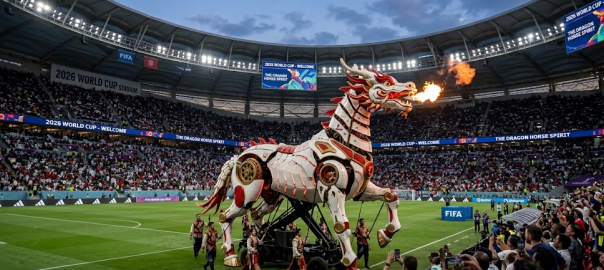
Thur, Jun 04 2026 /Mpelembe Media/ — These sources offer a multifaceted preview of 2026, primarily focusing on its identity as the Year of the Fire Horse in the Chinese zodiac. Authors explore the cultural symbolism and astrological significance of this rare sixty-year event, noting its reputation for intense energy, unbridled passion, and global upheaval. Historical analysis links the upcoming year to past milestones, most notably England’s 1966 World Cup victory, which is examined through both tactical innovations and its enduring national legacy. The collection further extends into sports psychology and gambling, investigating how pre-performance rituals mitigate athlete anxiety and how historical betting data shapes expectations for the 2026 World Cup. Together, these texts blend ancient tradition with modern analysis to project a year defined by competitive spirit and transformative change Continue reading →

29May/26

Britain’s Million Missing Young Workers

Rebuilding the Broken Ladder: Strategic Interventions to Save the UK’s Entry-Level Job Market

Fri, May 28 2026 /Mpelembe Media/ — The United Kingdom is facing a severe youth detachment crisis, with the number of young people Not in Education, Employment, or Training (NEET) surpassing 1 million, which equates to roughly one in eight young people. If left unaddressed, this figure could surge to 1.25 million within five years. This trajectory leaves the UK with the third-highest NEET rate among wealthy European nations, trailing only Italy and Lithuania. The crisis exacts a massive toll, costing the UK economy an estimated £125 billion annually in lost productivity, foregone taxes, and increased health and welfare expenditures. Continue reading →

16May/26

Boycotts and Algorithms Broke Eurovision 2026

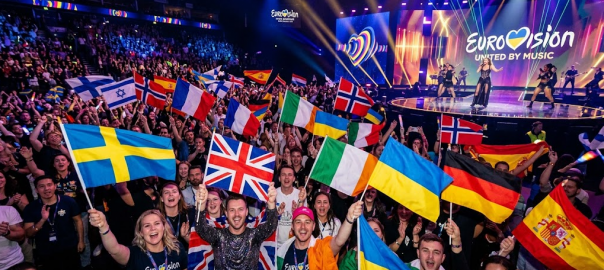
Sat, May 16 2026 /Mpelembe Media/ — The 70th edition of the Eurovision Song Contest is taking place in Vienna, Austria, following JJ’s victory for the country in 2025. While it marks a major milestone for the longest-running annual international televised music competition, the 2026 event is defined by profound geopolitical crises, sweeping rule changes, and intense musical competition. Continue reading →

01Apr/26

NATO’s secret armies and modern hybrid warfare

Unmasking the Deep State: Cold War Subversion, the P2 Lodge, and Modern Whistleblowers

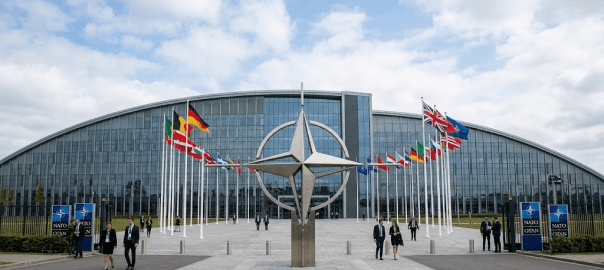
April 1, 2026 /Mpelembe Media/ — The historical sources detail the emergence of a covert “shadow government” architecture that originated during the Cold War. Initially organized by NATO, the CIA, and MI6 as clandestine “stay-behind” armies (such as Operation Gladio) to mount armed resistance in the event of a Soviet invasion, these networks frequently evolved into instruments of domestic political subversion. Across Western Europe and Turkey, right-wing paramilitary units employed a “strategy of tension,” staging false-flag terrorist attacks to spread public fear, discredit left-wing political movements, and justify authoritarian crackdowns. Prominent examples of this state-sponsored terror include the 1969 Piazza Fontana and 1980 Bologna massacres in Italy, as well as the Brabant massacres in Belgium.

Continue reading →

28Mar/26

Shadow Governments and Hit Squads: The Weaponization of Masonic Lodges

March 28, 2026 /Mpelembe Media/ —  Organized crime groups, particularly the Calabrian ‘Ndrangheta and the Sicilian Cosa Nostra, have transformed from regional racketeers into sophisticated global enterprises. Central to their modern success is the “submersion” strategy—a tactical move away from overt, bloody violence toward the silent infiltration of the legal economy, public administration, and global financial systems.

Continue reading →