

Tag Archives: Denmark

10Sep/26

The hidden cost of The Bear finale

Beyond the Pass: Character Growth, Kitchen Politics, and Technical Craftsmanship in The Bear

Wed Sep 09 2026 /Mpelembe Media/ — The Bear is confirmed to end with its fifth season. While FX and Hulu set an official premiere date for the final installment on June 25, the fourth season is highlighted as a critical return to form that balanced emotional depth with much-needed humor. Key narrative milestones include a significant wedding episode titled “Bears,” which utilized complex audio techniques to capture a pivotal group scene under a table. Audience reactions are mixed, with some viewers praising the character growth and performances while others feel the show has become repetitive or overly dramatic for its genre. Additionally, broader industry changes are noted, such as Disney+ implementing new terms to strictly prohibit password sharing outside of primary households. Continue reading

02Sep/26

Newsrooms fight for survival against AI

Ethics in Action: Preserving Human Judgment Amid the Rise of Generative News

Tue Sep 01 2026 /Mpelembe Media/ — The global expansion of artificial intelligence has created a landscape of digital hegemony where standard-setting and economic benefits are heavily concentrated in the Global North, establishing a form of digital extractivism that mirrors historical colonial dynamics. Large technology conglomerates utilize content harvested from global networks to train proprietary models and sell them back as subscriptions. This extraction is accompanied by a severe decline in search referral traffic, which has collapsed by 50% to 60% in critical emerging markets like Brazil, South Africa, and Indonesia. This occurs because conversational search engines summarize copyrighted reporting directly on results pages, bypassing clicks to the original publisher. In response, major nations in the Global South are reframing the AI debate, moving from historical strategies of diplomatic non-alignment directly into the digital realm. Media leaders and policymakers in these regions argue that AI must not be treated as an isolated technical novelty, but as a critical national sovereignty, labor, and industrial policy issue that fundamentally impacts the health of local information environments. Continue reading

27Aug/26

Trump’s Silverback Strategy and the Donroe Doctrine

A Weapon of Mass Disruption: Why the 2026 Iran War Exposed the Limits of American Might

Wed, Aug 26 2026 /Mpelembe Media/ — Donald Trump’s second term has transitioned into a highly volatile era characterized not by a passive “lame duck” status, but by what analysts call the “Silverback Presidency.” This statecraft style mirrors an aging mountain gorilla that, sensing its time is short and its dominance threatened, resorts to aggressive, unpredictable outbursts rather than yielding to institutional gridlock. Operating under a framework of personal grievance, vengeance, and an explicit rejection of the post-war rules-based order, Trump has openly asserted that his executive actions are limited only by his “own mind and morality”. Free from the perceived constraints of international law, the administration has launched high-stakes global maneuvers designed to forcefully project American power and secure a disruptive, nationalist legacy. Continue reading

29May/26

Britain’s Million Missing Young Workers

Rebuilding the Broken Ladder: Strategic Interventions to Save the UK’s Entry-Level Job Market

Fri, May 28 2026 /Mpelembe Media/ — The United Kingdom is facing a severe youth detachment crisis, with the number of young people Not in Education, Employment, or Training (NEET) surpassing 1 million, which equates to roughly one in eight young people. If left unaddressed, this figure could surge to 1.25 million within five years. This trajectory leaves the UK with the third-highest NEET rate among wealthy European nations, trailing only Italy and Lithuania. The crisis exacts a massive toll, costing the UK economy an estimated £125 billion annually in lost productivity, foregone taxes, and increased health and welfare expenditures. Continue reading

01Apr/26

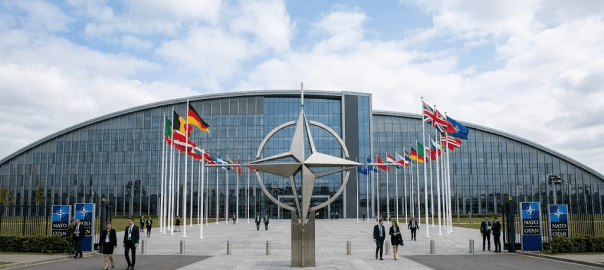
NATO’s secret armies and modern hybrid warfare

Unmasking the Deep State: Cold War Subversion, the P2 Lodge, and Modern Whistleblowers

April 1, 2026 /Mpelembe Media/ — The historical sources detail the emergence of a covert “shadow government” architecture that originated during the Cold War. Initially organized by NATO, the CIA, and MI6 as clandestine “stay-behind” armies (such as Operation Gladio) to mount armed resistance in the event of a Soviet invasion, these networks frequently evolved into instruments of domestic political subversion. Across Western Europe and Turkey, right-wing paramilitary units employed a “strategy of tension,” staging false-flag terrorist attacks to spread public fear, discredit left-wing political movements, and justify authoritarian crackdowns. Prominent examples of this state-sponsored terror include the 1969 Piazza Fontana and 1980 Bologna massacres in Italy, as well as the Brabant massacres in Belgium.

Continue reading

28Feb/26

Beyond the Hype: 7 Hard Truths About Securing the Modern Decentralized Stack

The 2026 Crypto Compliance Mandate: Navigating MiCA and the End of the Grandfathering Era

28 Feb. 2026 /Mpelembe Media/ —  The July 2026 Deadline and “Passporting” The European Union is fundamentally restructuring its digital asset market through the Markets in Crypto-Assets Regulation (MiCA). By July 1, 2026, the transitional “grandfathering” phase will permanently close, meaning any Crypto-Asset Service Provider (CASP) operating without full MiCA authorization will be doing so illegally. While some member states, like the Netherlands and Sweden, opted for much shorter transition periods that have already expired, the July 2026 date is the absolute maximum limit across the EU. Securing this license grants firms EU-wide “passporting” rights, allowing them to serve clients across all 27 member states with a single authorization. Continue reading

10Feb/26

The Machine Economy Arrives: Autonomous Agents, Stablecoins, and the Global Fiscal Pivot

The Copilot: 6 Surprising Ways the “Agent Economy” is Rewiring Global Finance in 2026 

10 Feb. 2026 /Mpelembe Media  — 2026 represents a structural shift from “assistive” technology to “autonomous” economic actors, underpinned by new U.S. crypto legislation and a global scramble to tax digital value. The Year of the “Agentic” Workforce 2026 is widely cited as “the year of the agent,” marking a transition from AI “copilots” (which wait for instructions) to autonomous “agents” (which act with intent to execute workflows). Continue reading

26Jan/26

Geopolitical Volatility Sparks Fears of a Global Exit from U.S. Treasury Market

Jan. 26, 2026 /Mpelembe Media/ — This report explores the growing instability of the U.S. Treasury market as international investors begin to distance themselves from American debt. Financial experts warn that China’s reduced holdings and a recent divestment by a Danish pension fund could signal a broader trend of foreign nations abandoning U.S. securities. These shifts are largely attributed to geopolitical friction, specifically unpredictable trade policies and diplomatic disputes regarding territory. While individual exits may seem small, analysts suggest that institutional concern over American fiscal reliability is mounting globally. Consequently, the sovereign debt market faces heightened risks as traditional allies reconsider the safety of their investments. This overview highlights how international relations directly impact the stability of the $30 trillion federal bond sector. Continue reading

24Jan/26

Forged in Fire: The “Helmand Effect” and the 2026 Arctic Sentry Compromise

Jan. 22, 2026 /Mpelembe Media/ — In January 2026, President Trump sparked a significant international crisis by disparaging the frontline contributions of NATO allies in Afghanistan, leading to widespread diplomatic condemnation. Statistical evidence from nations like the UK, Canada, and Denmark refuted his claims, showing that these countries often suffered higher proportional casualties than the United States. This “honor crisis” coincided with a tense standoff over Greenland, where the President’s threats of annexation and tariffs were met with a unified European military and political response. To resolve the deadlock, a compromise known as the Arctic Sentry framework was established, shifting focus from American ownership to a collaborative NATO presence. Central to this agreement is the Golden Dome, a sophisticated missile defense shield that will now be developed as a multilateral security project rather than a unilateral American initiative. Ultimately, the ordeal forced a transition from transactional threats to a more cooperative strategy for securing the Arctic against global adversaries. Continue reading

15Nov/25

Milestone Developer Summit: Innovating Video Intelligence with AI

Milestone Systems details a recent Developer Summit and Hackathon held in Copenhagen, Denmark. The event focused on innovation in video intelligence and the development of safer, more efficient video technology, particularly using Milestone’s upcoming Vision Language Model (VLM), which is powered by NVIDIA and trained on ethically sourced video data. The release highlights the importance of an open platform ecosystem for future technological advancements, featuring speakers from companies like NVIDIA and AWS. The core of the text announces the winners of the Hackathon, where developer Thomas Kreutz won for his application “Ask The City,” which turns live city camera footage into instant, privacy-aware answers to real-time questions, demonstrating the practical potential of the new generative AI and VLM tools being integrated into Milestone’s XProtect Video Management Software. Continue reading