Category Archives: Music

28Oct/26

How Digital Tech Saves Vinyl Records

The Pulse of the Crate: How Live Community Feeds Transformed Vinyl Discovery

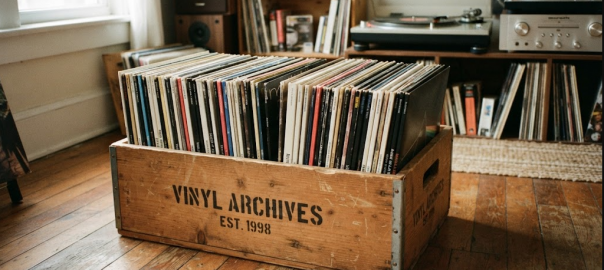
Mon, July 26 2026 /Mpelembe Media/ — The Live Vinyl Community Feed represents a structural shift in physical music discovery, transforming solitary record collecting into a real-time, interactive global network. Rather than relying on static catalogs or passive marketplace listings, the feed captures synchronous “Save to Crate” actions across diverse genres, broadcasting details such as album titles, release years, record labels, and physical store geolocations in real time. Collectors contribute enriched micro-metadata alongside acquisitions, attaching Goldmine condition grades, shop locations, and personal commentary on specific pressings or drum breaks. Advanced hardware protocols—including LiDAR groove depth mapping, acoustic scratch detection during playback, and NFC sleeve tagging—further standardize physical condition verification, bridging tactile playback with digital cataloging. Continue reading →
26Oct/26

Hidden history on vinyl record sleeves

Digital Crate-Digging: Combining Visual Metadata, Embedded Streaming, and Sample Discovery

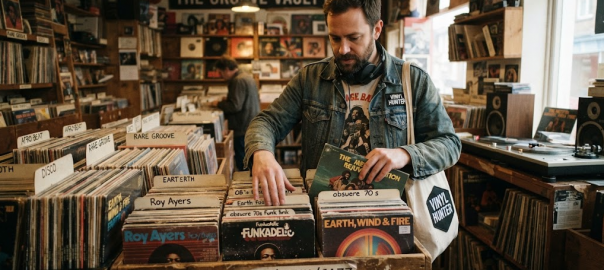
Mon, July 26 2026 /Mpelembe Media/ — Digital music archivism plays a vital role in safeguarding 20th-century sound recordings, bridging physical vinyl history with interactive digital crate-digging platforms. A prime exemplar in this domain is a digital repository indexing over 3,282 rare vinyl releases centered on 1970s soul and 1980s boogie, funk, R&B, and jazz. This collection documents a major transition in popular music, capturing the shift from 1970s analog studio arrangements with rich strings and live rhythm sections into 1980s electro-funk, synth-driven boogie, and early digital recording techniques. The underlying platform utilizes multi-tiered indexing by release year, sub-genre taxonomy, and physical release format, including LPs, rare 7-inch 45s, and extended 12-inch maxi-singles crucial to club mix culture. Furthermore, high-resolution front and back cover photography preserves essential historical documentation such as personnel credits, studio locations, track durations, mastering etchings, and sleeve conditions. To link static metadata with active listening, the archive incorporates embedded YouTube playback alongside an algorithmic “Random Spin” discovery feature that replicates the serendipity of digging through physical record bins. Continue reading →

17Oct/26

Chisenga – Loco feat. Joyce Tanmuoh

From Dance Mats to Club Bangers: The Evolution of Nightlife Narratives and Social Chemistry in Pop Music

Sat Oct. 16, 2026 /Mpelembe Media/ — Modern nightlife in contemporary popular music functions as a dynamic microcosm of youth culture, where crowded dance floors, late-night bars, and house parties become vibrant stages for complex emotional negotiations and romantic chemistry. Across featured tracks like Chisenga’s “Loco feat. Joyce Tanmuoh,” artists capture energetic club settings where crowded dance floors, penthouse after-parties, and complicated relationship statuses form the backdrop for unexpected romantic connections. A key narrative device identified across these works is the spectator-protagonist, an individual who balances active participation in collective party rituals with an internal observation of peer dynamics and romantic desire. Works such as Brynn Cartelli’s “Girl Code,” Olivia Rodrigo’s “bad idea right?”, and Ed Sheeran’s “Shape of You” illustrate this tension by contrasting the social safety of friend circles against the impulsive pull of immediate physical attraction, ex-partner relapses, or late-night courtship. Continue reading →

04Oct/26

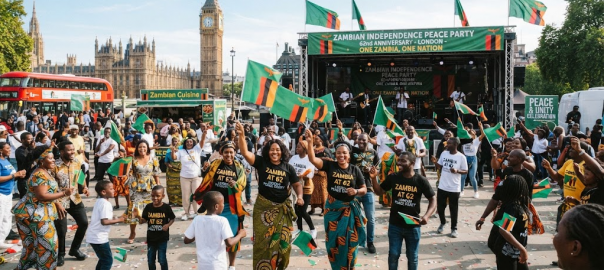
Inside London’s 62nd Zambian Independence Celebration

Events bring together diaspora members, community associations, and diplomatic partners under the national motto “One Zambia, One Nation”.

Sun 04 Oct 2026 /Mpelembe Media/ — Zambians living in the UK celebrate Independence Day through vibrant community galas, cultural showcases, live musical performances, and shared traditional meals held across major cities like London.

Continue reading →

19Sep/26

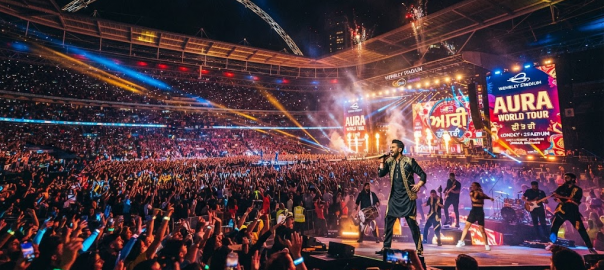
Diljit Dosanjh and the Punjabi Invasion

The Turbaned Tide: How Diljit Dosanjh Rewrote Global Pop History at Wembley Stadium

Sat Sep 19 2026 /Mpelembe Media/ — On September 12, 2026, Diljit Dosanjh made history as the first Punjabi artist to headline London’s iconic Wembley Stadium, bringing his global AURA World Tour to a sold-out crowd of over 90,000 fans. The performance represented a major cultural watershed, placing Punjabi music squarely on a premier international stage historically occupied by legendary acts like Michael Jackson, Prince, and Queen. Rather than diluting his artistic presentation or assimilating to meet Western crossover expectations, Dosanjh championed Punjabi language, attire, and identity throughout the show, opening with his signature exclamation “Punjabi Aa Gaye Wembley Oye!” and offering complimentary turban-tying for venue attendees. Continue reading →

11Sep/26

How Vinchenzo Mbale hacked the music algorithm

Inside Chakolwa Wa Nzeru: How Vinchenzo M’bale Built a Modern Cultural Movement

Thu Sep 10 2026 /Mpelembe Media/ — Vincent Daka, professionally known as Vinchenzo M’bale, is a prominent Zambian recording artist born on October 11, 1996. Raised across the Eastern Province and the industrial hub of Kitwe on the Copperbelt, he built a dual-regional perspective that deeply connects to his Chewa heritage. Despite being the son of a Reverend in the Reformed Church in Zambia, Daka adapted his early ecclesiastical choral arrangement training into secular music, using traditional call-and-response structures to address contemporary social conditions. Continue reading →

04Sep/26

The strategy behind Zone Fam’s 12-year comeback

Fri Sep 03 2026 /Mpelembe Media/ — Zone Fam, a pioneering Zambian hip-hop supergroup formed in Lusaka in 2009, established a massive regional presence by blending traditional “Zed beats” with Western hip-hop arrangements and multilingual lyrics in English, Nyanja, Bemba, and Zulu. Composed of Jackson Banda (Jay Rox), Sam Sakala (formerly Dope G), Reginald Lube (Yung Verbal), and Timbwama Chisenga (formerly Thugga, now known simply as Tim), the collective rose from a local mixtape group into prominent continental stars. They captured national bestseller status with their 2011 debut album, The Business: Foreign Exchange, and signed an international deal with Taurus Musik of Kenya in 2012, eventually winning Best Group at the Channel O Music Video Awards for their hit song “Contolola”. Following the release of their single “Two Things” in September 2014, the group entered a prolonged hiatus, which was formalized when Tim officially departed on April 1, 2015, to pursue Christian hip-hop. Continue reading →

25Aug/26

The Strategic Armor of Dolly Parton

The Rhinestone Saint: Celebrating the Life, Art, and Enduring Kindness of Dolly Parton

Tue, Aug 25 2026 /Mpelembe Media/ — Dolly Rebecca Parton was born on January 19, 1946, on a farm in Sevier County, Tennessee, where she grew up as the fourth of twelve children in an impoverished East Tennessee hills home. Blessed with a vivid imagination, she was composing her own songs even before she learned to read or write, eventually moving to Nashville the day after her high school graduation in 1964. Her musical career accelerated significantly in 1967 when she joined The Porter Wagoner Show, exposing her talent to over 45 million viewers and launching a highly successful duet partnership that earned her national recognition. Commemorating her emotional professional split from Wagoner in 1974, she wrote the classic “I Will Always Love You,” which topped the country charts that year and launched her into global solo superstardom as she went on to win the Country Music Association’s Entertainer of the Year award in 1978. Throughout her journey, her late husband of nearly sixty years, Carl Dean—whom she met on her first day in Nashville in 1964 and who passed away on March 3, 2025—remained her steadfast, private supporter who inspired her classic hit “Jolene” and other deeply personal tracks. Continue reading →

09Aug/26

Mariah Carey’s Secret Daydream Rebellion

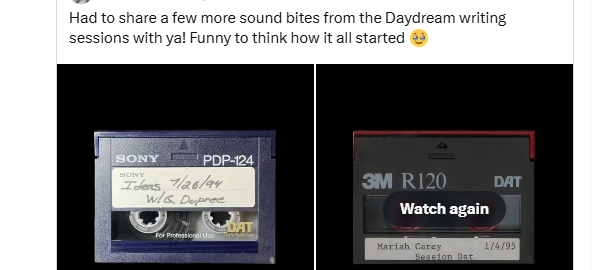
Sun, Aug 0& 2026 /Mpelembe Media/ —  Mariah Carey’s fifth studio album, Daydream, released in 1995, represented a monumental turning point in her career both musicSlly and personally. Moving away from the highly managed, traditional pop-balladeer image cultivated by Columbia Records, Carey sought to infuse her sound with contemporary R&B and hip-hop influences. This stylistic pivot led to intense creative friction with her record label and her then-husband, Sony Music head Tommy Mottola, who favored her established adult-contemporary formula. To bypass this corporate surveillance, Carey systematically established direct studio partnerships with innovative producers like Jermaine Dupri, Dave “Jam” Hall, and Kenneth “Babyface” Edmonds. Through these collaborations, she achieved immediate historic success; the Tom Tom Club-sampling lead single “Fantasy” became the first song by a female artist to debut at number one on the Billboard Hot 100, while her Boyz II Men duet “One Sweet Day” remained at the top of the charts for a record-breaking sixteen weeks. Ultimately, the album achieved a Diamond certification from the RIAA, selling over 11 million copies in the United States and cementing Carey’s status as a self-directed pop auteur. Continue reading →

07Aug/26

From Zamrock to Internet Kill-Switches

The Rise of Zed Beats and the Digital Music Revolution

Fri , Aug 0& 2026 /Mpelembe Media/ — Zed Beats, which takes its name from the letter “Z” in Zambia, represents a dynamic hybrid music genre that emerged in the late 1980s. Young, self-taught producers began using affordable computer software to blend indigenous Zambian elements with popular global sounds like R&B, reggae, rap, hip-hop, Jamaican dancehall, Afrobeats, and amapiano. The rise of this digital movement was catalyzed by a major cultural void in the late 1980s and 1990s, when the devastating HIV/AIDS epidemic claimed the lives of a generation of veteran musicians who had anchored traditional live genres like Kalindula and Zamrock. To fill this void, which had left radio and television heavily dominated by foreign music, young enthusiasts utilized newly accessible computer technology to resurrect local music and forge a modern urban identity. Continue reading →