
Tag Archives: Articles

21Sep/26

Ancient blueprints for living well

Beyond Consumerism: Ancient Blueprints for Tranquility in a Restless World

Mon 21 Sept 2026 /Mpelembe Media/ — Epicurus constructed a comprehensive, materialistic philosophy rooted in atomism to liberate humanity from psychological anxiety. By asserting that the universe consists solely of indestructible atoms moving and randomly swerving through empty space, he replaced mythological explanations with mechanistic natural laws. This physical worldview served a direct therapeutic purpose by demonstrating that divine beings do not interfere in human affairs or inflict punishment, and that the human soul—composed of fine physical particles—disperses entirely upon bodily death. Because consciousness ends permanently at death, Epicurus reasoned that death is nothing to us, freeing individuals from the existential dread that fuels irrational ambitions. Continue reading →

20Sep/26

Your kindness matters more than you think

A Little Good Goes an Unexpectedly Long Way: The Hidden Value of Everyday Kindness

Sun 20 Sept 2026 /Mpelembe Media/ — Extensive behavioral research demonstrates that people systematically underestimate the positive emotional impact their random acts of kindness have on recipients. Across a wide array of field and laboratory experiments—ranging from handing out hot chocolate at an ice-skating rink and distributing cupcakes in public parks to writing supportive notes and paying for coffee—performers consistently predicted that recipients would feel less positive and perceive the act as less significant than receivers actually reported. While givers recognize that prosocial acts generate positive feelings, they reliably fail to anticipate the true magnitude of that emotional boost. This cognitive miscalibration persists across diverse contexts, whether the gesture involves a material item or a practical action, whether it is large or small, and whether the recipient is a complete stranger, a classmate, or a long-time partner. Continue reading →

19Sep/26

Agrippa the Skeptic and the concept of the Muse

Because each modern theory must choose which of Agrippa’s three “horns” to address or reframe, philosopher Victor Brochard described Agrippa’s formulation as one of the most radical and irresistible statements of philosophical skepticism ever devised

Sat 19 Sept 2026 /Mpelembe Media/ —In this interdisciplinary synthesis, Agrippa’s logical tropes and the artist’s muse serve the same fundamental purpose: creative and cognitive breakthroughs require the willingness to destabilize absolute certainty. Rather than offering an artist neat answers or passive ideals, the muse acts as a skeptical catalyst who disrupts dogmatic habits, forces an aesthetic impasse, and opens the space necessary for radical artistic transformation. Continue reading →

14Sep/26

The Shadow Market for Social Housing

The £2 Million Shortcut: Inside the Scam Rigging London’s Social Housing

In London, a city where the wait for a stable home is measured in decades rather than years, desperation has a market price. For a family of seven packed into a damp, one-bedroom flat in Tower Hamlets, the official “bidding” system feels less like a ladder and more like a treadmill. But what if there was a way to jump the queue? What if a few thousand pounds could buy the keys that twenty years of waiting could not?This isn’t a hypothetical. It is the grim reality behind  Operation Chandrila , a massive criminal investigation that has pulled back the curtain on a £2 million conspiracy. It is a story of “gatekeeper” corruption, social media predators, and a system so broken that authorities are now offering a “no questions asked” amnesty to people living in stolen homes just to get the keys back. Continue reading →

12Sep/26

The Evolving Taxonomy of Moral Agency

The Architecture of Agency: A Comparative Report on Moral Subjectivity and Responsibility

1. Introduction: The Evolving Taxonomy of Moral Agency

As autonomous systems, complex corporate structures, and new insights into animal ethology challenge our traditional ethical boundaries, the strategic importance of defining “moral agency” has never been greater. For centuries, the domain of moral participation was reserved almost exclusively for the human rational agent. However, as non-human entities increasingly occupy roles of significant social and ethical consequence—ranging from AI-driven healthcare diagnostics to the legal personhood of corporations—we must move beyond a species-centric model. To maintain a functional moral community, we must examine the specific functional requirements that allow an entity to participate in moral life, regardless of its biological or structural origin.The “Orthodox View” of moral agency traditionally rests on three pillars: the capacity to distinguish right from wrong, the ability to make autonomous choices, and the liability to be held accountable for those actions. Under this framework, an agent is not merely an object of concern (a moral patient) but a participant capable of being praised or blamed. As we shall see, this benchmark remains the foundation upon which all other comparative frameworks are built, though the boundaries are increasingly porous. Continue reading →

11Sep/26

Why People Mourn Their AI Partners

The Architectural Boundaries of AI: Syntax, Semantics, and the Chinese Room

Thu Sep 10 2026 /Mpelembe Media/ — The philosophical foundation of artificial intelligence reveals a fundamental divide between syntactic computation and genuine mental understanding. John Searle’s Chinese Room thought experiment demonstrates that an agent manipulating uninterpreted symbols according to formal, programmatic rules can produce outputs indistinguishable from a native speaker without grasping their semantic meaning. Contemporary large language models function as scalable manifestations of this thought experiment, relying on complex mathematical and probabilistic statistical patterns across vast datasets to generate persuasive text. Although these models achieve high linguistic fluency, they lack subjective conscious experience, intentionality, and qualia, operating entirely within symbol manipulation while human users actively supply the meaning. Consequently, machine expressions of care or comprehension remain structural simulations rather than authentic internal states. Continue reading →

09Sep/26

The Human Cost of Administrative Failure

Modernizing Judicial Operations Through Centralized Digital Intelligence

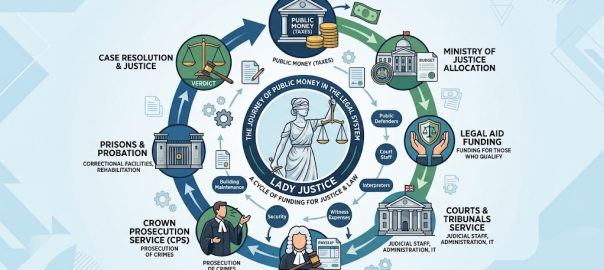
Wed Sep 09 2026 /Mpelembe Media/ — TrackFlow serves as a unified digital judicial intelligence platform that replaces fragmented case registries and paper-reliant court processes with a multi-tenant cloud workspace. The system centralizes case docketing, chronological timeline monitoring, administrative scheduling, and security auditing into a single digital architecture designed to reduce procedural delays and pre-trial detention risks. An automated scheduling engine coordinates judicial panels, stenographers, security teams, and certified language interpreters, cutting administrative workloads by up to forty-two percent while enforcing cryptographically signed digital audit trails for all calendar updates, invoice approvals, and system modifications. Continue reading →

09Sep/26

GPT-6 Astra takes the steering wheel

“AGI Has Arrived”: Industry Declarations, Benchmark Discrepancies, and the Launch of GPT-6 Astra

Wed Sep 09 2026 /Mpelembe Media/ — The public discussion surrounding artificial general intelligence reached a pivotal moment following the rollout of OpenAI’s GPT-6 Astra in September 2026. Nvidia CEO Jensen Huang declared on social media that “AGI has arrived,” highlighting Astra’s training on more than 100,000 Grace Blackwell NVLink72 GPUs and noting that another 400,000 GPUs are scheduled to come online. This definitive stance represented a sudden shift from Huang’s statements during Nvidia’s Q2 FY2027 earnings call just days prior, where he described traditional AGI milestones as “senseless” and emphasized that the industry should focus on practical utility, useful work, and generating “profitable tokens”. Over the preceding two years, Huang’s public timeline for AGI shifted from passing every human test within five years to defining it as an AI capable of creating a temporary viral application, while acknowledging that AI agents remained incapable of replicating the complex work of running Nvidia itself. Analysts note that by framing Astra’s rollout as the literal arrival of AGI, Huang reinforced the market narrative that massive hardware investments directly drive corporate revenue. Continue reading →

24May/26

The UBUNK Paradigm: Navigating Truth, Myth, and Endurance

Beyond Fact-Checking: How AI and Gamification are Creating a Resilient Digital Citizen

Sun, May 24 2026 /Mpelembe Media/ — The modern digital landscape is overwhelmed by a flood of algorithmic misinformation, historical hoaxes, and sensationalism designed to exploit human biases and emotional reactions. Because traditional, passive fact-checking is often too slow and tedious to compete with viral lies, researchers and technologists are pivoting toward active, gamified behavioral conditioning to build societal resistance against fake news. Continue reading →

18Apr/26

Rewriting the internet with ancestral blueprints

April 18, 2026 /Mpelembe Media/ — The Mpelembe Network Strategy focuses on developing online environments that foster enduring human connections through intentional design. By prioritizing community strength over disruptive algorithms, the initiative seeks to merge localized cultural values with expansive global networks. They utilize decentralized technology to ensure that shared identities remain the foundation for sustained cooperation among participants. This approach integrates traditional social structures into contemporary digital frameworks to create stable, thriving human ecosystems. Ultimately, the strategy aims to turn fragmented digital interactions into resilient public squares built for lasting kinship.

Continue reading →