Tag Archives: NAIROBI

10Sep/26

How African Filmmakers Reclaimed the Screen

Beyond the Colonial Shadow: The Financial Risk and Cultural Triumph of Love Brewed in the African Pot

From Objects to Authors: The Evolution of African Cinema

1. The Paternalistic Era: Cinema as a Colonial Tool (1900–1950s)

The history of cinema in Africa began not as an indigenous art form, but as a colonial novelty. In 1900, a French circus group projected the Lumière brothers’  L’arroseur arrosé  in a Dakar marketplace, a moment that marked the arrival of a medium that would be used for decades to document Europe’s “Other.” Early European cinema focused on newsreels and ethnographic studies that prioritized colonial solidarity, often erasing indigenous tensions to present a sanitized view of the continent.To control the African “gaze,” colonial administrations established dedicated film units. While their methods overlapped, their underlying motivations were distinct: Continue reading

24Aug/26

Why joblessness and diamonds fuel civil war

The Dual Private Sector Dilemma: Why IMF Market-Led Growth Models Fail to Create Jobs in Fragmented African Economies

Mon, Aug 24 2026 /Mpelembe Media/ — The economic relationship between sub-Saharan Africa and the International Monetary Fund (IMF) has its roots in the 1944 Bretton Woods Conference, where the few developing nations present failed to secure explicit references to their development financing needs in the Articles of Agreement. From its inception, the IMF maintained a rigid, short-term balance-of-payments focus, famously denying Ethiopia’s first request for financial assistance on the grounds that its needs were neither immediate nor temporary. By the 1980s and 1990s, this short-term framework was formalized into neoliberal Structural Adjustment Programs (SAPs), which mandated strict conditionalities such as market deregulation, extensive privatization of state-owned enterprises, and rapid trade opening. Although promoted as pathways to long-term macroeconomic stability, these interventions frequently triggered severe adverse social consequences, including declining real wages, heightened poverty, and the systematic deterioration of basic health and social welfare systems. In response to widespread critique in the late 1990s, the IMF purported to shift its operational model, replacing traditional SAPs with the Enhanced Structural Adjustment Facility (ESAF) and, subsequently, various credit facilities under the Poverty Reduction and Growth Trust (PRGT). However, empirical evidence indicates that these contemporary programs represent “SAPs in disguise,” with loan conditionalities and stringency steadily rising, and core prescriptions of fiscal consolidation and state retrenchment remaining largely unchanged. Continue reading

15May/26

Why Giving Away Clean Stoves Fails

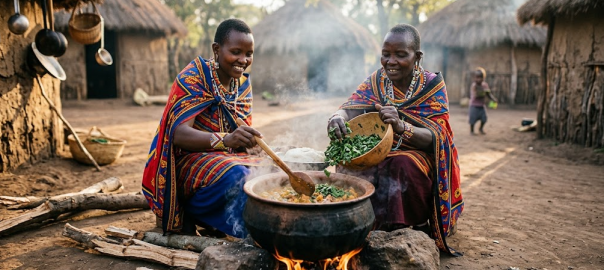
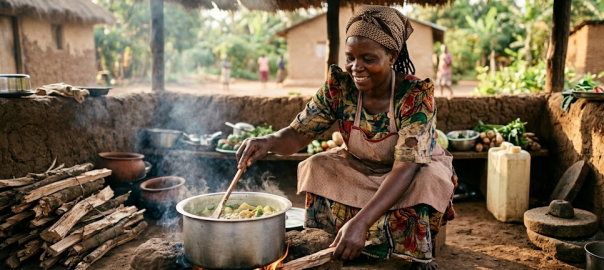
Fri, May 15 2026 /Mpelembe Media/ —The global reliance on traditional, polluting cooking fuels remains a critical health and environmental crisis, with over 2 billion people lacking access to clean alternatives like liquefied petroleum gas (LPG), biogas, and electricity. This dependence generates severe household air pollution (HAP), which is linked to nearly 3 million premature deaths annually and disproportionately impacts women and children, who also suffer the economic and educational toll of “time poverty” from daily fuel collection. Continue reading

09Mar/26

Inside ODSC 2026: The Ultimate Gathering of AI Builders and Visionaries

Beyond the Screen: 5 Surprising Realities Shaping the Future of AI and Robotics

March 9, 2026 /Mpelembe Media/ — For decades, the promise of the “robot age” has been stuck in an aggravating stalemate. We live in a world where an algorithm can compose a passable symphony or pass the bar exam, yet we still lack a machine that can reliably navigate a laundry room or patch a crumbling bridge. This is the “uncanny valley” of productivity: we have conquered the digital realm of symbols and logic, but the physical world—with its friction, gravity, and unpredictable messiness—remains stubbornly out of reach.But the screen is no longer a barrier; it is becoming a mirror. Recent breakthroughs presented by the world’s leading builders at ODSC 2026 and the Robotics and AI (RAI) Institute suggest we are finally witnessing the “tectonic shift” from artificial intelligence that merely thinks to intelligence that  does . We are moving beyond the era of chatbots and into the era of embodied partners. Here are the five surprising realities defining this new frontier. Continue reading

01Jan/26

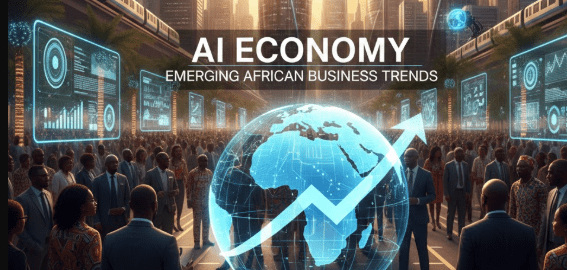
The AI Economy and Emerging African Business Trends

Jan. 1, 2026 /Mpelembe Media/ — China’s strategic framework for international cooperation is based on the four pillars of the Global Development, Security, Civilization, and Governance initiatives. These programs are presented as a comprehensive Chinese solution to modern crises, aiming to reform the global governance system while promoting a shared future for humanity. By focusing on a people-centered approach, the initiatives prioritize addressing poverty, resolving conflicts through dialogue, and respecting the diversity of cultures. The sources emphasize that these efforts particularly support the Global South by advocating for sovereign equality and a move away from unilateral hegemony. Ultimately, the text argues that these public goods provide a pragmatic roadmap for achieving lasting peace and universal prosperity through multilateral action. Continue reading

15Dec/23

Kenyan digital IDs: paused again

By Nita Bhalla | East Africa Correspondent

Dec 14, 2023, / Thomson Reuters Foundation/ — A high court in Kenya has halted the rollout of a new national digital identification programme, saying authorities failed to assess the risks from processing citizens’ personal data. Continue reading

05Sep/23

Africa Climate Summit: “opportunity” awaits

By Alister Doyle | Climate Correspondent

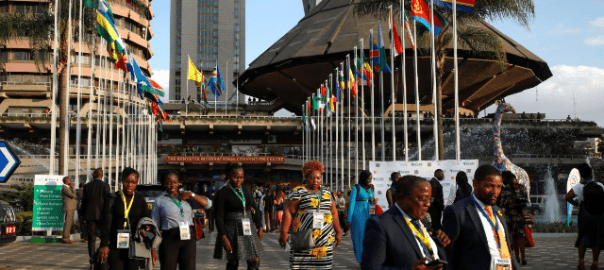
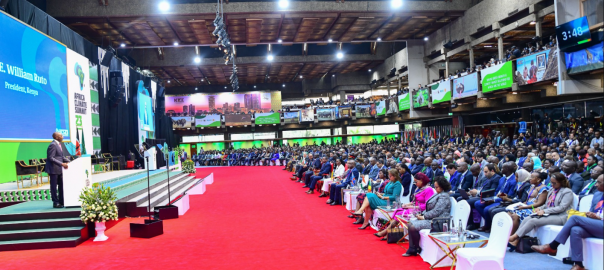
The Africa Climate Summit (ACS) is hearing a lot about “opportunities” for combating climate change on the continent that has done least to cause warming yet is most vulnerable to its harmful impacts.

The September 4-6 summit in Nairobi is a striking shift for African governments, who have berated rich nations for failing to meet a promise to mobilise $100 billion a year in climate finance by 2020. That year, it totalled just $83 billion. Continue reading

05Sep/23

COP28 Presidency Announces US$4.5 Billion UAE Finance Initiative to Unlock Africa’s Clean Energy Potential

The COP28 President-Designate, H.E. Dr. Sultan Al Jaber, announced today a UAE finance initiative that will provide US$4.5 billion to help unlock Africa’s clean energy potential. The announcement was made during a keynote address at the inaugural African Climate Summit in Nairobi, Kenya. Continue reading

25Jul/23

Women storm climate leadership

By Alister Doyle | Climate Correspondent

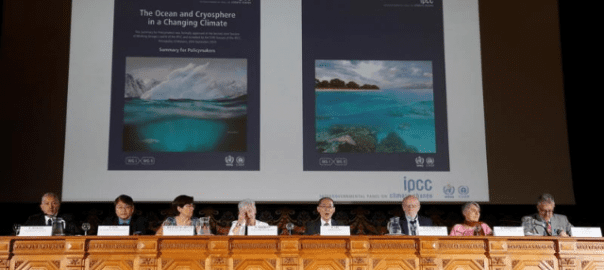
July 25, 2023 /Environment/ — Since it was set up in 1988, the U.N.’s prestigious panel of climate scientists has been led by men – a Swede, an Anglo-American, an Indian and a South Korean.

That 35-year all-male run may end this week when governments pick a new chair for the Intergovernmental Panel on Climate Change (IPCC) at a meeting in Nairobi from July 25-28. Continue reading