Tag Archives: Senegal

10Sep/26

How African Filmmakers Reclaimed the Screen

Beyond the Colonial Shadow: The Financial Risk and Cultural Triumph of Love Brewed in the African Pot

From Objects to Authors: The Evolution of African Cinema

1. The Paternalistic Era: Cinema as a Colonial Tool (1900–1950s)

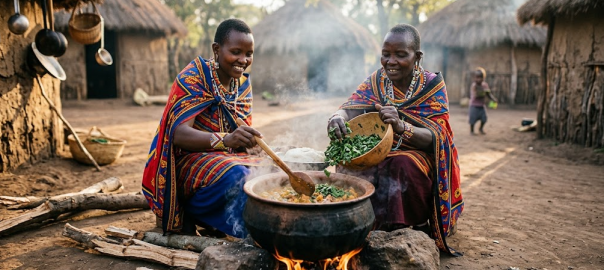
The history of cinema in Africa began not as an indigenous art form, but as a colonial novelty. In 1900, a French circus group projected the Lumière brothers’  L’arroseur arrosé  in a Dakar marketplace, a moment that marked the arrival of a medium that would be used for decades to document Europe’s “Other.” Early European cinema focused on newsreels and ethnographic studies that prioritized colonial solidarity, often erasing indigenous tensions to present a sanitized view of the continent.To control the African “gaze,” colonial administrations established dedicated film units. While their methods overlapped, their underlying motivations were distinct: Continue reading
24Aug/26

Why joblessness and diamonds fuel civil war

The Dual Private Sector Dilemma: Why IMF Market-Led Growth Models Fail to Create Jobs in Fragmented African Economies

Mon, Aug 24 2026 /Mpelembe Media/ — The economic relationship between sub-Saharan Africa and the International Monetary Fund (IMF) has its roots in the 1944 Bretton Woods Conference, where the few developing nations present failed to secure explicit references to their development financing needs in the Articles of Agreement. From its inception, the IMF maintained a rigid, short-term balance-of-payments focus, famously denying Ethiopia’s first request for financial assistance on the grounds that its needs were neither immediate nor temporary. By the 1980s and 1990s, this short-term framework was formalized into neoliberal Structural Adjustment Programs (SAPs), which mandated strict conditionalities such as market deregulation, extensive privatization of state-owned enterprises, and rapid trade opening. Although promoted as pathways to long-term macroeconomic stability, these interventions frequently triggered severe adverse social consequences, including declining real wages, heightened poverty, and the systematic deterioration of basic health and social welfare systems. In response to widespread critique in the late 1990s, the IMF purported to shift its operational model, replacing traditional SAPs with the Enhanced Structural Adjustment Facility (ESAF) and, subsequently, various credit facilities under the Poverty Reduction and Growth Trust (PRGT). However, empirical evidence indicates that these contemporary programs represent “SAPs in disguise,” with loan conditionalities and stringency steadily rising, and core prescriptions of fiscal consolidation and state retrenchment remaining largely unchanged. Continue reading

06Aug/26

AI Automates the Industrialized Cybercrime Economy

Coordinated Policing Battles a Surge in Sophisticated, AI-Powered Scams Across Africa

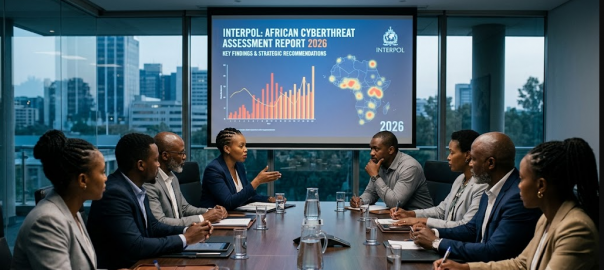
Thur , Aug 06 2026 /Mpelembe Media/ — Artificial intelligence has become the primary engine transforming cybercrime across Africa, driving 55 percent of all reported digital offenses and shifting the threat landscape from isolated incidents into an industrialized, borderless criminal ecosystem. This automation spans every stage of a cyberattack, from initial target reconnaissance and highly personalized phishing generation to execution, extortion, and operational evasion. Fueled by the continent’s rapid digital transformation, which reached over 1.1 billion registered mobile subscribers in 2025, cybercriminals have successfully scaled their operations to target massive audiences simultaneously. This has resulted in a devastating financial toll, with annual regional losses skyrocketing from $192 million in 2024 to $484 million in 2025, while the number of identified individual victims surged from 35,000 to 87,000. Continue reading

05Jul/26

How Norway Engineered the Viking Row


The Viking Row (Viking-roing) has emerged as the definitive viral fan sensation of the 2026 FIFA World Cup, transforming a newly developed supporter ritual into a global cultural phenomenon. Continue reading

29Jan/26

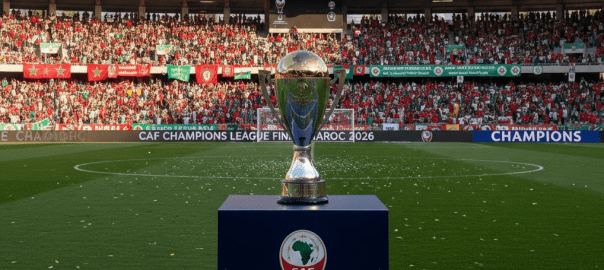
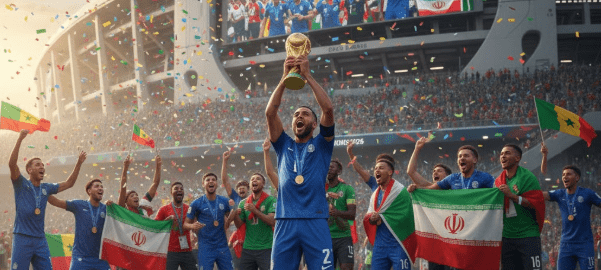
CAF Imposes Severe Sanctions Following AFCON 2025 Final Disciplinary Violations

Jan. 29, 2026 /Mpelembe Media/ — Disciplinary actions has been taken by the Confédération Africaine de Football following the 2025 Africa Cup of Nations final. Both the Senegalese and Moroccan football federations faced substantial monetary fines and player suspensions due to various ethical violations and crowd disturbances. Specifically, Senegal’s head coach and several key players received bans for unprofessional behavior toward officials, while Morocco was penalized for staff interference with technology and fan misconduct. Additionally, the governing body officially dismissed a formal protest submitted by Morocco regarding alleged regulatory breaches by their opponents. These sources serve as an official record of the penalties intended to uphold sportsmanship and integrity within African football. Continue reading

09Jan/26

The Gated Games: Why the 2026 World Cup is Losing its Soul

Jan. 9, 2026 /Mpelembe Media/ — The World Cup has always been more than a tournament; it is a quadrennial “Global Village” where the world puts aside its borders for ninety minutes at a time. But as we approach the 2026 kickoff, that village is being replaced by a fortress. The United States’ current immigration stance—marked by travel bans for 39 nations and “extreme vetting” for others—is fundamentally altering the spirit of the game. We are moving toward a “Two-Tier World Cup” where your ability to cheer for your national team is determined by the strength of your passport, not the depth of your passion. Continue reading

09Jan/26

A Divided Pitch: The Rise of “Fortress America” and the Death of the Global Fan

Jan. 9, 2026 /Mpelembe Media/ — The intersection of U.S. immigration policy and the 2026 FIFA World Cup has become a major flashpoint. The feasibility of a boycott and the “ruining” of the game are subjects of intense debate among human rights groups, fans, and governing bodies. Football without fans is like a movie without a soundtrack. You can still follow the plot, and the acting (the skill) is still world-class, but you lose the emotional crescendos that make you jump out of your seat. For a World Cup—an event built on the “unity” of humanity—a lack of fans doesn’t just change the score; it changes the soul of the event. Continue reading

22Dec/25

2025 Africa Cup of Nations

Dec. 22, 2025 /Mpelembe Media/ — The 2025 Africa Cup of Nations, a premier football tournament hosted by Morocco will span from 21 December 2025 to 18 January 2026, the competition features 24 national teams divided into six distinct groups. The document lists specific match dates, kick-off times, and various stadium locations across the country, starting with the opening group stages and concluding with the final in Rabat.
Continue reading

16Jan/24

Zambia and Gambia explained

Jan. 16, 2024 /Human Interest/ — Zambia and Gambia, despite their similar-sounding names, are quite different countries in Southern and West Africa, respectively. Here’s a breakdown of their key differences: Continue reading

13Jan/24

The Africa Cup of Nations (AFCON) 2024 analysis

Jan. 9, 2024 /Sports/ –The Africa Cup of Nations (AFCON) kicks off today, 13th January 2024! Here’s the breakdown: Continue reading