Tag Archives: Tehran

28Feb/26

The Decapitation Strike on Supreme Leader Khamenei

Middle East in Flames: US-Israeli Strikes on Tehran Prompt Massive Iranian Counterattack

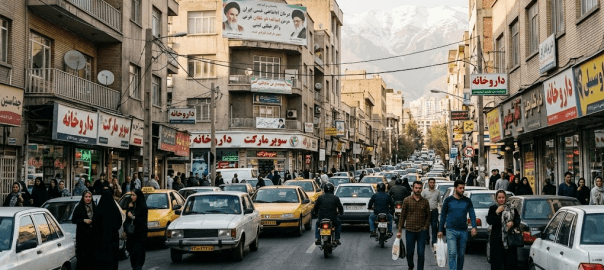
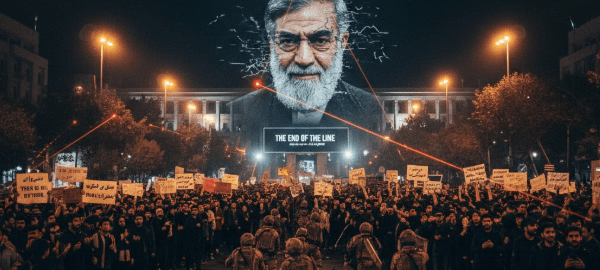
28 Feb. 2026 /Mpelembe Media/ —  These reports detail a massive joint military operation by the United States and Israel against Iran on February 28, 2026, aimed at dismantling its nuclear program and security apparatus. President Donald Trump and Prime Minister Benjamin Netanyahu confirmed the strikes, with the later claiming that Supreme Leader Ayatollah Ali Khamenei was likely killed in an attack on his compound. In response, Iran and its regional allies launched retaliatory missile and drone barrages at Israel and several U.S. military bases in the Persian Gulf. International reactions vary, as Western leaders support the effort to prevent a nuclear-armed Iran while Oman, Russia, and China warn of a catastrophic regional war. Domestic chaos has gripped Iran, characterized by infrastructure damage, internet blackouts, and civilians attempting to flee the capital amidst calls for regime change. Continue reading

28Feb/26

The Board of Peace is Bombing Iran for the Gaza Riviera

5 Radical Realities Reshaping the Middle East

28 Feb. 2026 /Mpelembe Media/ —  The 2026 US-Iran War (“Operation Epic Fury”) Tensions between the United States and Iran escalated sharply in late 2025 and early 2026 following massive anti-regime protests in Iran, which the Iranian government suppressed with unprecedented lethal force and internet blackouts. In response, US President Donald Trump initiated a massive military buildup in the Middle East, deploying two aircraft carrier strike groups and issuing ultimatums demanding Iran halt its nuclear program and proxy support.
After US-brokered nuclear negotiations in Geneva broke down, the US and Israel launched joint military strikes on Iran on February 28, 2026, dubbed “Operation Epic Fury” and “Operation Roaring Lion”. The massive bombardment targeted Iranian nuclear facilities, military infrastructure, and leadership compounds in Tehran. In retaliation, Iran launched significant ballistic missile barrages at Israel and US military bases across the Persian Gulf, including in Bahrain, Qatar, Kuwait, and the UAE, while its regional proxies mobilized, triggering a multi-theater conflict.

Continue reading

09Jan/26

The Persian Threshold: Tehran Teeters Between Total Collapse and a “Year of Blood”

Jan. 9, 2026 /Mpelembe Media/ — The Iranian regime is currently facing its most existential challenge since the 1979 Revolution. As of January 9, 2026, the situation has shifted from sporadic economic protests into a coordinated nationwide uprising. Continue reading

09Jan/26

A Divided Pitch: The Rise of “Fortress America” and the Death of the Global Fan

Jan. 9, 2026 /Mpelembe Media/ — The intersection of U.S. immigration policy and the 2026 FIFA World Cup has become a major flashpoint. The feasibility of a boycott and the “ruining” of the game are subjects of intense debate among human rights groups, fans, and governing bodies. Football without fans is like a movie without a soundtrack. You can still follow the plot, and the acting (the skill) is still world-class, but you lose the emotional crescendos that make you jump out of your seat. For a World Cup—an event built on the “unity” of humanity—a lack of fans doesn’t just change the score; it changes the soul of the event. Continue reading

13Jan/23

Reclaiming privacy

By Samuel Woodhams | Digital rights researcher and journalist

Last week, WhatsApp announced a new proxy support feature that will help people stay connected during internet disruptions. The app is often targeted by government censors because messages on the end-to-end encrypted service can’t be intercepted, enabling people to organise protests and share critical information in private.
Continue reading

26Aug/22

The inside story of the CIA v Russia – from cold war conspiracy to ‘black’ propaganda in Ukraine

In the early 1990s, Senator Patrick Moynihan campaigned for the abolition of the CIA. The brilliant campaigner thought the US Department of State should take over its intelligence functions. For him, the age of secrecy was over.

In a New York Times opinion piece, Moynihan wrote:

Continue reading