
The Viking Row (Viking-roing) has emerged as the definitive viral fan sensation of the 2026 FIFA World Cup, transforming a newly developed supporter ritual into a global cultural phenomenon. Continue reading
Unmasking the Deep State: Cold War Subversion, the P2 Lodge, and Modern Whistleblowers
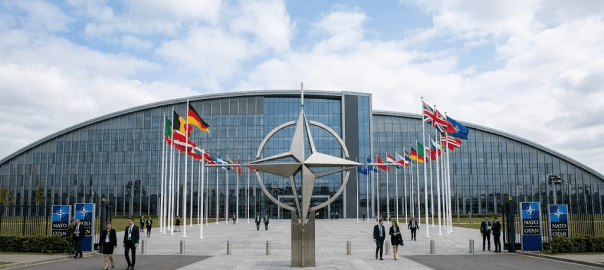
April 1, 2026 /Mpelembe Media/ — The historical sources detail the emergence of a covert “shadow government” architecture that originated during the Cold War. Initially organized by NATO, the CIA, and MI6 as clandestine “stay-behind” armies (such as Operation Gladio) to mount armed resistance in the event of a Soviet invasion, these networks frequently evolved into instruments of domestic political subversion. Across Western Europe and Turkey, right-wing paramilitary units employed a “strategy of tension,” staging false-flag terrorist attacks to spread public fear, discredit left-wing political movements, and justify authoritarian crackdowns. Prominent examples of this state-sponsored terror include the 1969 Piazza Fontana and 1980 Bologna massacres in Italy, as well as the Brabant massacres in Belgium.
Your Smartphone’s Next Roaming Partner is 350 Miles Up: 5 Surprising Realities of Starlink’s “Cell Towers in Space”
March 8, 2026 /Mpelembe Media/ — The provided sources examine the emergence and rapid expansion of Direct-to-Cell (D2C) technology, specifically focusing on Starlink’s efforts to provide Supplemental Coverage from Space (SCS). Research highlights that these satellite-based networks allow unmodified 4G LTE smartphones to connect directly to orbiting satellites, effectively eliminating terrestrial dead zones in remote areas like national parks. While initial commercial services in the United States and New Zealand focused on text messaging and emergency alerts, the technology is evolving to support voice, high-speed data, and IoT applications. Significant milestones include Airtel Africa and MTN Zambia partnering with SpaceX to launch services across the African continent, successfully piloting the first satellite-based fintech transactions. Despite technical hurdles like lower signal power and Doppler shifts, regulatory bodies worldwide are modernizing frameworks to accommodate this hybrid orbital-terrestrial model. Ultimately, these sources position D2C as a transformative tool for global digital inclusion, promising near-universal connectivity without the need for traditional ground infrastructure.
The Future of the Stay: A Student’s Primer on AI & IoT in Hospitality
Feb 18, 2026 /Mpelembe media/ — The travel industry is undergoing a structural metamorphosis driven by the transition from generative to “Agentic AI,” the rise of the Asia-Pacific (APAC) region as the dominant market, and a shift toward hyper-personalized, “zero-touch” experiences. While technology promises to erase logistical friction, it introduces new challenges regarding algorithmic bias, data privacy, and the “complexity tax” of managing massive scale. Continue reading
The Copilot: 6 Surprising Ways the “Agent Economy” is Rewiring Global Finance in 2026
10 Feb. 2026 /Mpelembe Media — 2026 represents a structural shift from “assistive” technology to “autonomous” economic actors, underpinned by new U.S. crypto legislation and a global scramble to tax digital value. The Year of the “Agentic” Workforce 2026 is widely cited as “the year of the agent,” marking a transition from AI “copilots” (which wait for instructions) to autonomous “agents” (which act with intent to execute workflows). Continue reading
Jan. 1, 2026 /Mpelembe Media/ — The “Fifth Industrial Revolution” (5IR), is a shift from tools that we control to environments that control themselves. It frames the future not as a collection of gadgets, but as a totalizing system—the “Cathedral”—where the infrastructure itself makes moral and economic decisions. The Dark Industrial Cathedral is built on surveillance, extraction, and algorithmic control. The primary task for 5IR leaders is “engineering ethics into infrastructure” by embedding human values directly into the code. Continue reading
May 17, 2025 /Mpelembe Media/ — The Eurovision Song Contest is an annual international song competition organized by the European Broadcasting Union (EBU) since 1956. It brings together participants representing primarily European countries, although nations from outside of Europe, such as Australia, have also been invited to compete. Continue reading
Jan. 11, 2025 /Mpelembe Media/ — nsave, a fintech company founded by former Rhodes Scholars, launched an investment platform offering safe, compliant overseas accounts and investments to individuals in high-inflation economies. This platform provides access to US equities, ETFs, and soon, funds, aiming to protect and grow wealth for those facing financial exclusion. Continue reading
Trip.com Group, a leading global travel service provider, has set its sights on tackling key challenges surrounding the tourism industry. This is evidenced by CEO Ms Jane Sun’s participation in the panel discussion “Sorry, We’re Full: Tackling Overtourism” at the prestigious World Economic Forum in Davos, Switzerland. The forum invited influential dignitaries, from political elites to business leaders, to tackle the challenges facing our world, in the hope of finding common ground and united solutions, aligning with this year’s theme of “Rebuilding Trust”. Continue reading
Matt Weaver, University of Portsmouth
In 1956, seven European countries – Belgium, France, Italy, Luxembourg, the Netherlands, Switzerland and West Germany – gathered in Lugano, Switzerland for the first ever Eurovision Song Contest. The competition was only broadcast in select countries, meaning only a small number of viewers watched Swiss entry Lys Assia win the grand prize with the song Refrain.