31Oct/26

The Death of Passwords and Physical Screens

Scalable Media Discovery Meets Immersive Reality: The Technical Blueprint of Horizon

Thu, July 29 2026 /Mpelembe Media/ —The Horizon streaming ecosystem combines a zero-friction identity architecture with broad media delivery capabilities to streamline subscriber acquisition and long-term engagement. To eliminate the user drop-off typical of manual registration forms and credential entry, the platform integrates standard OAuth 2.0 and OpenID Connect protocols alongside in-context Google One-Tap authentication. Utilizing browser-level Federated Credential Management APIs, Google One-Tap detects active sessions and transmits cryptographically signed JSON Web Tokens directly to backend verification endpoints without triggering disruptive page redirects. This passwordless entry pattern produces conversion rate increases ranging between 50% and 107%, capturing verified demographic data immediately to personalize content catalogs upon arrival.


Continue reading →

30Oct/26

Escaped Zambian MP Sparks Facebook Defamation Lawsuit

Executive Power Under Scrutiny: The Legal Timeline of Zambia’s High-Stakes Opposition Prosecutions

Fri, July 30 2026 /Mpelembe Media/ —The legal and political saga surrounding Emmanuel “Jay Jay” Banda, the former independent Member of Parliament for Petauke Central, represents a pivotal focal point in contemporary Zambian jurisprudence and executive-judicial dynamics. The crisis began in late May 2024 when Banda vanished under mysterious circumstances in Lusaka, only to resurface days later in a debilitated state at a medical facility alleging he had been abducted and tortured. Through his legal counsel, Banda publicly accused senior government officials—including State House Political Advisor Levy Joseph Ngoma, Chief Communications Specialist Clayson Hamasaka, and ruling UPND youth leader Trevor Mwiinde—of orchestrating his forced disappearance. These accusations immediately triggered a double-track legal clash: the implicated officials launched a civil defamation action in the Lusaka High Court seeking injunctive relief, while the state arrested several opposition figures on espionage and hate speech charges for promoting the abduction claims. Continue reading →

30Oct/26

Why Bad Dashboards Stress Your Brain

Core Architectural Framework and Operational Design

Thu, July 29 2026 /Mpelembe Media/ — Modern legal tracking platforms represent a fundamental transition from static, paper-based administrative records to unified digital command centers that orchestrate multi-jurisdictional case flows and high-stakes legal operations in real time. To handle the divergent demands of legal practice, enterprise judicial systems deploy a dual-storage architecture that pairs normalized relational schemas with append-only, event-sourcing streams. The relational data tier maintains strict structural integrity across core entities—such as cases, parties, variable legal roles, hearings, and financial ledgers—preventing data redundancy and conflict across matters. Concurrently, immutable, timestamped event-sourcing logs capture dynamic procedural milestones, hearing results, and docket modifications, enabling high-performance rendering of chronological court timelines and automated calculation of statutory deadlines. Continue reading →

30Oct/26

How Agentic AI Replaces Software

The Tollbooth Trap: Why Commoditized Middlemen Are Losing Ground to Autonomous Intelligence.

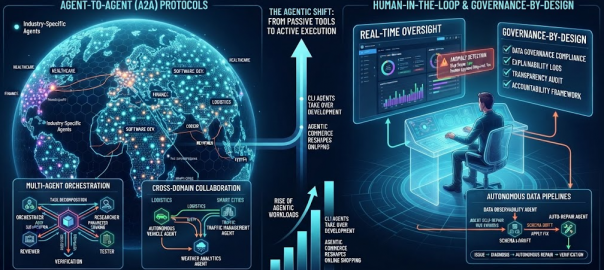
Fri, July 30 2026 /Mpelembe Media/ — The rapid evolution of generative artificial intelligence and autonomous multi-agent architectures is driving a structural transformation across the digital economy, dismantling traditional business models founded on search arbitrage, manual creative services, seat-based software licensing, and intermediation. Legacy stock photography illustrates this vulnerability, highlighted by Getty Images filing for Chapter 11 bankruptcy after losing more than 99 percent of its peak market valuation amid competition from on-demand text-to-image generators that undercut conventional pay-per-image licensing. Similar pressures are impacting online labor markets such as Upwork, where freelancers in occupations exposed to language and image models experienced a 2 percent decline in contracts and a 5 percent decrease in earnings, with high-reputation professionals disproportionately impacted as automated systems compress human skill differentials. Concurrently, commoditized intermediaries across travel booking, online retail, and mid-market SaaS face severe disintermediation. Over 100 publicly listed mid-market software providers are caught in a major squeeze between low-cost AI startups and cloud hyperscalers, prompting enterprises to replace traditional per-seat subscriptions with internal autonomous agents. Continue reading →

29Oct/26

Why Positive Thinking Backfires

Cultivating Psychological Flexibility: Synthesizing Behavioral Therapy, Cognitive Science, and Existential Thought

Thu, July 29 2026 /Mpelembe Media/ — Psychological Flexibility and Acceptance & Commitment Therapy (ACT) Psychological flexibility—defined as consciously contacting the present moment as a human being and guiding action based on chosen values—serves as the foundational mechanism of Acceptance and Commitment Therapy (ACT). Derived from Relational Frame Theory (RFT), ACT addresses the core problematic process of experiential avoidance, wherein individuals expend immense energy attempting to suppress, escape, or alter unpleasant thoughts, emotions, and bodily sensations. Cognitive fusion occurs when literal language and internal verbal rules dominate behavior, pulling individuals away from direct contingencies in their environment. Through core processes such as cognitive defusion, acceptance, present-moment awareness, self-as-context, values clarification, and committed action, ACT fundamentally alters an individual’s relationship to their internal experiences rather than attempting to forcibly modify cognitive content. Empirical research confirms that workplace interventions increasing psychological flexibility enhance employee health, innovation, software mastery, and performance targets while outperforming traditional individual-difference constructs like Emotional Intelligence or the Big Five personality traits. Continue reading →

29Oct/26

Police Called on Toddler Soccer Prodigy

When Excellence Breaks the System: The Viral Controversy of Toddler Soccer Phenom Nevada Pierre

Thu, July 29 2026 /Mpelembe Media/ — Nevada Pierre, a three-year-old soccer prodigy widely known online as @nevadaney10, became the subject of an international media controversy following a match at Martin Luther King Jr. Park in Winter Park, Florida, on October 24, 2026. Competing in an i9 Sports recreational league against older children aged four and five, Nevada demonstrated exceptional ball control, agility, and scoring ability, scoring 10 goals in approximately 12 minutes of play. His remarkable technical talent was developed through intensive early athletic training supervised by his father, Don Pierre, which included ball-handling drills beginning at 10 months old and up to three hours of structured daily practice. Continue reading →

29Oct/26

Which AI Certifications Actually Matter

Inside Google’s Centralized Learning Hub for Enterprise AI, Cloud Infrastructure, and Agentic Engineering

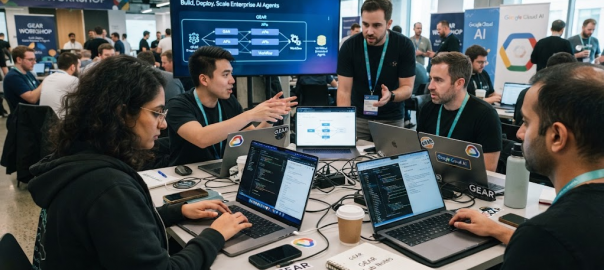
Thu, July 29 2026 /Mpelembe Media/ — Google Skills represents a strategic consolidation of Google’s educational ecosystem, consolidating nearly 3,000 courses, hands-on interactive labs, and professional credentials into a single unified platform. By merging content across Google Cloud, Google DeepMind, Grow with Google, and Google for Education, the platform establishes a continuous learning continuum serving all proficiency levels. Learners can progress seamlessly from foundational digital literacy to advanced large language model architectures and enterprise cloud infrastructure management. Prior to this unification, users across these individual properties completed over 26 million courses and credentials in a single year, highlighting the massive global demand for structured technical upskilling. Continue reading →

29Oct/26

Hidden Drivers of Depression in Zambia

Beyond Individual Risk: How Community Context and Structural Inequalities Shape Mental Health Across Zambia

Thu, July 29 2026 /Mpelembe Media/ — National epidemiological evidence from the 2024 Zambia Demographic and Health Survey (ZDHS) demonstrates that approximately 8.2% of Zambian adults aged 15–59 years—or roughly one in twelve people—screen positive for probable depression, probable anxiety, or both. Utilizing validated screening tools including the Patient Health Questionnaire (PHQ-9) and Generalized Anxiety Disorder scale (GAD-7), the study establishes a national baseline for a population where epidemiological evidence was previously scarce. Symptom prevalence shows a distinct age trajectory, rising steadily from 4.2% among adolescents aged 15–19 to a peak of 11.5% among adults aged 40–44. While Zambia’s overall baseline is moderate compared to regional neighbors such as South Africa (where probable depression reaches 25.7%), it reflects a substantial mental health burden that remains largely undetected and untreated due to severe healthcare workforce constraints, structural low priority, and widespread social stigma. Continue reading →

29Oct/26

Why STIs Are Outsmarting Modern Medicine

Surging Cases and Superbug Strains: Inside Europe’s Escalating Sexual Health Crisis

Thu, July 29 2026 /Mpelembe Media/ — Bacterial sexually transmitted infections have reached record highs across Europe, led by a surge in gonorrhoea notifications that reached 106,331 cases in 2024—a 303% increase since 2015 and the highest level recorded since European surveillance began. Over the same decade, syphilis cases more than doubled to 45,577, while congenital syphilis cases nearly doubled in a single year to 140. Although men who have sex with men account for the majority of diagnoses (62% of gonorrhoea cases), infections are increasingly expanding into heterosexual populations and young adults, particularly women aged 20 to 24. Epidemiologists attribute this multi-pathogen resurgence to a complex interplay of post-pandemic behavioural shifts, declining condom usage, expanded HIV PrEP protocols that mandate routine screening and catch more asymptomatic cases, and structural healthcare barriers such as out-of-pocket testing fees required in 13 European countries. Continue reading →

28Oct/26

Why AI Ethics Needs Ancient Theology

Faith, Human Dignity, and Governance: Why AI Ethics Demands Moral Depth Over Statistical Consensus

Wed, July 28 2026 /Mpelembe Media/ — The Limits of Preference Aggregation and the Rise of Algorithmic Pluralism Leading technology executives have proposed aligning artificial intelligence with human values by calculating a “weighted average” or statistical consensus through techniques such as Reinforcement Learning from Human Feedback (RLHF). However, social choice theory demonstrates that there is no unique voting protocol capable of universally aggregating individual preferences without generating logical contradictions or violating private ethical values. Theological and philosophical scholars emphasize that religious traditions cannot be reduced to modular, extractable rulebooks to be averaged in machine learning models. Attempting to compute a universal moral consensus flattens culturally rich worldviews, suppresses minority perspectives, and risks codifying dominant, secular-rational norms at the expense of global faith communities. Continue reading →