28Aug/26

Zambia’s Padlocked Courts and Treason Charges

A Fragile Stability Shaken: Suspicious Raid, Court Blockade, and Treason Charges Roil Zambia

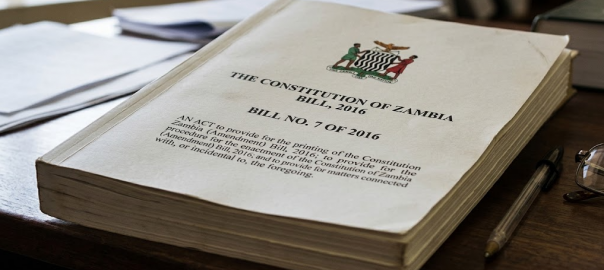
Fri Aug 27 2026 /Mpelembe Media/ — The 2026 Zambian general election, held on August 13, resulted in the re-election of incumbent President Hakainde Hichilema of the United Party for National Development (UPND) with 60.49% of the vote, defeating his primary challenger Brian Mundubile of the Tonse Alliance’s National Reconciliation Party for Unity and Prosperity (NRPUP), who received 37.87%. While the Electoral Commission of Zambia (ECZ) declared Hichilema the winner, the contest was conducted on a deeply uneven playing field due to late-stage constitutional and legislative overhauls that structurally favored the ruling party. These included the Constitutional Amendment Act No. 13 of 2025 and the subsequent Electoral Processes Act No. 12 of 2026, which were passed in May 2026 during the week parliament dissolved, just three months prior to the election. This late enactment, combined with an opaque boundary delimitation exercise completed on April 16, 2026, which added 70 new constituencies largely favoring rural areas traditionally leaning toward the UPND, left minimal time for public education and structurally altered the legislative balance. Furthermore, international and domestic observer missions, including the European Union and the Christian Churches Monitoring Group (CCMG), raised serious concerns over the misuse of state resources, selective enforcement of campaign schedules, and parallel vote count discrepancies suggesting vote inflation in several constituencies. Continue reading →

27Aug/26

Rebuilding after the thirty-minute Himalayan flood

Beyond the Storm: Why Repeated Hazards Trigger Systemic Collapse and Compounded Human Tolls

Thu Aug 27 2026 /Mpelembe Media/ — The accelerating pace of human-caused climate change is compressing the temporal intervals between extreme meteorological and geophysical events, giving rise to a critical systemic challenge known as the recovery gap. This gap represents the temporal misalignment between the duration required for a community to fully restore its infrastructural, economic, and institutional capacities, and the actual interarrival time between consecutive damaging hazards. Traditional disaster risk management has historically evaluated disasters through a static lens, assuming that extreme events are discrete, isolated occurrences and that communities always return to a fully recovered baseline before the next event. In reality, a subsequent hazard rarely encounters the same community that existed before the first; instead, it strikes a system with less resilience, depleted financial reserves, struggling businesses, and weakened infrastructure. Because of these overlapping demands, the compounding damages of consecutive disasters are highly non-linear, often escalating long-term losses far beyond the simple sum of individual impacts. Continue reading →

27Aug/26

Restructuring Trump’s Second-Term Immigration Policy

The High Cost of Silence: Tracing the Economic Fallout and Political Volatilities of America’s New Deportation Model

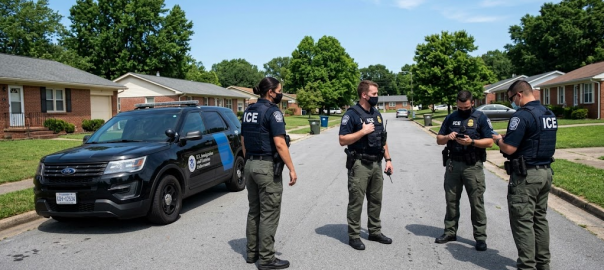
Thu Aug 27 2026 /Mpelembe Media/ — The second Trump administration initially launched its restrictive agenda with highly visible, militarized enforcement campaigns like “Operation Metro Surge” to project an uncompromising stance on domestic security. However, this overt, theatrical strategy hit an immediate crisis following a series of fatal enforcement errors, most notably the killing of Renée Nicole Macklin Good—an unarmed thirty-seven-year-old writer, poet, and U.S. citizen—by an ICE agent in Minneapolis on January 7, 2026. This tragedy, along with other fatal shootings, sparked nationwide protests, public outrage, and state-led lawsuits, inducing a major shift in public opinion. In response to this mounting political liability, the administration underwent a strategic restructuring: it replaced high-profile enforcers, removed Homeland Security Secretary Kristi Noem, and privately instructed congressional allies to drop the politically sensitive phrase “mass deportations” in favor of targeting violent criminals. Continue reading →

27Aug/26

Trump’s Silverback Strategy and the Donroe Doctrine

A Weapon of Mass Disruption: Why the 2026 Iran War Exposed the Limits of American Might

Wed, Aug 26 2026 /Mpelembe Media/ — Donald Trump’s second term has transitioned into a highly volatile era characterized not by a passive “lame duck” status, but by what analysts call the “Silverback Presidency.” This statecraft style mirrors an aging mountain gorilla that, sensing its time is short and its dominance threatened, resorts to aggressive, unpredictable outbursts rather than yielding to institutional gridlock. Operating under a framework of personal grievance, vengeance, and an explicit rejection of the post-war rules-based order, Trump has openly asserted that his executive actions are limited only by his “own mind and morality”. Free from the perceived constraints of international law, the administration has launched high-stakes global maneuvers designed to forcefully project American power and secure a disruptive, nationalist legacy. Continue reading →

26Aug/26

Meta pays 17 billion for teen addiction

A New Era of Online Safety: States Secure Massive Product Reforms and Billions for Youth Mental Health

Wed, Aug 26 2026 /Mpelembe Media/ — On August 26, 2026, Meta Platforms, Inc. agreed to a landmark $17.1 billion settlement with a bipartisan coalition of 47 state attorneys general, the District of Columbia, and several U.S. territories to resolve allegations that the company designed its social media platforms, Facebook and Instagram, to addict young users. This massive agreement, which is subject to approval by U.S. District Judge Yvonne Gonzalez Rogers, abruptly cut short a landmark federal bellwether trial in Oakland, California, that was only in its second week of proceedings. Key testimonies from platform whistleblowers and executives had already begun highlighting how the company prioritized user engagement over minor safety before the sudden settlement took place. Outside of the multi-state coalition, Texas Attorney General Ken Paxton concurrently secured a separate $1 billion independent settlement with Meta containing similar child safety requirements, representing his third billion-dollar tech settlement following a $1.4 billion biometric data settlement with Meta in 2024 and a $1.375 billion privacy settlement with Google. Continue reading →

25Aug/26

The Strategic Armor of Dolly Parton

The Rhinestone Saint: Celebrating the Life, Art, and Enduring Kindness of Dolly Parton

Tue, Aug 25 2026 /Mpelembe Media/ — Dolly Rebecca Parton was born on January 19, 1946, on a farm in Sevier County, Tennessee, where she grew up as the fourth of twelve children in an impoverished East Tennessee hills home. Blessed with a vivid imagination, she was composing her own songs even before she learned to read or write, eventually moving to Nashville the day after her high school graduation in 1964. Her musical career accelerated significantly in 1967 when she joined The Porter Wagoner Show, exposing her talent to over 45 million viewers and launching a highly successful duet partnership that earned her national recognition. Commemorating her emotional professional split from Wagoner in 1974, she wrote the classic “I Will Always Love You,” which topped the country charts that year and launched her into global solo superstardom as she went on to win the Country Music Association’s Entertainer of the Year award in 1978. Throughout her journey, her late husband of nearly sixty years, Carl Dean—whom she met on her first day in Nashville in 1964 and who passed away on March 3, 2025—remained her steadfast, private supporter who inspired her classic hit “Jolene” and other deeply personal tracks. Continue reading →

25Aug/26

Profitable Gemini AI Architecture with Stripe

The Idempotent Webhook: Securing Asynchronous Payment Ingestion with Stripe

Tue, Aug 25 2026 /Mpelembe Media/ — Transitioning to direct-to-consumer (DTC) web-based gaming allows developers to completely bypass Apple and Google’s restrictive 15% to 30% storefront commissions, enabling studios to retain up to 96% of checkout volume. By moving the registration and payment portals to the browser, developers establish a web-first onboarding strategy where credentials and purchased credit balances are consumed across cross-platform application wrappers. In this hybrid layout, a rendering engine such as Phaser manages the canvas, WebGL states, and low-level game inputs, while React manages HTML-native interface overlays, localized text, and transaction dialogs. Keeping the UI in React offers responsive CSS scaling, dynamic localization, and automated testability. Crucially, to prevent transactional manipulation, payment intent generation is decoupled from the client, forcing the React UI to dispatch authenticated requests to secure backend routes rather than declaring transactional costs directly to Stripe. Continue reading →

25Aug/26

Substantive Justice vs. Locked Gates: Chief Justice Malila and the Email That Shook Lusaka

The 2026 Constitutional Standoff: Bypassing Police Barricades with an Electronic Petition

Tue, Aug 25 2026 /Mpelembe Media/ — On August 24, 2026, a major constitutional crisis emerged in Zambia when state authorities physically closed the country’s superior courts—including the Supreme, High, and Constitutional Courts—citing unspecified security concerns. This unilateral administrative shutdown occurred on the final day of the strict seven-day window mandated by Article 105 of the Zambian Constitution to file a presidential petition challenging the August 13, 2026 election results. Incumbent President Hakainde Hichilema had been declared the winner with over 2.9 million votes against challenger Brian Mundubile’s 1.8 million votes. Across Lusaka and multiple provinces, court buildings were cordoned off with police tape and guarded by armed police units, physically blocking the opposition and other litigants from accessing judicial registries to file their challenges before the deadline. Continue reading →

24Aug/26

Zambia’s election petition hits a padlocked court

Separation of Powers Fractured: Armed Forces Lock Down Zambian Courts as Inauguration Looms

Mon, Aug 24 2026 /Mpelembe Media/ — The general election in Zambia on August 13, 2026, concluded with the Electoral Commission of Zambia declaring incumbent President Hakainde Hichilema of the United Party for National Development (UPND) the winner with 60.49% of the vote, securing a second term over his chief opponent, Brian Mundubile of the National Reconciliation Party for Unity and Prosperity (NRPUP), who received 37.87%. Mundubile immediately rejected these results, citing serious irregularities, vote fraud, and significant ballot count discrepancies, which were echoed by independent parallel vote tabulations and international observer reports. Concerns were heightened by a temporary suspension of vote counting on August 14 and subsequent heavy military deployment at tallying centers, which observers noted compromised the transparency of the results process. Continue reading →

24Aug/26

How French conspiracy theories ignited Colombia

Architects of the Esoteric, Victims of the Myth: The Dual History of Jews and Freemasonry

Sun, Aug 23 2026 /Mpelembe Media/ — The historical intersection of Speculative Freemasonry, Jewish mysticism, and modern political conspiracism is defined by a deep tension between the actual integration of Hebrew iconography within early Masonic ritual and the weaponized conspiracy theories that arose to demonize both groups. When Speculative Freemasonry emerged in the early eighteenth century, its founders adopted the building of King Solomon’s Temple in Jerusalem as its central allegorical framework. This architectural focus was represented by designing the physical layout of lodges to mirror the Temple, utilizing the columns of Jachin and Boaz, and developing rituals centered on the legend of the master architect Hiram Abif. This symbolic integration was facilitated not by direct Jewish infiltration, but by the intellectual legacy of Renaissance humanism and Christian Kabbalism. During the fifteenth and sixteenth centuries, Christian scholars sought to integrate Jewish mystical texts, particularly the Zohar, into Christian theology as a divine science that prefigured Christian mysteries. Consequently, early Speculative Masonic innovators drew heavily upon this Christian Kabbalistic corpus, to the extent that figures like William Preston conceived of the lodge as a “Masonic University” of the “Cabala”. Continue reading →