Tag Archives: Africa

13Sep/26

The Struggle is One Zambia, One Nation: Kenneth Kaunda

The Political and Economic Legacy of Kenneth Kaunda: A Comprehensive Analysis

1. Introduction: The Architect of Modern Zambia

In October 1964, Kenneth Kaunda ascended to the presidency of the newly independent Republic of Zambia, executing a transition of immense strategic complexity. Navigating the metamorphosis of the former British protectorate of Northern Rhodesia into a sovereign Republic required not merely administrative acumen, but the navigation of a post-colonial state inheriting a dualistic economy characterized by enclave mineral extraction and structural dependency. Kaunda emerged as a primary architect of the region’s decolonial architecture, a role that earned him the reverential titles of “Pan-Africanist” and the “Baobab of African politics”—symbolizing a towering, resilient figure whose influence provided the essential canopy for regional liberation. His core mission, as distilled from the regional collective memory, was the reclamation of an African destiny where the continent’s inhabitants could chart their own socio-economic trajectory, finally ending the era where natural resources were plundered while the populace remained in structural poverty. This mission was predicated on a governance model that sought to harmonize indigenous values with the requirements of a modern state. Continue reading →

12Sep/26

How the Tumbuka People Survived Erasure


The Ethno-Historical Trajectory of the Tumbuka People”, “Iron, Ivory, and Lineage: Kinship and State Formation in Tumbukaland”

Ancestral Migration and Early Territorial Settlement

The Tumbuka people trace their ethno-historical ethnogenesis to early Bantu expansion waves from the Luba Empire in the modern Democratic Republic of the Congo under ruler Mwaa Yamvo. Resisting forced menial labor and state subjugation, the ancestral group migrated eastward during the early fifteenth century under the overall leadership of a patriarch named Mudala. Following Mudala’s death around 1415, a succession dispute led the Tumbuka branch—guided by Mulonga Mbulalubilo—to cross the Songwe River and establish an initial settlement at Kalonga in present-day Karonga District, Malawi. Subsequent population expansion and the search for fertile agricultural land after 1430 triggered widespread dispersals across a geographic corridor bounded by the Luangwa River, Lake Malawi, the Dwangwa River, and the North Rukuru River. During this early period, Tumbuka society was decentralized, consisting of autonomous, low-density homesteads organized around localized agrarian clans. Continue reading →

12Sep/26

How Military Generals Run Zambian Agribusiness

Thu Sep 10 2026 /Mpelembe Media/ — Brigadier General Laston Chabinga served as a flag officer in the Zambia Army, holding executive command of the 3 Infantry Brigade headquartered in Ndola, the administrative and industrial hub of the Copperbelt Province. As active Brigade Commander around March 2017, he directed the military’s strategic and operational envelope across critical regional defense and economic corridors. Continue reading →

11Sep/26

How Vinchenzo Mbale hacked the music algorithm

Inside Chakolwa Wa Nzeru: How Vinchenzo M’bale Built a Modern Cultural Movement

Thu Sep 10 2026 /Mpelembe Media/ — Vincent Daka, professionally known as Vinchenzo M’bale, is a prominent Zambian recording artist born on October 11, 1996. Raised across the Eastern Province and the industrial hub of Kitwe on the Copperbelt, he built a dual-regional perspective that deeply connects to his Chewa heritage. Despite being the son of a Reverend in the Reformed Church in Zambia, Daka adapted his early ecclesiastical choral arrangement training into secular music, using traditional call-and-response structures to address contemporary social conditions. Continue reading →

03Aug/26

The Memoir of Dr. Kenneth Kaunda

A Wake-Up Call for the Diaspora and Economic Sovereignty Institutionalizing Peace:

Mon, Aug 03 2026 /Mpelembe Media/ — The provided sources collectively chronicle Africa’s historical journey from colonial subjugation toward liberation, heavily emphasizing the enduring spirit of Pan-Africanism. A central figure in this narrative is Dr. Kenneth Kaunda, the first president of Zambia, who led his nation to independence in 1964 and became a patriarch of the continent’s anti-colonial struggles. Through his philosophical framework of Zambian Humanism and the unifying national slogan “One Zambia, One Nation,” Kaunda sought to build a cohesive, multi-ethnic society free from the exploitation of man by man. Internationally, he—alongside contemporaries like Julius Nyerere and Kwame Nkrumah—offered crucial support to regional liberation movements fighting against apartheid and minority rule in Southern Africa. While Kaunda’s legacy involves complex debates regarding his period of one-party rule and post-colonial economic challenges, his published works, such as the seminal 1962 autobiography “Zambia Shall Be Free,” remain foundational texts that articulate the ethical and political defense of African self-determination. Continue reading →

01Mar/26

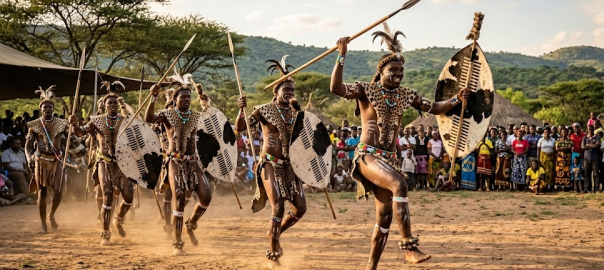
The Return of the Warriors: Inside Zambia’s Historic N’cwala Festival

28 Feb. 2026 /Mpelembe Media/ — The N’cwala (or Nc’wala) ceremony is a major annual cultural festival celebrated by the Ngoni people of Zambia’s Eastern Province. Held every year on the last Saturday of February at Mtenguleni village near Chipata, it primarily serves as a thanksgiving festival for the first fruits of the harvest and an occasion to pay homage to God, ancestral spirits, and the Paramount Chief Mpezeni. Continue reading →

29Jan/26

CAF Imposes Severe Sanctions Following AFCON 2025 Final Disciplinary Violations

Jan. 29, 2026 /Mpelembe Media/ — Disciplinary actions has been taken by the Confédération Africaine de Football following the 2025 Africa Cup of Nations final. Both the Senegalese and Moroccan football federations faced substantial monetary fines and player suspensions due to various ethical violations and crowd disturbances. Specifically, Senegal’s head coach and several key players received bans for unprofessional behavior toward officials, while Morocco was penalized for staff interference with technology and fan misconduct. Additionally, the governing body officially dismissed a formal protest submitted by Morocco regarding alleged regulatory breaches by their opponents. These sources serve as an official record of the penalties intended to uphold sportsmanship and integrity within African football. Continue reading →

21Nov/25

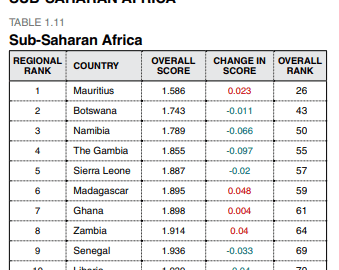
The Global Peace Index: How did African Countries Perform in 2025?

Nov. 21, 2025 /Mpelembe Media/ — Africa, particularly the Sub-Saharan Africa (SSA) and Middle East and North Africa (MENA) regions, features prominently in the report’s analysis of global instability and conflict, often ranking among the world’s least peaceful and most conflict-affected areas.

The overall trend shows a continuous decline in peacefulness for both regions, marked by severe conflicts, rising geopolitical competition, and acute economic stressors. Continue reading →

21Oct/23

Can Muslims and Christians ever unite in the Middle East?

Oct 21 2023 –The Middle East is a region with a diverse history and culture, and it is important to avoid making generalizations about it. It is true that there have been many conflicts in the Middle East that have resulted in the deaths of children, but it is also important to remember that the vast majority of people in the Middle East are peaceful and law-abiding. Continue reading →

06Sep/23

France will collapse without Africa

Wed, Sep 6 2023  – France is a major European power with a long history of involvement in Africa. However, in recent years, France has been criticized for its handling of its relationships with African countries. Some argue that France has “dropped the ball” in Africa, citing a number of factors, including: Continue reading →