Tag Archives: Edgar Lungu

28Aug/26

Zambia’s Padlocked Courts and Treason Charges

A Fragile Stability Shaken: Suspicious Raid, Court Blockade, and Treason Charges Roil Zambia

Fri Aug 27 2026 /Mpelembe Media/ — The 2026 Zambian general election, held on August 13, resulted in the re-election of incumbent President Hakainde Hichilema of the United Party for National Development (UPND) with 60.49% of the vote, defeating his primary challenger Brian Mundubile of the Tonse Alliance’s National Reconciliation Party for Unity and Prosperity (NRPUP), who received 37.87%. While the Electoral Commission of Zambia (ECZ) declared Hichilema the winner, the contest was conducted on a deeply uneven playing field due to late-stage constitutional and legislative overhauls that structurally favored the ruling party. These included the Constitutional Amendment Act No. 13 of 2025 and the subsequent Electoral Processes Act No. 12 of 2026, which were passed in May 2026 during the week parliament dissolved, just three months prior to the election. This late enactment, combined with an opaque boundary delimitation exercise completed on April 16, 2026, which added 70 new constituencies largely favoring rural areas traditionally leaning toward the UPND, left minimal time for public education and structurally altered the legislative balance. Furthermore, international and domestic observer missions, including the European Union and the Christian Churches Monitoring Group (CCMG), raised serious concerns over the misuse of state resources, selective enforcement of campaign schedules, and parallel vote count discrepancies suggesting vote inflation in several constituencies. Continue reading

24Aug/26

Zambia’s election petition hits a padlocked court

Separation of Powers Fractured: Armed Forces Lock Down Zambian Courts as Inauguration Looms

Mon, Aug 24 2026 /Mpelembe Media/ — The general election in Zambia on August 13, 2026, concluded with the Electoral Commission of Zambia declaring incumbent President Hakainde Hichilema of the United Party for National Development (UPND) the winner with 60.49% of the vote, securing a second term over his chief opponent, Brian Mundubile of the National Reconciliation Party for Unity and Prosperity (NRPUP), who received 37.87%. Mundubile immediately rejected these results, citing serious irregularities, vote fraud, and significant ballot count discrepancies, which were echoed by independent parallel vote tabulations and international observer reports. Concerns were heightened by a temporary suspension of vote counting on August 14 and subsequent heavy military deployment at tallying centers, which observers noted compromised the transparency of the results process. Continue reading

20Aug/26

Zambia’s Landslide Victory and Opposition Crackdown

From Democratic Beacon to Shadow State — President Hichilema’s Co-option of the Judiciary and Post-Election Security Crackdowns

Thu, Aug 20 2026 /Mpelembe Media/ — Zambia’s standing as a historically resilient multiparty democracy in Southern Africa has been severely tested by the events surrounding the August 13, 2026, general election, which critics argue represent a systematic campaign by President Hakainde Hichilema’s administration to dismantle the country’s democratic framework. Although Hichilema came to power in 2021 on a reformist “New Dawn” platform pledging to restore the rule of law and depoliticize the civil service, his administration has increasingly co-opted state institutions to eliminate political opposition and consolidate executive hegemony, fueling fears of an engineered “life presidency”. The run-up to the election was marked by rising authoritarianism, including the weaponization of the Cyber Crimes Act of 2025 to arrest independent journalists like MacPherson Mukuka and Thomas Allan Zgambo, as well as a proposed Non-Governmental Organizations Bill designed to grant the government excessive control over civil society groups. Tensions escalated further following the death of former President Edgar Lungu in June 2025, which fragmented the opposition, and the Constitutional Court’s retroactive disqualification of Lungu from contesting the 2026 elections. Continue reading

07Aug/26

From Zamrock to Internet Kill-Switches

The Rise of Zed Beats and the Digital Music Revolution

Fri , Aug 0& 2026 /Mpelembe Media/ — Zed Beats, which takes its name from the letter “Z” in Zambia, represents a dynamic hybrid music genre that emerged in the late 1980s. Young, self-taught producers began using affordable computer software to blend indigenous Zambian elements with popular global sounds like R&B, reggae, rap, hip-hop, Jamaican dancehall, Afrobeats, and amapiano. The rise of this digital movement was catalyzed by a major cultural void in the late 1980s and 1990s, when the devastating HIV/AIDS epidemic claimed the lives of a generation of veteran musicians who had anchored traditional live genres like Kalindula and Zamrock. To fill this void, which had left radio and television heavily dominated by foreign music, young enthusiasts utilized newly accessible computer technology to resurrect local music and forge a modern urban identity. Continue reading

04Aug/26

Bond Rallies and Blackouts in Zambia

Zambia’s 2026 Election: A High-Stakes Two-Horse Race Decided by Economic Squeeze and Drought

Tue , Aug 04 2026 /Mpelembe Media/ — Zambia’s general election on August 13, 2026, represents a pivotal, alliance-driven contest that will test the country’s democratic resilience and economic direction. Although fourteen presidential candidates are officially cleared to run, the election is fundamentally a two-horse race between incumbent President Hakainde Hichilema of the United Party for National Development (UPND) and opposition challenger Brian Mundubile. Hichilema enters the race backed by an expanded 15-party UPND Alliance, leveraging the power of incumbency. His challenger, Mundubile—a 55-year-old lawyer, accountant, and former government chief whip—is running under the National Reconciliation Party for Unity and Prosperity (NRPUP) banner after unifying a highly fractured opposition under the Tonse–Pamodzi Alliance. Continue reading

30Jul/26

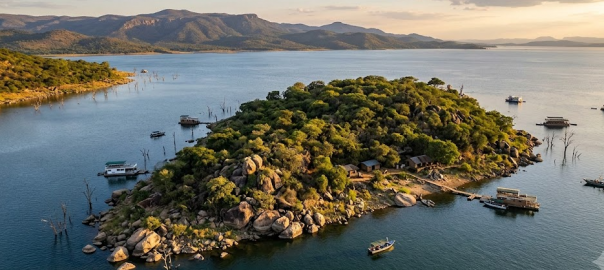
Lake Kariba and Zambia’s land rush

The Jeremiah Island Evictions

Thu, July 30 2026 /Mpelembe Media/ — This report documents and examines the ecological, social, and industrial landscape of Lake Kariba and the broader Zambian region, focusing on the tension between economic development and community welfare. One source highlights the area’s tourism and biodiversity, detailing the lake’s role as a massive man-made reservoir that supports both wildlife and hydroelectric power. In contrast, legal and technical reports address the displacement of rural populations and the necessity of protecting customary land rights through fair compensation and informed consent. Efforts to improve public health are also discussed, specifically through the creation of nutrient-dense fish-based food products to combat infant malnutrition. Finally, the sources document the importance of regulatory oversight, as evidenced by the closure of a major fish farm for violating environmental and sanitary standards. Together, these texts illustrate a complex regional effort to balance industrial growth with environmental protection and human rights. Continue reading

22Jul/26

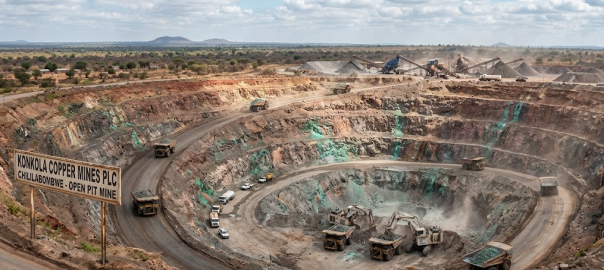
How Green Copper Overthrew Zambia’s Democracy

The Restroom Negotiations: How a Canadian Mining Giant Bought a Presidency and Rewrote Zambia’s Laws

Wed, July 22 2026 /Mpelembe Media/ — The provided documents explore the essential role of the mining industry in the global transition toward a low-carbon economy, particularly the rising demand for transition minerals. These sources emphasize that while mineral extraction underpins a vast portion of global wealth, it simultaneously presents significant environmental and social risks, such as habitat loss, water stress, and human rights concerns. To address these challenges, the Global Investor Commission on Mining 2030 outlines a framework for institutional investors to use their financial influence to promote responsible operations. By prioritizing capital allocation and active stewardship, investors can encourage better safety standards, equitable benefit distribution, and the adoption of circular economy principles. Ultimately, the reports argue that a strategic “reset” of the relationship between finance and mining is necessary to ensure the industry leaves a positive legacy for host communities. These materials serve as a roadmap for achieving a sustainable mining sector that balances industrial growth with ecological and ethical boundaries. Continue reading

21Jun/26

Chinese debt and mining labor in Zambia

The Dragon and the Copper Belt: The Complex Realities of China-Zambia Relations

Fri, Jun 18 2026 /Mpelembe Media/ — The relationship between China and Zambia is deeply complex, evolving from historical solidarity into a modern partnership defined by massive economic investment, sovereign debt crises, and significant labor controversies. Continue reading

25Feb/26

Analyzing Zambia’s Progress: An Interview with Hakainde Hichilema

Zambia’s Strategic Evolution: From Landlocked to Land-Linked Economic Powerhouse

25 Feb. 2026 /Mpelembe Media/ —  This is an analysis of John McDermott, The Economist chief Africa correspondent
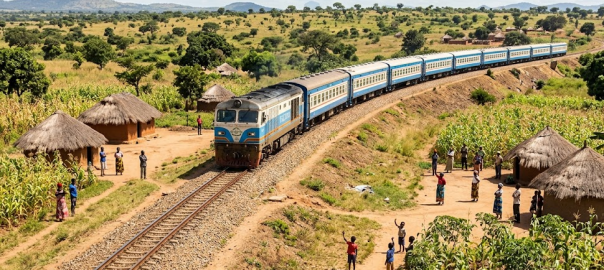
interview with Zambian President Hakainde Hichilema (often referred to as “HH”) ahead of the country’s upcoming August elections,. Hichilema is urging voters to “stay the course,” arguing that his administration has made significant strides in repairing the damage left by his predecessor, Edgar Lungu. He highlights several achievements, including securing a debt restructuring deal, delivering free education, enacting liberal reforms in power and agriculture, and initiating major infrastructure projects like the Lobito Corridor and Tazara railway renovations to transform Zambia into a “land-linked” nation. He also aims for the country to reach 1 million tonnes of copper production this year. Continue reading

08Jan/26

2026 Risk Report: Zambia’s Economic & Political Outlook

Jan. 8, 2026 /Mpelembe Media/ — In 2026, Zambia is positioned at a critical crossroads, transitioning from a period of climate-induced shocks (2024–2025) into a high-growth phase. The economy is projected to expand by 6.4%, a “rebound” driven primarily by a resurgence in the mining sector as copper production targets 1 million metric tons. This growth is supported by a more stable agricultural season and a strategic pivot toward renewable energy to mitigate future power deficits. Continue reading