April 19, 2026 /Mpelembe Media/ — The statement “I cannot think of any need in childhood as strong as the need for a father’s protection” originates from Sigmund Freud’s 1930 foundational text, Civilization and Its Discontents. This assertion serves as the bedrock for Freud’s psychological explanation of both human religious belief and the structural development of the ego. Elaborating on this concept reveals several key psychological and cultural dimensions: Continue reading
Tag Archives: United States
The Humans Behind the AI Illusion
April 18, 2026 /Mpelembe Media/ — These sources analyze the shift toward precarious labor and contracting within the modern economy, with a particular focus on the technology sector. One report highlights the exploitation of data workers in the United States, revealing that those who train artificial intelligence often face low wages, unstable hours, and a lack of essential mental health benefits. Parallel research examines the broader gig economy, noting that while some high-skilled professionals choose independent contracting for its autonomy, many others are forced into these roles by restructuring or a lack of traditional opportunities. This transition often results in limited employer-provided training and the erosion of job security, creating a “race to the bottom” for workers across various demographics. Ultimately, the collection illustrates how algorithmic management and subcontracting are redefining the relationship between firms and employees, often prioritizing corporate flexibility and profits over worker stability. Continue reading
Why Distance Makes Some Couples Closer
April 14, 2026 /Mpelembe Media/ — This research explores how long-distance couples utilize multiplayer video games to maintain emotional connections and foster intimacy despite physical separation. By analyzing the experiences of thirteen couples, the authors identify specific ways partners adapt game mechanics to express virtual affection and navigate different play styles. The study highlights significant gaps in current gaming technology, particularly regarding the lack of physical sensation and the inability to store digital mementos. To address these shortcomings, the researchers developed prototypes and design recommendations aimed at enhancing the relational maintenance capabilities of interactive software. Ultimately, the source advocates for new design standards that better support the unique emotional needs of partners living apart. Continue reading
How Radio DJs Built Community Before Algorithms
The Soul Frontier: Robbie Vincent, the ‘Soul Mafia,’ and the Integration of British Broadcasting (1970–1985)
Welcome Home, Artemis II: Inside the High-Stakes Pacific Splashdown
The Artemis II mission will conclude with a highly coordinated splashdown in the Pacific Ocean off the coast of San Diego, California, scheduled for Friday, April 10, 2026, at approximately 8:07 p.m. EDT.
April 9, 2026 /Mpelembe Media/ — The Descent and Parachute Sequence Returning from the Moon, the Orion spacecraft will slam into Earth’s atmosphere at a blistering 25,000 mph. After surviving intense reentry heat using its ablative heat shield, the capsule relies on a carefully choreographed sequence of 11 parachutes to reach a safe landing speed. After the forward bay cover is jettisoned, two 23-foot drogue parachutes deploy at 25,000 feet to slow and stabilize the spinning capsule. At 9,500 feet, three pilot parachutes are released, which pull out the three massive 116-foot main parachutes. These main chutes gracefully decelerate Orion from around 130 mph to a splashdown speed of just 17 mph. Continue reading
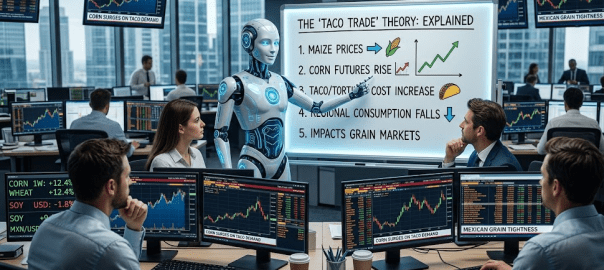
TACO” (Trump Always Chickens Out) trade theory
Greedflation and the Global Market: How Empty Ultimatums are Costing the Consumer
April 9, 2026 /Mpelembe Media/ — The analysis explores the geopolitical and economic volatility surrounding the 2025–2026 trade policies of the Trump administration, specifically focusing on the “Taco trade” theory. This investment strategy, standing for “Trump Always Chickens Out,” suggests that markets often rally following aggressive tariff threats because traders anticipate a subsequent retreat or moderation. While some financial analysts view these maneuvers as negotiating tactics, macroeconomic reports warn of a “tax on certainty” that drives inflation and disrupts global supply chains. The texts also detail specific international frictions, such as 100% tariffs on Chinese goods and military tensions with Iran, which impact energy prices and strategic mineral control. Additionally, regional reactions are captured through public discourse in Louisiana regarding political monuments and legislative priorities. Collectively, the sources examine how authoritarian populism and executive discretion have transformed the global trade landscape into a transactional, high-stakes environment.
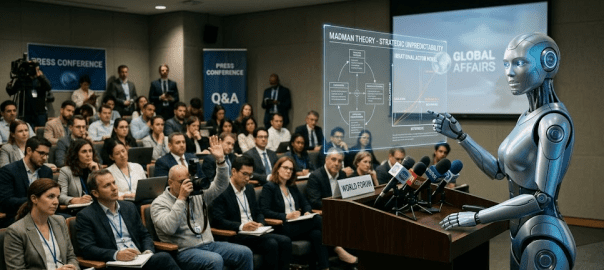
The Economic and Strategic Costs of Cosplaying Madness
Wrecking Ball Diplomacy: How ‘America First’ Tariffs and Transactionalism Alienated the World
April 8, 2026 /Mpelembe Media/ — The “Madman Theory” is a concept in international relations suggesting that a leader can gain coercive bargaining leverage by appearing irrational, highly volatile, or indifferent to the costs of conflict. By cultivating a reputation for madness, a leader attempts to make otherwise incredible threats—such as initiating a nuclear war or destroying the global economy—appear credible, thereby forcing adversaries to concede to avoid a catastrophe.
The Fragile 2026 Iran War Ceasefire
Global Markets Rally as U.S. Halts Operation Epic Fury for Islamabad Negotiations
April 8, 2026 /Mpelembe Media/ — The 2026 war in the Middle East has reached a critical diplomatic turning point following a provisional two-week ceasefire between the United States and Iran, agreed upon on April 7, 2026. The truce, brokered through the mediation of Pakistani officials, was reached less than two hours before President Donald Trump’s deadline to launch devastating strikes against Iranian power plants and bridges. Prior to the agreement, Trump had escalated his rhetoric to unprecedented levels, warning that “a whole civilization will die” if Iran did not reopen the vital Strait of Hormuz to global shipping.
Five cent AI and the compliance trap
April 8, 2026 /Mpelembe Media/ — This is a comprehensive overview of the 2026 generative AI landscape, heavily focusing on Google’s latest media models, enterprise orchestration, and the broader impacts of AI on industry and regulation. This article analyses a report from Google Cloud titled “Transformation Today,” which highlights new generative media tools available on Vertex AI. The primary focus is the launch of the Lyria 3 Pro and Veo 3.1 Lite models, designed for advanced music and video creation. It categorizes the Veo 3.1 family into three tiers—standard, fast, and lite—to help developers balance visual quality, processing speed, and cost. Additionally, the text offers a specific prompting formula to help users achieve better control over cinematic elements and subject actions. Technical experts contribute to the guide, providing frameworks for applying these AI innovations to professional workflows. Overall, the document serves as an educational resource for engineers looking to integrate high-volume video generation into their applications.
Continue reading
Why Friction Prevents Escalation
U.S. politicians across the political spectrum have reacted with intense alarm to the President’s recent expletive-laden threats toward Iran, with several questioning his mental fitness for office.
April 6, 2026 /Mpelembe Media/ — The current conflict between the United States, Israel, and Iran began in late February 2026 with joint U.S.-Israeli “preemptive” military strikes on Iran, aiming to either eliminate the country’s nuclear capabilities or force regime change. In retaliation, Iran launched drones and ballistic missiles against Israel, as well as U.S. military targets located in the Gulf States and Jordan. Now in its sixth week, the war has severely destabilized the Middle East, killing over 3,500 people across the region—including more than 1,900 in Iran and 1,400 in Lebanon—while displacing millions. Continue reading