Tag Archives: Iran

28Feb/26

The Decapitation Strike on Supreme Leader Khamenei

Middle East in Flames: US-Israeli Strikes on Tehran Prompt Massive Iranian Counterattack

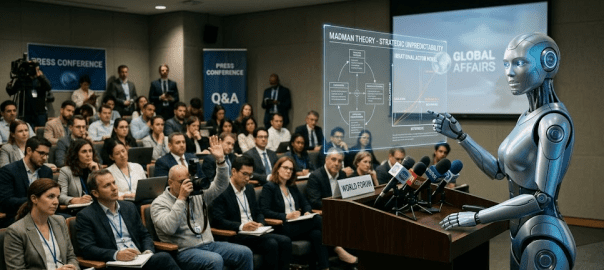
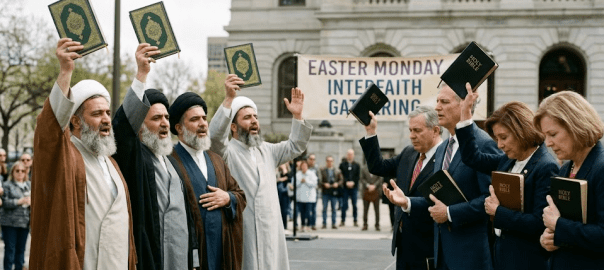
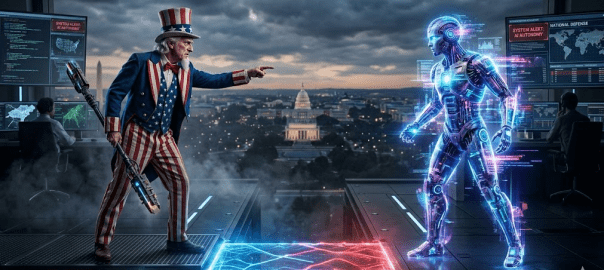
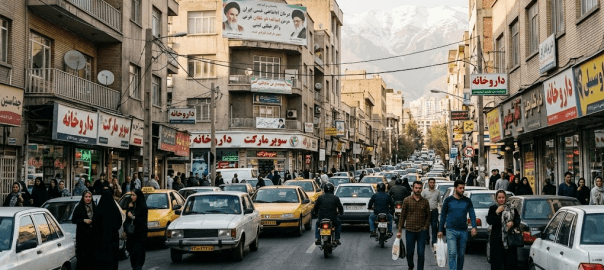
28 Feb. 2026 /Mpelembe Media/ —  These reports detail a massive joint military operation by the United States and Israel against Iran on February 28, 2026, aimed at dismantling its nuclear program and security apparatus. President Donald Trump and Prime Minister Benjamin Netanyahu confirmed the strikes, with the later claiming that Supreme Leader Ayatollah Ali Khamenei was likely killed in an attack on his compound. In response, Iran and its regional allies launched retaliatory missile and drone barrages at Israel and several U.S. military bases in the Persian Gulf. International reactions vary, as Western leaders support the effort to prevent a nuclear-armed Iran while Oman, Russia, and China warn of a catastrophic regional war. Domestic chaos has gripped Iran, characterized by infrastructure damage, internet blackouts, and civilians attempting to flee the capital amidst calls for regime change. Continue reading

28Feb/26

The Board of Peace is Bombing Iran for the Gaza Riviera

5 Radical Realities Reshaping the Middle East

28 Feb. 2026 /Mpelembe Media/ —  The 2026 US-Iran War (“Operation Epic Fury”) Tensions between the United States and Iran escalated sharply in late 2025 and early 2026 following massive anti-regime protests in Iran, which the Iranian government suppressed with unprecedented lethal force and internet blackouts. In response, US President Donald Trump initiated a massive military buildup in the Middle East, deploying two aircraft carrier strike groups and issuing ultimatums demanding Iran halt its nuclear program and proxy support.
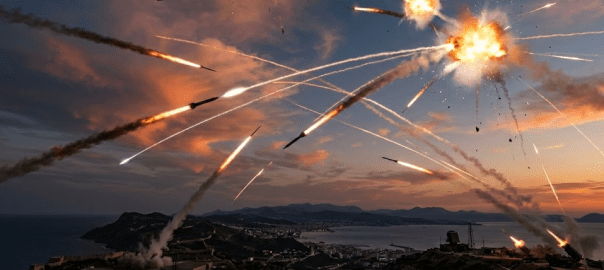
After US-brokered nuclear negotiations in Geneva broke down, the US and Israel launched joint military strikes on Iran on February 28, 2026, dubbed “Operation Epic Fury” and “Operation Roaring Lion”. The massive bombardment targeted Iranian nuclear facilities, military infrastructure, and leadership compounds in Tehran. In retaliation, Iran launched significant ballistic missile barrages at Israel and US military bases across the Persian Gulf, including in Bahrain, Qatar, Kuwait, and the UAE, while its regional proxies mobilized, triggering a multi-theater conflict.

Continue reading

28Feb/26

The 2026 Geo-Economic Fault Line: Energy, Logistics, and the Great Divergence

Contextualizing the 2026 Escalation: From Trade Tensions to Kinetic Warfare

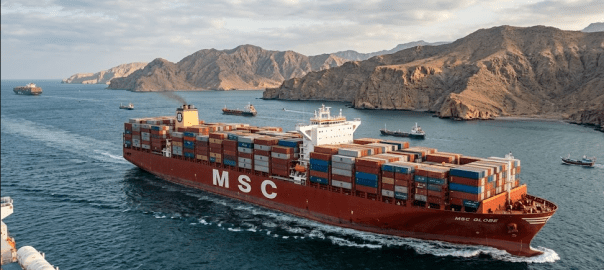
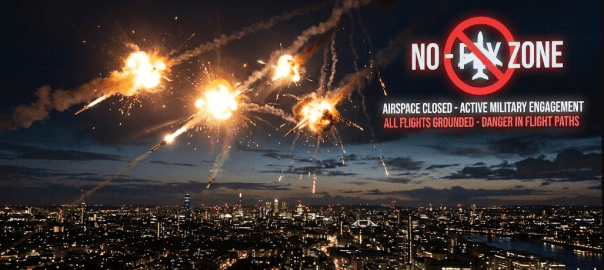
28 Feb. 2026 /Mpelembe Media/ —  The global strategic landscape has transitioned from the “unpredictable” trade volatility of 2024–2025—characterized by a century-high effective tariff rate and fiscal “haze”—into a state of “major combat operations” initiated in February 2026. This shift represents an existential threshold for regional stability; geopolitical risk is no longer an occasional variable but a foundational structural baseline. The previous era’s focus on trade countermeasures has been superseded by a period of kinetic escalation that fundamentally alters the movement of global capital and commodities.The tactical environment of the 2026 conflict was defined by the U.S. and Israeli “preventative strikes” launched on February 28, targeting Iranian nuclear and missile infrastructure. These operations necessitated the immediate closure of Iranian, Israeli, and Iraqi airspace to civilian traffic. The U.S. administration has adopted a posture of total naval dominance, explicitly declaring an intent to “annihilate” the Iranian navy and “raze” its missile industry to the ground. This transition to high-intensity warfare aims to neutralize regional proxies and prevent nuclear breakout, yet its execution has invalidated previous economic projections. The April 2025 “haze” projections—which anticipated a gradual decline in oil prices toward $65 per barrel—have been rendered obsolete by supply-side shocks that prioritize hard security over soft demand fundamentals. Continue reading

28Feb/26

Global Markets Brace as US-Israeli Strikes on Iran Compound Tariff and Inflationary Pressures


The 2026 Global Pivot: 5 Surprising Realities Reshaping the Middle East and Beyond

28 Feb. 2026 /Mpelembe Media/ —  The geopolitical landscape has drastically deteriorated, culminating in joint “pre-emptive” military strikes launched by the United States and Israel against Iran in late February 2026. The US military announced “major combat operations” aimed at razing Iran’s missile industry and naval capabilities. This severe escalation follows a previous 12-day war in June 2025, during which Israel and the US targeted Iranian nuclear facilities, including Fordow and Natanz, fundamentally altering the region’s risk profile. Continue reading

06Feb/26

The Paranoid Style Ascendant: From the Business Plot to the Deep State and the Erosion of Public Trust

06, Feb. 2026 /Mpelembe Media  —  Conspiracy theories have been a persistent feature of American political life, though their status has shifted over time. In the 17th and 18th centuries, conspiracy theories were considered “orthodox knowledge” voiced by elites, such as the Founding Fathers’ fears of British plots or the Puritan belief in the devil’s influence,. In the early republic, fears centered on the Illuminati, Freemasons, and Catholics, who were accused of subverting American liberty,,. Following the assassination of Abraham Lincoln, persistent myths arose claiming that John Wilkes Booth escaped and a government cover-up hid the truth. Continue reading

09Jan/26

The Persian Threshold: Tehran Teeters Between Total Collapse and a “Year of Blood”

Jan. 9, 2026 /Mpelembe Media/ — The Iranian regime is currently facing its most existential challenge since the 1979 Revolution. As of January 9, 2026, the situation has shifted from sporadic economic protests into a coordinated nationwide uprising. Continue reading

09Jan/26

The Gated Games: Why the 2026 World Cup is Losing its Soul

Jan. 9, 2026 /Mpelembe Media/ — The World Cup has always been more than a tournament; it is a quadrennial “Global Village” where the world puts aside its borders for ninety minutes at a time. But as we approach the 2026 kickoff, that village is being replaced by a fortress. The United States’ current immigration stance—marked by travel bans for 39 nations and “extreme vetting” for others—is fundamentally altering the spirit of the game. We are moving toward a “Two-Tier World Cup” where your ability to cheer for your national team is determined by the strength of your passport, not the depth of your passion. Continue reading

09Jan/26

A Divided Pitch: The Rise of “Fortress America” and the Death of the Global Fan

Jan. 9, 2026 /Mpelembe Media/ — The intersection of U.S. immigration policy and the 2026 FIFA World Cup has become a major flashpoint. The feasibility of a boycott and the “ruining” of the game are subjects of intense debate among human rights groups, fans, and governing bodies. Football without fans is like a movie without a soundtrack. You can still follow the plot, and the acting (the skill) is still world-class, but you lose the emotional crescendos that make you jump out of your seat. For a World Cup—an event built on the “unity” of humanity—a lack of fans doesn’t just change the score; it changes the soul of the event. Continue reading

06Jan/26

2026 Venezuelan oil is being used to counter BRICS momentum

Jan. 6, 2026 /Mpelembe Media/ —The term petrodollar refers to the global system where crude oil is priced and traded exclusively in U.S. dollars. This system has been a cornerstone of American economic and geopolitical power for over 50 years. As of early 2026, the petrodollar system is facing its most significant challenges since its inception, with major shifts in Venezuela and the Middle East reshaping the global energy landscape. Continue reading

01Jan/26

The AI Economy and Emerging African Business Trends

Jan. 1, 2026 /Mpelembe Media/ — China’s strategic framework for international cooperation is based on the four pillars of the Global Development, Security, Civilization, and Governance initiatives. These programs are presented as a comprehensive Chinese solution to modern crises, aiming to reform the global governance system while promoting a shared future for humanity. By focusing on a people-centered approach, the initiatives prioritize addressing poverty, resolving conflicts through dialogue, and respecting the diversity of cultures. The sources emphasize that these efforts particularly support the Global South by advocating for sovereign equality and a move away from unilateral hegemony. Ultimately, the text argues that these public goods provide a pragmatic roadmap for achieving lasting peace and universal prosperity through multilateral action. Continue reading