Tag Archives: United States

24Jul/26

Why the DOJ is Subpoenaing Reporters

Armed Agents, Family Surveillance, and Redracted Demands: Inside the DOJ’s Failed Campaign to Unmask Journalists’ Sources

Fri, July 24 2026 /Mpelembe Media/ — Recent legal developments and proposed legislation highlight a growing conflict between national security interests and press freedom in the United States. Following the rescission of Biden-era protections, the Department of Justice has adopted a more aggressive stance, exemplified by the subpoenaing of New York Times reporters to uncover anonymous sources. While the PRESS Act was introduced to establish a federal shield law and protect journalist-source confidentiality, it faced significant political opposition and failed to pass the Senate. Critics of these government actions argue that investigative authorities are being used to intimidate the media, creating a chilling effect on public interest reporting. Conversely, government officials defend these maneuvers as essential for identifying illegal leaks of classified information that could undermine national safety. Ultimately, these sources illustrate an environment where the lack of a federal shield law leaves journalists vulnerable to surveillance and prosecution during the news-gathering process. Continue reading →
23Jul/26

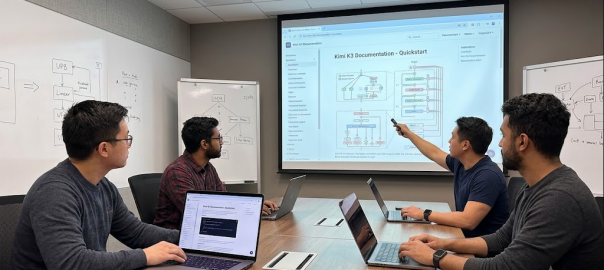
Why Kimi and DeepSeek Terrify Superpowers

The Geopolitics of Chinese Open-Weight AI

Thu, July 23 2026 /Mpelembe Media/ —The global artificial intelligence landscape is undergoing a major structural shift driven by the rapid technical maturation and aggressive pricing of open-weight models originating from China, specifically Moonshot AI’s Kimi K3 and DeepSeek’s V4 Pro. While these models offer massive cost efficiencies for Western enterprises, they introduce severe national security, cybersecurity, and intellectual property concerns, prompting a pivot in Washington toward weaponized regulatory uncertainty, federal procurement restrictions, and supply chain mapping.
Continue reading →

23Jul/26

Your Passport Is a Geopolitical Weapon

The 20-Year Global Mobility Shift

Thu, July 23 2026 /Mpelembe Media/ — The 20-year retrospective analysis of global mobility reveals a profound geopolitical realignment, characterized by the expansion of average travel freedom alongside a starkly polarizing divide between the world’s most and least mobile populations.

Continue reading →

22Jul/26

How Green Copper Overthrew Zambia’s Democracy

The Restroom Negotiations: How a Canadian Mining Giant Bought a Presidency and Rewrote Zambia’s Laws

Wed, July 22 2026 /Mpelembe Media/ — The provided documents explore the essential role of the mining industry in the global transition toward a low-carbon economy, particularly the rising demand for transition minerals. These sources emphasize that while mineral extraction underpins a vast portion of global wealth, it simultaneously presents significant environmental and social risks, such as habitat loss, water stress, and human rights concerns. To address these challenges, the Global Investor Commission on Mining 2030 outlines a framework for institutional investors to use their financial influence to promote responsible operations. By prioritizing capital allocation and active stewardship, investors can encourage better safety standards, equitable benefit distribution, and the adoption of circular economy principles. Ultimately, the reports argue that a strategic “reset” of the relationship between finance and mining is necessary to ensure the industry leaves a positive legacy for host communities. These materials serve as a roadmap for achieving a sustainable mining sector that balances industrial growth with ecological and ethical boundaries. Continue reading →

03Jul/26

How AI turns research into cinematic documentaries

Doomscrolling Gone Educational: Google NotebookLM Launches 60-Second Vertical AI Videos

Thur, July 03 2026 /Mpelembe Media/ — Google’s NotebookLM has evolved into a fully multimodal platform with the launch of “Short Video Overviews,” a feature powered by a cutting-edge dual-model AI stack that auto-converts research notes and documents into 60-second vertical videos. This strategic expansion from text summaries and audio podcasts to portrait-oriented micro-content is designed to meet the consumption habits of a mobile-first generation accustomed to rapid, highly visual information delivery on social feeds. Continue reading →

21Jun/26

The King of the North Arrives in Westminster: Can Starmer Survive Labour’s Internal Civil War?

The Brewing Labour Leadership Showdown

Sun, Jun 21 2026 /Mpelembe Media/ — Following Andy Burnham’s decisive Makerfield by-election victory, the Labour Party is on the precipice of a historic and potentially brutal leadership showdown. With Burnham now possessing the required parliamentary seat to launch a challenge, his allies are pushing for an expedited handover of power, arguing that his landslide win proves he is the only politician capable of defeating the populist threat from Reform UK. Continue reading →

17Jun/26

The Tactics and Mythos of England’s 1966 World Cup Victory

The Mythos of 1966: Sir Alf Ramsey, the Fire Horse, and the 60-Year Wait for World Cup Glory

Wed, Jun 17 2026 /Mpelembe Media/ — The psychological landscape of competitive sports is a high-stakes environment where the difference between victory and defeat often rests on an athlete’s ability to manage intense pressure and fluctuating emotions. In the quest for an edge, athletes frequently adopt specific behaviors to navigate this stress. These behaviors generally fall into two categories: those grounded in technical preparation and those rooted in “magical thinking.””Superstition is a behavior which does not have a clear technical function in the execution of skill, yet which is believed to control luck and/or other external factors. Rituals comprise magical thinking, belief in specific sayings, and ritualized behavior.”While the desire for victory is universal, the specific paths athletes take to achieve readiness vary wildly. Have you ever wondered why an elite striker insists on a specific pair of socks, or why a goalkeeper talks to the goalposts? Understanding the distinction between irrational rituals and professional routines is the first step in moving from a mindset of luck to a mindset of logic. Continue reading →

17Jun/26

How bulldozers beat Operation Epic Fury

The 2026 US-Iran Interim Peace Agreement and Its Fallout

Wed, Jun 17 2026 /Mpelembe Media/ — In June 2026, the United States, under the Trump administration, and Iran agreed to an interim peace deal to halt a devastating four-month conflict that began in February. While the White House has attempted to frame the ceasefire as a victory that will reopen the Strait of Hormuz, geopolitical analysts and international media overwhelmingly characterize the war as one of the greatest strategic blunders in modern US history. The conflict cost the US an estimated $30 billion, resulted in the loss of advanced military hardware, and caused over 7,000 deaths, primarily in Iran and Lebanon. Continue reading →

15Jun/26

Mandatory ID checks for social media

End of the Scroll: UK to Ban Instagram, TikTok, and YouTube for Under-16s

Mon, Jun 15 2026 /Mpelembe Media/ —  In June 2026, UK Prime Minister Keir Starmer announced sweeping legislation to ban children under the age of 16 from accessing social media platforms, with the restrictions set to take effect in Spring 2027. Grounded in Part 3 of the Children’s Wellbeing and Schools Act 2026, the policy aims to combat a youth mental health crisis and protect children from addictive algorithms and harmful online content. Continue reading →

09Jun/26

The Political War Over Equality Laws

Tue, Jun 09 2026 /Mpelembe Media/ — Kemi Badenoch argues that equality legislation like the Public Sector Equality Duty (PSED) has inadvertently created a culture where public authorities are so terrified of career-ending accusations of racism that they replace common sense and critical thinking with bureaucratic box-ticking. She claims this deep-seated fear has caused institutions to withhold information, avoid difficult conversations, and become “institutionally incompetent” when dealing with issues of race and identity. Continue reading →