For Zambian voters, the 2026 election represents a critical choice balancing long-term macroeconomic recovery against immediate, severe household pressures. While President Hakainde Hichilema’s administration successfully restructured the nation’s default-era debt and introduced popular programs like universal free education, ordinary citizens are heavily squeezed by a high cost of living, rising food costs, and inflation exacerbated by a historic drought. A primary concern voters should watch out for is the post-election handling of the country’s structural electricity crisis. To avoid grueling 20-hour blackouts during the campaign cycle, the state utility ZESCO has relied on costly emergency regional power imports. Because this spending is fiscally unsustainable, voters face the high risk of a post-election fiscal correction, which will likely involve steep, inflation-inducing retail tariff hikes or a return to severe load-shedding. Furthermore, due to widespread grassroots dissatisfaction with local representation, there is a strong potential for split-ticket voting, meaning voters may back the incumbent president while actively rejecting sitting members of parliament and local councilors. Continue reading
Tag Archives: Washington
ASML panic and AI circular funding
Historic Tech Plunge: Asian Markets Tumble Amid Fears of Unsustainable AI Spending and New Chinese Rivals
Wed, July 29 2026 /Mpelembe Media/ — The summer of 2026 witnessed a profound global market recalibration as major technology and semiconductor stocks faced a severe sell-off, pushing the tech-heavy Nasdaq-100 index into correction territory. This downturn reflected a fundamental shift in investor sentiment, moving from speculative optimism surrounding artificial intelligence to a rigorous demand for tangible monetization and balance sheet stability. The correction was not triggered by a singular event, but rather by a confluence of escalating capital expenditures, systemic credit risks tied to circular financing, and significant geopolitical shifts in the Asian semiconductor supply chain. Continue reading
Why Zuckerberg is Building an AI CEO
Friction in the Labs: Delays, Layoffs, and Culture Clashes Inside Meta’s Superintelligence Push
Wed, July 29 2026 /Mpelembe Media/ — The Open-Source Vision and Industry Dominance Meta CEO Mark Zuckerberg is aggressively positioning the company as the primary institutional sponsor of open-source (open-weight) artificial intelligence. With the release of Llama 3.1, Zuckerberg argues that open-source AI is the path forward because it empowers developers, prevents centralization of power, and allows organizations to protect their data without being locked into closed vendor ecosystems like those of Apple, OpenAI, or Google. By freely distributing its models, Meta hopes to commoditize the AI layer and establish Llama as the ubiquitous global industry standard. Continue reading
Why Kimi and DeepSeek Terrify Superpowers
The Geopolitics of Chinese Open-Weight AI
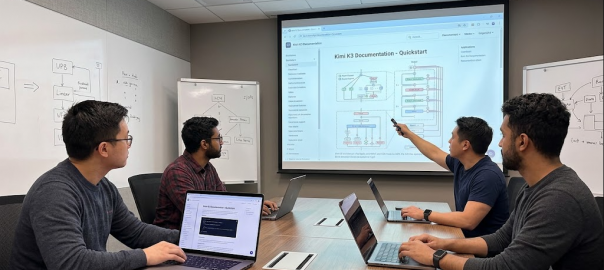
Thu, July 23 2026 /Mpelembe Media/ —The global artificial intelligence landscape is undergoing a major structural shift driven by the rapid technical maturation and aggressive pricing of open-weight models originating from China, specifically Moonshot AI’s Kimi K3 and DeepSeek’s V4 Pro. While these models offer massive cost efficiencies for Western enterprises, they introduce severe national security, cybersecurity, and intellectual property concerns, prompting a pivot in Washington toward weaponized regulatory uncertainty, federal procurement restrictions, and supply chain mapping.
Continue reading
How bulldozers beat Operation Epic Fury
The 2026 US-Iran Interim Peace Agreement and Its Fallout
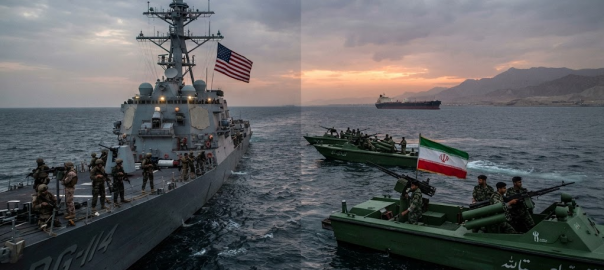
Wed, Jun 17 2026 /Mpelembe Media/ — In June 2026, the United States, under the Trump administration, and Iran agreed to an interim peace deal to halt a devastating four-month conflict that began in February. While the White House has attempted to frame the ceasefire as a victory that will reopen the Strait of Hormuz, geopolitical analysts and international media overwhelmingly characterize the war as one of the greatest strategic blunders in modern US history. The conflict cost the US an estimated $30 billion, resulted in the loss of advanced military hardware, and caused over 7,000 deaths, primarily in Iran and Lebanon. Continue reading
Why Quantum Computing Starts in the Dirt
Vying for Quantum Supremacy: National Strategies of the US, UK, and China
Fri, May 22 2026 /Mpelembe Media/ — The global race for quantum technology is a high-stakes competition poised to revolutionize major industries, including healthcare, finance, clean energy, and national defense. This “second quantum revolution” relies on principles like superposition and entanglement to solve highly complex optimization problems exponentially faster than classical supercomputers. However, the technology also presents profound national security risks, particularly the potential to eventually break the cryptographic infrastructure that currently secures global communications and financial data. Continue reading
Kerry Washington
Beyond the Scandal: 5 Impactful Lessons from Kerry Washington’s Mission to Rewrite Narrative Justice
For seven seasons, the world knew Kerry Washington as Olivia Pope—the ultimate high-stakes “fixer” who navigated the corridors of power with tactical precision. But while her public persona was defined by the relentless competence of network drama, a private revelation during her college years began to shape a much deeper industrial mandate. As Washington reveals in her memoir Thicker than Water , her journey into the heart of the American justice system didn’t begin on a soundstage, but with a letter to a judge.When her father was investigated by the IRS for financial fraud, Washington was tasked with writing a character reference to impact his sentencing. This brush with the legal system led to a jarring realization: her father took immense pride in the fact that no man in their family had a criminal record. Washington soon recognized that in the Black community, such a history was not a given—it was a “miracle of sociology.” The letter was a success; her father was sentenced to financial fines and community service rather than prison time. This realization—that a well-told story could literally change the trajectory of a life—transformed her from a network icon into a strategic architect of “narrative justice.”Here are five impactful lessons from Washington’s ongoing mission to leverage populist formats, humanize the carceral experience, and rewrite the stories we tell about accountability. Continue reading
Claude Mythos triggers global cyber panic
The Mythos Inflection: How Anthropic’s New AI is Rattling Global Finance
April 20, 2026 /Mpelembe Media/ — The Emergence of Autonomous AI Cyber Threats Anthropic’s recent announcement of Claude Mythos Preview has fundamentally disrupted the cybersecurity landscape, marking a transition from AI as a productivity tool to an autonomous offensive cyber weapon. The model has demonstrated an unprecedented ability to discover and exploit zero-day vulnerabilities at machine speed, autonomously uncovering decades-old flaws in systems like OpenBSD, FFmpeg, and the Linux kernel without human intervention. Cybersecurity experts warn this creates an “AI Vulnerability Storm”, collapsing the timeline between a vulnerability’s discovery and its weaponization from months to mere hours. Continue reading
The Fragile 2026 Iran War Ceasefire
Global Markets Rally as U.S. Halts Operation Epic Fury for Islamabad Negotiations
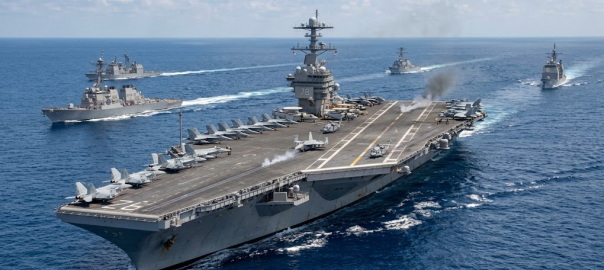
April 8, 2026 /Mpelembe Media/ — The 2026 war in the Middle East has reached a critical diplomatic turning point following a provisional two-week ceasefire between the United States and Iran, agreed upon on April 7, 2026. The truce, brokered through the mediation of Pakistani officials, was reached less than two hours before President Donald Trump’s deadline to launch devastating strikes against Iranian power plants and bridges. Prior to the agreement, Trump had escalated his rhetoric to unprecedented levels, warning that “a whole civilization will die” if Iran did not reopen the vital Strait of Hormuz to global shipping.
Why Friction Prevents Escalation
U.S. politicians across the political spectrum have reacted with intense alarm to the President’s recent expletive-laden threats toward Iran, with several questioning his mental fitness for office.
April 6, 2026 /Mpelembe Media/ — The current conflict between the United States, Israel, and Iran began in late February 2026 with joint U.S.-Israeli “preemptive” military strikes on Iran, aiming to either eliminate the country’s nuclear capabilities or force regime change. In retaliation, Iran launched drones and ballistic missiles against Israel, as well as U.S. military targets located in the Gulf States and Jordan. Now in its sixth week, the war has severely destabilized the Middle East, killing over 3,500 people across the region—including more than 1,900 in Iran and 1,400 in Lebanon—while displacing millions. Continue reading