
Category Archives: Economy

07Aug/26

Diaspora women building peace against state violence

Until Lasting Peace: Black Women Peacebuilders in Britain

Fri , Aug 0& 2026 /Mpelembe Media/ — The USD report, “Until Lasting Peace: Diaspora Women Building Peace Where They Are,” co-created by Women PeaceMaker Fellows Bochra Laghssais, Mariia Levchenko, and Temi Mwale, explores how diaspora women act as vital, yet often invisible, agents of peace and social cohesion. By bridging international frameworks like the Women, Peace, and Security agenda with grassroots activism, the research challenges traditional definitions of peacebuilding, arguing that true peace is not merely the absence of war, but the daily presence of justice, community care, and collective safety. In her case study on Britain, Mwale examines how Black women lead the resistance against systemic racism and carceral violence within the criminal legal system. This work, however, extracts a massive physical, emotional, and mental toll, exacerbated by the “strong Black woman” trope, which forces women to suppress vulnerability and neglect their own health. Mwale highlights an urgent need for sustainable, trust-based funding and public safety strategies that prioritize “healing justice” and build care infrastructures to protect the wellbeing of frontline leaders. Continue reading

07Aug/26

Why the World Is Bypassing the Dollar

Zambia’s Closed-Loop Monetary Strategy: Balancing Retail De-Dollarization with Sovereign Copper Finance

Fri , Aug 0& 2026 /Mpelembe Media/ — Sub-Saharan Africa is undergoing a profound structural transformation as sovereign nations systematically seek to reduce their historic reliance on the United States dollar for reserves, trade invoicing, and domestic transactions. For decades, the US dollar served as the undisputed financial anchor across the continent, but this deep integration has exposed emerging economies to extreme macro-financial vulnerabilities, particularly during cycles of US Federal Reserve monetary tightening. When interest rates rise in Washington, global capital retreats to dollar-denominated assets, triggering sharp depreciations of local African currencies that inflate the cost of imported goods and escalate the servicing costs of dollar-denominated sovereign debt. This systemic vulnerability was starkly demonstrated in November 2020 when Zambia defaulted on a $42.5 million Eurobond payment, with the concurrent strength of the US dollar significantly exacerbating the domestic financial fallout. Furthermore, the geopolitical landscape of the mid-2020s has accelerated the search for alternative payments due to the perceived weaponization of Western-dominated dollar-clearing systems, prompting African policymakers to seek bilateral trade architectures and payment systems backed by the BRICS+ alliance to protect their economic sovereignty. Continue reading

02Aug/26

Building Industrial Giants in High Friction Zambia

From Power Cuts to Profit: How Zambian Food Processors are Innovating. Nutrition and Strategy

Sun, Aug 02 2026 /Mpelembe Media/ —  Here are a few suggested headlines for this summary: Navigating the Zambian Biscuit Maze: Strategies for Confectionery Startups. The High Cost of Baking in Zambia: Challenges and Triumphs in the FMCG Sector. From Power Cuts to Profit: How Zambian Food Processors are Innovating. Nutrition and Strategy: Overcoming Systemic Headwinds in Zambia’s Food Industry. Continue reading

30Jul/26

Southern Africa is breaking energy monopolies

Zambia’s 2024 Open Access Reforms: A Catalyst and Testing Ground for Regional Energy Liberalization

Thu, July 30 2026 /Mpelembe Media/ — The electricity supply industries in Southern Africa are undergoing a major structural shift, transitioning from vertically integrated, state-dominated monopolies toward decentralized and competitive wholesale power markets. This transformation is largely driven by persistent power deficits, climate-induced hydropower shortages, and the soaring energy demands of the region’s mining sectors. Continue reading

29Jul/26

Zambia’s massive leap into digital finance

Navigating Zambia’s Digital Payment Landscape

Wed, July 29 2026 /Mpelembe Media/ — The Zambian digital payment ecosystem historically struggled with severe fragmentation, relying heavily on bilateral agreements between financial institutions and routing domestic card transactions through expensive international networks. To address these structural inefficiencies and lower the cost of domestic electronic payments, the Bank of Zambia, the Bankers Association of Zambia, and the Zambia Electronic Clearing House Limited initiated the National Financial Switch project in 2013. The system was designed as a shared public utility to interconnect various payment streams, including automated teller machines, point-of-sale systems, and mobile money platforms, thereby eliminating the need for institutions to build and maintain costly bilateral connections. Continue reading

29Jul/26

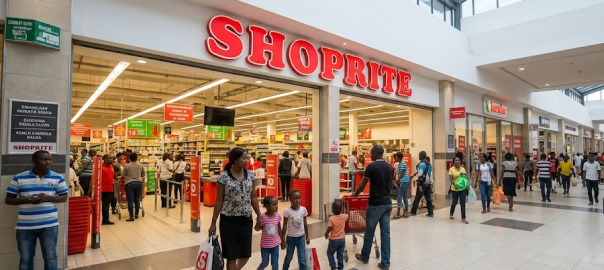
How Shoprite Became Africa’s Operating System

The Digital Integration and Social Evolution of African Retail: An Analysis of Mobile Wallet Adoption and Community Impact

Wed, July 29 2026 /Mpelembe Media/ — The landscape of retail in Africa is undergoing a profound transformation, characterized by the rapid digitization of payment ecosystems and a deep, institutional commitment to social impact. Driven by high mobile penetration and the need for inclusive financial services, retailers are rethinking traditional commercial infrastructures to better serve unbanked populations. A leading example of this dual evolution is observed in Zambia, where Shoprite Holdings has seamlessly integrated mobile wallet payments into its point-of-sale systems while simultaneously expanding its extensive community resilience programs. Continue reading

26Jul/26

Why the AI job apocalypse hasn’t happened

The Macroeconomic Paradox of Cognitive Automation

Sun, July 26 2026 /Mpelembe Media/ — At the aggregate level, the widely feared “AI jobs apocalypse” has not materialized in the macroeconomic data. Prominent technology executives, including Anthropic CEO Dario Amodei, have previously warned of an imminent structural crisis, predicting that advanced cognitive systems could displace up to 50% of entry-level white-collar jobs and push aggregate unemployment into double digits. However, actual labor statistics tell a much more stable story. The U.S. labor market remains near full employment, hovering at a 4.2% jobless rate, with prime-age employment rates remaining near multi-decade highs. Extensive research by Anthropic’s head of economics, Peter McCrory, shows no relative increase in unemployment for highly exposed occupations compared to unexposed ones. Continue reading

22Jul/26

How Green Copper Overthrew Zambia’s Democracy

The Restroom Negotiations: How a Canadian Mining Giant Bought a Presidency and Rewrote Zambia’s Laws

Wed, July 22 2026 /Mpelembe Media/ — The provided documents explore the essential role of the mining industry in the global transition toward a low-carbon economy, particularly the rising demand for transition minerals. These sources emphasize that while mineral extraction underpins a vast portion of global wealth, it simultaneously presents significant environmental and social risks, such as habitat loss, water stress, and human rights concerns. To address these challenges, the Global Investor Commission on Mining 2030 outlines a framework for institutional investors to use their financial influence to promote responsible operations. By prioritizing capital allocation and active stewardship, investors can encourage better safety standards, equitable benefit distribution, and the adoption of circular economy principles. Ultimately, the reports argue that a strategic “reset” of the relationship between finance and mining is necessary to ensure the industry leaves a positive legacy for host communities. These materials serve as a roadmap for achieving a sustainable mining sector that balances industrial growth with ecological and ethical boundaries. Continue reading

03Jul/26

From Student Prefects to Parliament: The Leadership Pipeline of Kitwe Boys High School

Building Zambia’s Engineers: The STEM Legacy and Academic Rigor of Kitwe Boys

Thur, July 03 2026 /Mpelembe Media/ — Kitwe Boys Secondary School, founded in 1957 during the peak of British colonial administration in Northern Rhodesia, reflects the broader social, political, and architectural transformations of the Copperbelt region. Spanning eras of strict racial segregation, rapid post-independence integration, and modern educational adaptation, the school’s history provides a powerful lens into the heritage of Zambia’s mining heartland. Continue reading

21Jun/26

Chinese debt and mining labor in Zambia

The Dragon and the Copper Belt: The Complex Realities of China-Zambia Relations

Fri, Jun 18 2026 /Mpelembe Media/ — The relationship between China and Zambia is deeply complex, evolving from historical solidarity into a modern partnership defined by massive economic investment, sovereign debt crises, and significant labor controversies. Continue reading