Category Archives: Finance

26Oct/26

Anthropic S-1 Warns of AI Extinction

Balancing Hyper-Growth and Public Safety: Anthropic Pairs Operating Profits with Catastrophic AI Disclosures

Mon, July 26 2026 /Mpelembe Media/ — Under Anthropic, PBC has officially filed its Form S-1 registration statement with the U.S. SEC to list its Class A common stock on the Nasdaq under the ticker symbol “ANT”. The artificial intelligence developer is seeking a target IPO valuation between $1.8 trillion and $2.0 trillion, with plans to raise as much as $80 billion to $100 billion. If realized at this scale, the offering would surpass SpaceX’s $1.77 trillion market debut from June 2026 to become the largest initial public offering in history. Driving this valuation is unprecedented enterprise expansion: revenue for the first half of 2026 surged to $16.286 billion—a 14-fold increase compared to $1.163 billion in the corresponding prior-year period. In the second quarter of 2026 alone, Anthropic generated $11.6 billion in revenue and achieved an operating profit of $974 million. Corporate API token contracts generate approximately 80% of top-line revenue, propelled by rapid adoption of agentic software products like Claude Code. Continue reading →

26Oct/26

How Noisy Neighbors Destroy Property Value

Capital Quiet List Revealed: Leafy Outer Boroughs Lead London in Safety, Parkland, and Nighttime Peace

Sat Oct. 24, 2026 /Mpelembe Media/ — Richmond upon Thames has been crowned London’s most peaceful borough in a comprehensive study evaluating residential tranquility across England and Wales. Richmond earned the top position in the capital with a peace score of 58.1 out of 100, followed closely by Havering (56.5) in second place and Merton (56.3) in third. The top ten list of London’s quietest boroughs is rounded out by Redbridge (55.9), Bromley (50.3), Sutton (49.8), Harrow (42.5), Barking and Dagenham (40.4), Hillingdon (39.2), and Barnet (37.7). Continue reading →

24Oct/26

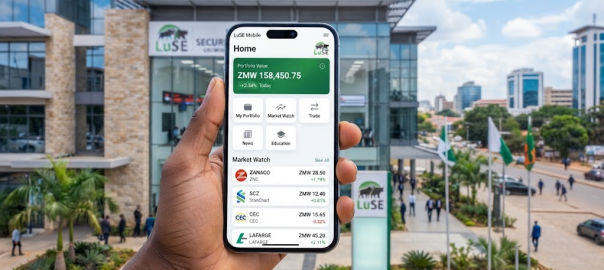
How Foreign Investors Trade in Zambia

Investing in the Lusaka Securities Exchange: Comparative Pathways, Settlement Mechanics, and Treaty Tax Relief for UK Residents

Sat Oct. 24, 2026 /Mpelembe Media/ — The Lusaka Securities Exchange (LuSE) operates under the regulatory supervision of the Securities and Exchange Commission (SEC) of Zambia pursuant to the Securities Act No. 41 of 2016, providing a centralized capital market with an equity market capitalization of approximately USD 2.30 billion. To prevent off-market fragmentation, Zambian law mandates that all public companies with 50 or more shareholders must register with the SEC and trade exclusively on a recognized stock exchange, effectively prohibiting Over-The-Counter (OTC) equity markets. The exchange functions across a two-tier market structure comprising the Main Board (Official List) for established public enterprises and the Quoted Tier for growth-phase entities. Zambia maintains a fully liberalized foreign exchange regime with no exchange controls, permitting up to 100% foreign ownership in private and listed assets—with narrow statutory exceptions, such as domestic cellular network operators required to float 10% of their shares on the exchange—and guaranteeing the repatriation of investment capital, dividends, and profits through the Bank of Zambia. Continue reading →

20Sep/26

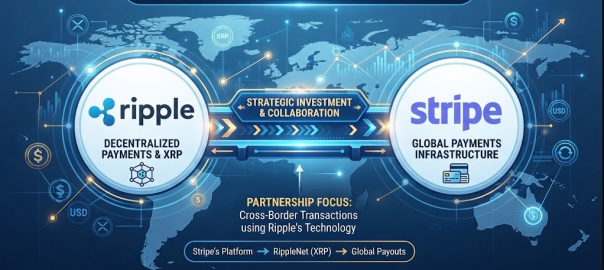
XRP Powers Stripe’s New Payment Standard

Ripple Connects XRP Ledger to Stripe via Machine Payments Protocol

Sun 20 Sept 2026 /Mpelembe Media/ — The XRPL AI Starter Kit version 1.1 serves as the software framework enabling this connection by adding support for both the Machine Payments Protocol (MPP) and the Open Wallet Standard. Originally launched in June, this updated developer resource incorporates MPP—a protocol co-authored by Stripe and Tempo, a payment-focused blockchain that launched its mainnet in March. Continue reading →

03Sep/26

Wall Street Battles for Digital Plumbing

Wall Street Goes Public: 21 Financial Giants Commit to Joint H1 2027 G7 Stablecoin Launch

Thu Sep 03 2026 /Mpelembe Media/ —Twenty-one of the world’s largest financial institutions have committed to establishing a new operating company in the second half of 2026 to support the issuance of a regulated, reserve-backed digital asset pegged to the U.S. dollar, with a commercial launch targeted for the first half of 2027. The consortium, which includes Wall Street anchors like Goldman Sachs, Bank of America, and Citigroup, as well as European heavyweights like UBS and Deutsche Bank, plans to focus initially on institutional, wholesale, and retail use cases such as cross-border payments and atomic digital asset settlement. The venture represents a significant expansion of an exploratory pilot launched in October 2025 with just ten banks, although certain original participants like Barclays and BNP Paribas have withdrawn from the joint venture. While the consortium plans to eventually expand into other G7 currencies, prioritizing a euro-denominated token next, it stands alongside a highly competitive landscape where JPMorgan Chase has notably chosen to remain independent, focusing instead on its proprietary commercial bank token networks, JPM Coin and Kinexys. Continue reading →

21Aug/26

The hidden plumbing of AI commerce

From Payments to Intelligence: Inside Stripe’s Bold Move to Own the AI Token Economy

Fri, Aug 21 2026 /Mpelembe Media/ — Stripe has officially agreed to acquire OpenRouter, a premier AI model marketplace and gateway, in a landmark transaction that positions the fintech giant at the center of the fast-growing token routing sector. While the companies did not publicly disclose the purchase price, multiple reports value the deal at approximately $7.5 billion, representing a massive premium over the startup’s $1.3 billion private valuation set just months earlier. Under the reported terms of the agreement, $1.5 billion will be distributed to OpenRouter’s founders and key staff, with the remaining $6 billion going to its venture capital and seed-stage investors. OpenRouter, which facilitates access to over 400 AI models and handles more than 10 trillion tokens daily for over 10 million developers, will continue to operate under its existing brand, name, and product roadmap. Through this acquisition, Stripe aims to help enterprise clients dynamically evaluate and route requests to the most cost-efficient models in real time, turning the management of volatile AI token costs into a core part of its programmable financial services platform. Continue reading →

18Aug/26

Why your brain hates being a sucker

The Anatomy of Sugrophobia: Why We Dread Being Played for a Fool

Tue, Aug 18 2026 /Mpelembe Media/ — The ubiquitous fear of being duped, or played for a fool, is a powerful and underappreciated driver of human behavior that can escalate into a true phobia known as sugrophobia. Coined in 2007 by experimental psychologists Kathleen Vohs, Roy Baumeister, and Jason Chin, sugrophobia represents the specific, anticipatory dread that someone is taking advantage of us, partly due to our own choices. While a baseline level of wariness is highly adaptive, excessive skepticism can paralyze our ability to trust and cooperate. Unlike passive forms of misfortune such as pickpocketing, being suckered involves our active consent or participation; when a deception is revealed, we are forced to see an element of ourselves in the event, triggering a painful “sucker in the mirror” phenomenon characterized by deep self-blame, anticipated humiliation, and cognitive dissonance. This deep aversion is not limited to major frauds but is triggered daily in low-stakes situations—such as yielding to an aggressive driver, overpaying for lunch, or taking on the workload of a slacker colleague. Continue reading →

03Aug/26

Private markets hit a physical bottleneck

From Hyperscaler Debt to Emerging Market Tailwinds: The Macroeconomics of the AI Supercycle.

Mon , Aug 03 2026 /Mpelembe Media/ —The current macroeconomic landscape is dominated by an unprecedented artificial intelligence capital expenditure boom, with hyperscalers projected to invest up to $1.4 trillion annually by 2027 to fund data centers, advanced packaging, and energy grids. This massive concentration of tech spending is currently masking broader economic weaknesses, prompting growing concerns among investors regarding an “expectations correction” or an AI bubble. While the underlying technology continues to advance rapidly, Wall Street is increasingly demanding tangible financial returns, as value capture currently lags behind widespread experimentation and massive cash burn. To sustain this infrastructure race, companies are heavily tapping into debt markets, with AI-linked firms and hyperscalers now dominating a significant portion of investment-grade and high-yield bond issuances. Concurrently, public markets are bracing for a wave of mega-IPOs from innovation-led giants like SpaceX, OpenAI, and Anthropic, which could represent trillions in market value and test the capital absorption limits of global equities. In the private sector, the focus on AI data centers and the broader energy transition has led to record fundraising for infrastructure assets, even as traditional private equity distributions remain sluggish. Globally, this AI supercycle is acting as a powerful structural tailwind for emerging markets, creating a historic wealth transfer as developed markets rely on emerging market suppliers for memory, silicon, and critical minerals, which is further fueling surges in mining mergers and acquisitions. Continue reading →

29Jul/26

Why Zambia’s Digital Rails Need Routine

Zambia’s Digital Payment Landscape: Bridging the Gap from Rails to Routine

Wed, July 29 2026 /Mpelembe Media/ — Zambia has made remarkable strides in expanding financial access, achieving a financial inclusion rate of 80.1% by 2025, a significant increase from 69.4% in 2020. A cornerstone of this progress is the National Financial Switch (NFS), a shared infrastructure that connects banks, payment service providers, fintechs, and mobile money operators. By facilitating wallet-to-bank, bank-to-wallet, and merchant transactions, the NFS eliminates the need for institutions to build expensive bilateral connections. However, despite these foundational achievements, Zambia faces a critical new challenge: transitioning these digital “rails” into an affordable, trusted, and everyday routine for its citizens. Continue reading →

29Jul/26

ASML panic and AI circular funding

Historic Tech Plunge: Asian Markets Tumble Amid Fears of Unsustainable AI Spending and New Chinese Rivals

Wed, July 29 2026 /Mpelembe Media/ — The summer of 2026 witnessed a profound global market recalibration as major technology and semiconductor stocks faced a severe sell-off, pushing the tech-heavy Nasdaq-100 index into correction territory. This downturn reflected a fundamental shift in investor sentiment, moving from speculative optimism surrounding artificial intelligence to a rigorous demand for tangible monetization and balance sheet stability. The correction was not triggered by a singular event, but rather by a confluence of escalating capital expenditures, systemic credit risks tied to circular financing, and significant geopolitical shifts in the Asian semiconductor supply chain. Continue reading →