Tag Archives: China

01Nov/26

The Illusion of Democracy: Constitutional Manipulation and the Modern Dictator

How Modern Dictators Hold Absolute Power

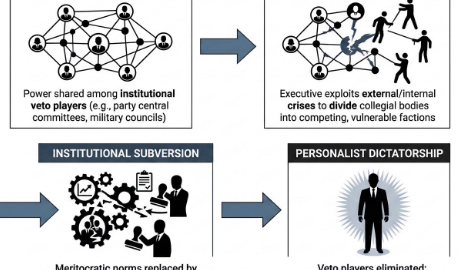
Sun, Nov 01 2026 /Mpelembe Media/ —A dictatorship is a system of governance where a single individual or political party wields absolute power, typically emerging during periods of severe social unrest or economic instability. Within these regimes, personal autonomy, political choice, and human rights are heavily suppressed, and democratic institutions as well as opposition parties are dismantled. Rulers maintain authority through coercion, intimidation, unlawful imprisonment, violence, and state apparatuses such as secret police or indefinite detentions. Furthermore, autocrats frequently manipulate legal frameworks to preserve control; for instance, constitutional amendments in Russia altered presidential term limits to allow Vladimir Putin to remain in power through 2036. While autocracies concentrate unchecked authority strictly within an individual—a category that historically encompassed benevolent rulers—dictatorships can disperse authority across a governing party or ruling circle and inherently feature severe abuses of power. Continue reading →

26Oct/26

Audi Ditches Its Logo in China

The Great Automotive Realignment: How China Upended Germany’s Global Car Supremacy

Mon, July 26 2026 /Mpelembe Media/ — For decades, German automotive giants—Volkswagen Group, BMW, and Mercedes-Benz—dominated the global industry and derived a significant share of their corporate profits from mainland China. However, a severe structural contraction has destabilized this industrial core, culminating in a 76% year-on-year collapse in combined Q3 operating profits down to €1.711 billion. China’s share of total global vehicle deliveries for German carmakers dropped from 39% in 2020 to 29% in 2025, with quarterly deliveries in China plummeting between 30% and 41% by mid-2026. Domestically, annual German passenger vehicle output fell from 5.6 million units in 2017 to 3.4 million in 2024, burdened by high labor costs averaging €62 per hour and severely underutilized assembly plants—such as Wolfsburg operating at just 61% capacity—compelling Volkswagen to shutter a domestic manufacturing plant in Germany for the first time in its 88-year history. Continue reading →

24Oct/26

Zambia’s Rule of Law Paradox

Beyond the Composite Score: Bridging the Implementation Gap in Zambia’s Legal System

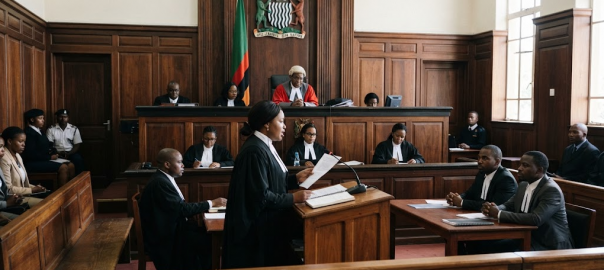
Sat Oct. 24, 2026 /Mpelembe Media/ — In the 2026 World Justice Project (WJP) Rule of Law Index, Zambia registers an overall composite score of 0.44 on a scale from 0.00 to 1.00, placing it 108th globally out of 143 surveyed countries. This performance marks a single-position drop in global standing and a minor 0.01 score contraction from the 0.45 baseline maintained between 2022 and 2025. Regionally, Zambia ranks 19th out of 34 Sub-Saharan African states, placing its score slightly below the regional benchmark of 0.45 and well beneath the global average of 0.55. Despite this global deficit, Zambia maintains a solid standing within its lower-middle-income cohort, outperforming regional neighbors such as Nigeria (120th) and Zimbabwe (122nd). Historically, Zambia reached a decade-high score of 0.48 in 2016 before political polarization eroded it to 0.44 in 2021; while the peaceful transfer of power in late 2021 stabilized scores at 0.45 through 2025, administrative bottlenecks led to the slight 2026 contraction. Continue reading →

17Oct/26

U.S. immigration: National Interest Waivers, and Consular Strategies for Zambian Travelers

Navigating Proclamation 10998: What the 2026 U.S. Travel Restrictions Mean for Zambian Passport Holders

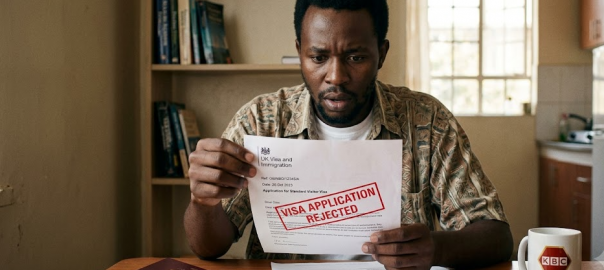
Sat Oct. 16, 2026 /Mpelembe Media/ — Effective January 1, 2026, Presidential Proclamation 10998 placed Zambia into a partial suspension tier that restricts entry and visa issuance for its passport holders. Under this executive directive, Zambian nationals who were outside the United States without a valid visa on the effective date are barred from obtaining immigrant visas as well as B-1/B-2 visitor visas, F academic student visas, M vocational student visas, and J exchange visitor visas. The United States government justified Zambia’s inclusion by citing Department of Homeland Security metrics showing a 10.73 percent overstay rate for B-1/B-2 visitor visas and a 21.02 percent overstay rate for student and exchange visitor categories. For nonimmigrant visa classifications that remain open, such as employment-based H-1B, L-1, and O-1 visas, consular officers are instructed to shorten validity periods, typically limiting approved visas to three months with single-entry authorization. The proclamation explicitly preserves existing valid visas issued prior to January 1, 2026, and provides categorical exemptions for U.S. lawful permanent residents, dual nationals traveling on an unrestricted passport, qualifying diplomatic personnel, and athletes participating in major international sporting events. Continue reading →

05Sep/26

Emmanuel Mwamba from statecraft to sedition

Diplomacy, Dissidence, and Digital Resistance: The Life and Career of Emmanuel Mwamba

Sat Sep 05 2026 /Mpelembe Media/ — Emmanuel Mwamba was born on April 18, 1971, in the mining hub of Luanshya within the Copperbelt Province of Zambia. He completed his secondary education at Roan Antelope Secondary School and subsequently earned a Diploma in Journalism and Public Relations from Evelyn Hone College. He expanded his qualifications globally, obtaining a Master of Business Administration from Edith Cowan University in Australia and a Master in Peace Studies from the Institute of Peace & Security Studies at Addis Ababa University. After initial employment at the Zambia National Commercial Bank, he entered the political arena as the administrative secretary and spokesperson for Zambia’s second president, Frederick Chiluba. During this time, Mwamba aggressively defended Chiluba against state-directed corruption prosecutions. This loyalty caused friction with the administration of Levy Mwanawasa, resulting in the termination of Mwamba’s probationary contract in October 2004, though he continued serving Chiluba in a private capacity. Following the reconciliation of Chiluba and Michael Sata in 2005, Mwamba transitioned his allegiance to the Patriotic Front (PF). Continue reading →

27Aug/26

Rebuilding after the thirty-minute Himalayan flood

Beyond the Storm: Why Repeated Hazards Trigger Systemic Collapse and Compounded Human Tolls

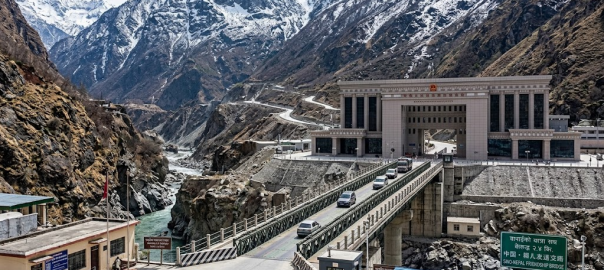
Thu Aug 27 2026 /Mpelembe Media/ — The accelerating pace of human-caused climate change is compressing the temporal intervals between extreme meteorological and geophysical events, giving rise to a critical systemic challenge known as the recovery gap. This gap represents the temporal misalignment between the duration required for a community to fully restore its infrastructural, economic, and institutional capacities, and the actual interarrival time between consecutive damaging hazards. Traditional disaster risk management has historically evaluated disasters through a static lens, assuming that extreme events are discrete, isolated occurrences and that communities always return to a fully recovered baseline before the next event. In reality, a subsequent hazard rarely encounters the same community that existed before the first; instead, it strikes a system with less resilience, depleted financial reserves, struggling businesses, and weakened infrastructure. Because of these overlapping demands, the compounding damages of consecutive disasters are highly non-linear, often escalating long-term losses far beyond the simple sum of individual impacts. Continue reading →

27Aug/26

Trump’s Silverback Strategy and the Donroe Doctrine

A Weapon of Mass Disruption: Why the 2026 Iran War Exposed the Limits of American Might

Wed, Aug 26 2026 /Mpelembe Media/ — Donald Trump’s second term has transitioned into a highly volatile era characterized not by a passive “lame duck” status, but by what analysts call the “Silverback Presidency.” This statecraft style mirrors an aging mountain gorilla that, sensing its time is short and its dominance threatened, resorts to aggressive, unpredictable outbursts rather than yielding to institutional gridlock. Operating under a framework of personal grievance, vengeance, and an explicit rejection of the post-war rules-based order, Trump has openly asserted that his executive actions are limited only by his “own mind and morality”. Free from the perceived constraints of international law, the administration has launched high-stakes global maneuvers designed to forcefully project American power and secure a disruptive, nationalist legacy. Continue reading →

24Aug/26

Why AI labels tank game sales

“AI Slop” Backlash: How Player Outrage is Forcing Developers to Put Human Artists First

Sun, Aug 23 2026 /Mpelembe Media/ — The video game industry is undergoing a swift legal and structural recalibration as “anti-AI” clauses rapidly transition from bespoke risk-mitigation measures into standard contract boilerplate. Corporate intellectual property lawyers, such as Haley MacLean of Voyer Law, report that nearly all of their game development and publishing clients now explicitly mandate strict bans on generative AI. This shift is primarily driven by massive intellectual property liability: under current U.S. copyright law, works must be the product of human authorship to receive IP protection. If a developer incorporates AI-generated assets like art, writing, or sound without substantial human editing, those elements fall into the public domain. Consequently, competitors could legally extract those identical assets and use them in their own games with no legal recourse for the original creator, rendering unedited AI assets a major commercial risk for publishers and investors alike. Continue reading →

18Aug/26

Why your brain hates being a sucker

The Anatomy of Sugrophobia: Why We Dread Being Played for a Fool

Tue, Aug 18 2026 /Mpelembe Media/ — The ubiquitous fear of being duped, or played for a fool, is a powerful and underappreciated driver of human behavior that can escalate into a true phobia known as sugrophobia. Coined in 2007 by experimental psychologists Kathleen Vohs, Roy Baumeister, and Jason Chin, sugrophobia represents the specific, anticipatory dread that someone is taking advantage of us, partly due to our own choices. While a baseline level of wariness is highly adaptive, excessive skepticism can paralyze our ability to trust and cooperate. Unlike passive forms of misfortune such as pickpocketing, being suckered involves our active consent or participation; when a deception is revealed, we are forced to see an element of ourselves in the event, triggering a painful “sucker in the mirror” phenomenon characterized by deep self-blame, anticipated humiliation, and cognitive dissonance. This deep aversion is not limited to major frauds but is triggered daily in low-stakes situations—such as yielding to an aggressive driver, overpaying for lunch, or taking on the workload of a slacker colleague. Continue reading →