The 3rd APEC Women Connect “Her Power” Entrepreneurship Competition came to an end on December 16 with a livestreamed ceremony. Over four months, the competition engaged over 1,000 participants interested in social commerce from countries including the United States, the United Kingdom, France, Australia, Portugal, Spain, Thailand, Vietnam, The Philippines, Italy, Nigeria, Malawi, Venezuela, and China. Continue reading
Tag Archives: China
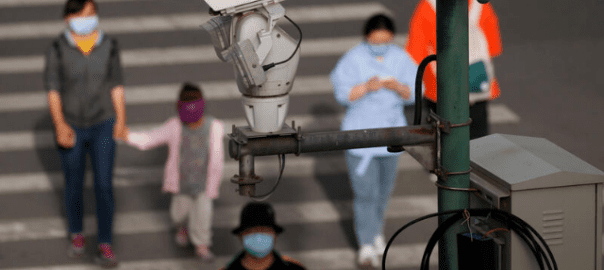
Facial recognition: An ethical policing tool?
By Samuel Woodhams | Digital rights researcher and journalist
| Facial recognition technology made headlines again last month as researchers at the University of Cambridge, UK said that the UK police’s use of the technology was unethical and potentially unlawful. The report from the Minderoo Centre for Technology and Democracy urged police to stop using live facial recognition (LFR) in public spaces and said trials by the Metropolitan Police and South Wales Police failed to meet the “minimum legal and ethical standards.” Continue reading |
8 billion people: why trying to control the population is often futile – and harmful
Melanie Channon, University of Bath and Jasmine Fledderjohann, Lancaster University
The world’s population is expected to hit 8 billion people on November 15, according to the UN. Already this has prompted worry about whether there will be enough food, water and energy to support our growing population. While human activity is undoubtedly driving the climate crisis, population growth is a red herring.
Video doorbells: security or surveillance?
By Samuel Woodhams | Digital rights researcher and journalist
| Video doorbells are everywhere now, sold as a modern security solution that can help protect your home and belongings. They let you greet guests remotely, deter would-be parcel thieves, and could even reduce the cost of your home insurance. Continue reading |
The whole world is facing a debt crisis – but richer countries can afford to stop it
Patrick E. Shea, University of Glasgow
Countries across the world are drifting towards a debt crisis. Economic slowdowns and rising inflation have increased demands on spending, making it almost impossible for many governments to pay back the money they owe.
Four scenarios for a world in disorder
David Bach, International Institute for Management Development (IMD)
Chinese leader Xi Jinping’s recent speech to the Communist Party Congress could be one of the most consequential of the decade. He told the audience – and the world – that his economic growth-crushing zero-COVID policy is here to stay, and that Beijing is more determined than ever to reunify with Taiwan, peacefully if possible and by force if necessary.
Why is 13 considered unlucky? Explaining the power of its bad reputation
Many elevators do not have a floor numbered 13 because of common superstitions about the number.
Luis Alvarez/DigitalVision via Getty Images
Barry Markovsky, University of South Carolina Continue reading
Surveillance tech is weaponry
By Rand Hammoud, Surveillance Campaigner, Access Now
Surveillance technology is weaponry – it targets, tracks, invades, and decimates – and its unbridled use is a far-reaching, destructive violation of human rights. It is an assault rifle in the sustained global offensive on civic space, and we need a global moratorium on its export, sale, transfer, servicing, and use. Continue reading
To reach net zero the world still needs mining. After 26 years, here’s what I’ve learned about this ‘evil’ industry
On the wooded hill above the Stan Terg lead and zinc mine in Kosovo, there is an old concrete diving platform looming over what was once an open-air swimming pool. Before the break-up of Yugoslavia, people who worked at the mine would bring their families here to swim, sunbathe on the wide terrace with its view across the valley, and picnic among the trees. Now the pool is slowly disappearing into the forest, the view obscured by birch saplings.
Digital nomads have rejected the office and now want to replace the nation state. But there is a darker side to this quest for global freedom
A ‘network state’ is ideologically aligned but geographically decentralised. The people are spread around the world in clusters of varying size, but their hearts are in one place.
In June 2022 Balaji Srinivasan, former chief technology officer of the Coinbase cryptocurrency exchange, published an ebook entitled The Network State: How To Start a New Country. It is the latest in a flurry of utopian visions by self-styled digital visionaries, crypto believers and web 3.0 evangelists who are lining up to declare the death of the traditional concept of countries and nationhood.