Tag Archives: Egypt

13Sep/26

The Struggle is One Zambia, One Nation: Kenneth Kaunda

The Political and Economic Legacy of Kenneth Kaunda: A Comprehensive Analysis

1. Introduction: The Architect of Modern Zambia

In October 1964, Kenneth Kaunda ascended to the presidency of the newly independent Republic of Zambia, executing a transition of immense strategic complexity. Navigating the metamorphosis of the former British protectorate of Northern Rhodesia into a sovereign Republic required not merely administrative acumen, but the navigation of a post-colonial state inheriting a dualistic economy characterized by enclave mineral extraction and structural dependency. Kaunda emerged as a primary architect of the region’s decolonial architecture, a role that earned him the reverential titles of “Pan-Africanist” and the “Baobab of African politics”—symbolizing a towering, resilient figure whose influence provided the essential canopy for regional liberation. His core mission, as distilled from the regional collective memory, was the reclamation of an African destiny where the continent’s inhabitants could chart their own socio-economic trajectory, finally ending the era where natural resources were plundered while the populace remained in structural poverty. This mission was predicated on a governance model that sought to harmonize indigenous values with the requirements of a modern state. Continue reading
03Sep/26

Zambia’s High Stakes Digital Money Revolution

The Digital Economy at a Crossroads

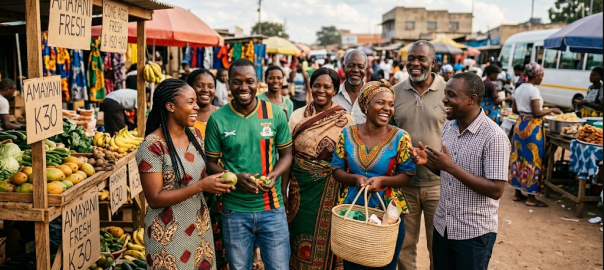
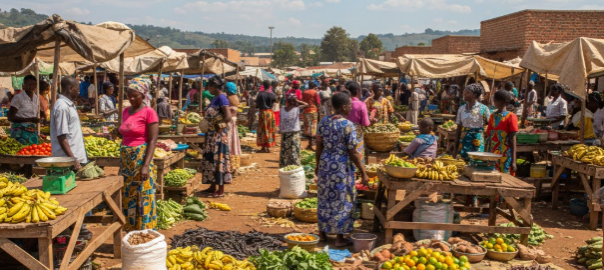
Thu Sep 03 2026 /Mpelembe Media/ — Zambia’s developmental trajectory currently faces a paradoxical challenge: the imperative to widen the domestic tax base versus the mandate to achieve universal digital financial inclusion. As the primary engine for the nation’s 2027 digital economy vision, mobile money provides the “last mile” infrastructure necessary to transition the informal sector into the formal economy. However, the introduction of a dedicated transaction levy creates a friction point that threatens to bifurcate the ecosystem. While fiscal authorities view the levy as a mechanism for equity, it risks introducing a regressive cost layer that could stall the momentum of Zambia’s most successful financial inclusion tool.Strategic Dilemma:  Policymakers must reconcile the immediate need for revenue with the long-term macroeconomic benefits of digital liquidity. The core risk is that aggressive fiscal extraction at this nascent stage may drive users back to cash, thereby eroding the Bank of Zambia’s visibility into the economy and increasing the cost of cash management.The current tension is a byproduct of Zambia’s rapid evolution from fragmented banking silos to a sophisticated, shared payment infrastructure. Continue reading

23Aug/26

AI Ethics Dumping and 2Africa Cables

Countering AI Ethics Dumping: African Nations Mobilize for True Digital Autonomy

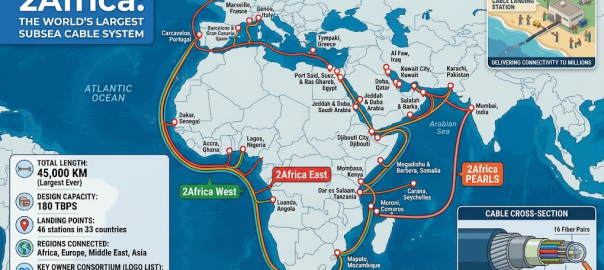
Sun, Aug 23 2026 /Mpelembe Media/ — Africa is undergoing a profound digital infrastructure revolution, shifting from historical neglect where international communications bypassed its coastlines to becoming a key hub of global data transit. This physical transformation is anchored by massive subsea cable projects driven by global technology giants. Foremost among these is Meta’s 2Africa cable system, the longest undersea telecommunications cable in the world at 45,000 kilometers, connecting 46 landing stations in 33 countries across Africa, Asia, and Europe. Boasting a design capacity of up to 180 Terabits per second, this project is expected to boost Africa’s cumulative GDP by $36.9 billion in its first few years of operation. Simultaneously, Google’s privately-funded Equiano cable runs along the western seaboard from Portugal to South South Africa, integrating space-division multiplexing to deliver 20 times the network capacity of previous regional cables. The economic impact of Equiano is massive, with projected GDP increases of $11.1 billion in Nigeria, $5.8 billion in South South Africa, and $290 million in Namibia. Continue reading

01Jun/26

Why The Sunrise Reboots The Brain

The Healing Power of the Dawn: How Natural Light Wards off Depression and Resets Your Brain

Mon, Jun 01 2026 /Mpelembe Media/ — In our frantic modern age, many of us exist in a state of nocturnal chaos. We are severed from the rhythms of the earth by the relentless hum of digital noise and the intrusive glare of artificial light, leaving our internal clocks decoupled and drifting. We feel perpetually “out of sync,” wandering through days that lack a definitive beginning. Yet, the sunrise is far more than a mechanical rotation of the planet; it is a profound cosmological threshold and the ultimate “blank slate.”To the ancient eye, the dawn was the “unseen blush of the invisible,” a moment where the world was born anew. In the traditional monastic cycle, this is  Lauds , or “The Awakening Hour”—a sacred juncture where nature is seen to leap from the “tomb of sleep,” offering a daily invitation to a miniature resurrection. By reclaiming this hour, we transition from merely opening our eyes to the deeper process of truly waking up.
Continue reading

02Mar/26

A Region on the Brink: Stranded Civilians, Evacuation Chaos, and Suspended Aid in the Middle East

Hundreds of Thousands Stranded: Middle East Airspace Shutdown and Strait of Hormuz Closure Paralyze Global Transit

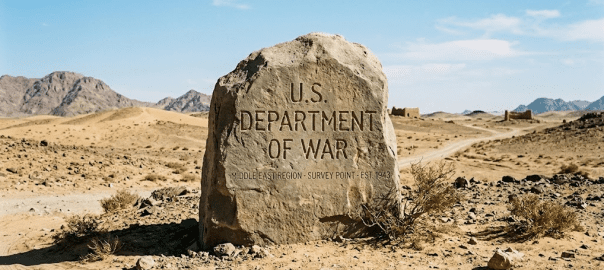
March 2, 2026 /Mpelembe Media/ — The United States and Israel launched a massive, coordinated military campaign—codenamed Operation Epic Fury and Operation Lion’s Roar—against the Islamic Republic of Iran. The coalition conducted nearly 900 strikes in the first 12 hours, targeting Iranian air defenses, missile production facilities, and IRGC command centers. The strikes successfully assassinated Supreme Leader Ali Khamenei and dozens of top Iranian military and government officials. In retaliation, Iran launched “Operation True Promise 4,” firing waves of ballistic missiles and drones at Israel and US military installations across the Persian Gulf, including bases in Qatar, Bahrain, Kuwait, and the UAE.

Continue reading

28Feb/26

The Board of Peace is Bombing Iran for the Gaza Riviera

5 Radical Realities Reshaping the Middle East

28 Feb. 2026 /Mpelembe Media/ —  The 2026 US-Iran War (“Operation Epic Fury”) Tensions between the United States and Iran escalated sharply in late 2025 and early 2026 following massive anti-regime protests in Iran, which the Iranian government suppressed with unprecedented lethal force and internet blackouts. In response, US President Donald Trump initiated a massive military buildup in the Middle East, deploying two aircraft carrier strike groups and issuing ultimatums demanding Iran halt its nuclear program and proxy support.
After US-brokered nuclear negotiations in Geneva broke down, the US and Israel launched joint military strikes on Iran on February 28, 2026, dubbed “Operation Epic Fury” and “Operation Roaring Lion”. The massive bombardment targeted Iranian nuclear facilities, military infrastructure, and leadership compounds in Tehran. In retaliation, Iran launched significant ballistic missile barrages at Israel and US military bases across the Persian Gulf, including in Bahrain, Qatar, Kuwait, and the UAE, while its regional proxies mobilized, triggering a multi-theater conflict.

Continue reading

28Feb/26

Global Markets Brace as US-Israeli Strikes on Iran Compound Tariff and Inflationary Pressures


The 2026 Global Pivot: 5 Surprising Realities Reshaping the Middle East and Beyond

28 Feb. 2026 /Mpelembe Media/ —  The geopolitical landscape has drastically deteriorated, culminating in joint “pre-emptive” military strikes launched by the United States and Israel against Iran in late February 2026. The US military announced “major combat operations” aimed at razing Iran’s missile industry and naval capabilities. This severe escalation follows a previous 12-day war in June 2025, during which Israel and the US targeted Iranian nuclear facilities, including Fordow and Natanz, fundamentally altering the region’s risk profile. Continue reading

09Feb/26

JPMorgan to Launch New Frontier Index as Investors Push for Zambia’s Inclusion

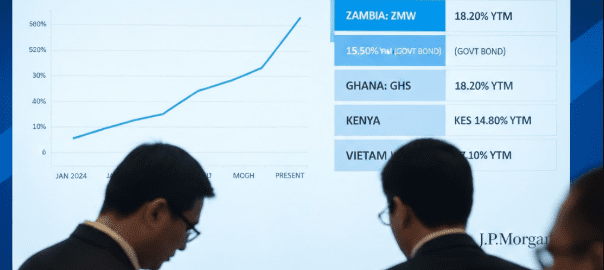
10 Feb. 2026 /Mpelembe Media  — New Frontier Benchmark JPMorgan is finalizing plans to launch a new frontier market local currency debt index, aiming to formalize investment in high-yield, developing economies. Expected to include 20 to 25 countries, the index focuses on nations such as Egypt, Vietnam, Kenya, and Nigeria, which are anticipated to carry the heaviest weightings. This launch addresses growing investor appetite for riskier debt, with analysis suggesting that frontier local markets have systematically outperformed mainstream emerging market indices over the last eight years. Continue reading

26Jan/26

How the Lusaka Securities Exchange is Driving its Record-Breaking Rally

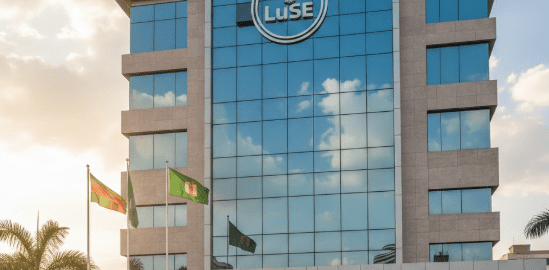
Jan. 26, 2026 /Mpelembe Media/ — The Zambian stock market is currently experiencing a significant period of growth, positioning it as the top-performing bourse in Africa. To capitalize on this momentum, the Lusaka Securities Exchange plans to introduce several initial public offerings and a new gold-linked exchange-traded fund throughout 2026. This strategic expansion aims to take advantage of rising precious metal prices while diversifying investment options for local and international participants. Additionally, market leadership intends to simplify regulatory requirements to lower barriers to entry for new issuers. By streamlining these processes, the exchange hopes to foster a more accessible financial environment and attract a wider variety of investors. These initiatives represent a concerted effort to modernize the nation’s capital markets and sustain its current economic trajectory. Continue reading

26Jan/26

The Return of Ran Gvili: Closing Israel’s Gaza Chapter

Jan. 26, 2026 /Mpelembe Media/ — The recovery of Ran Gvili’s remains, marks the return of the final captive held in Gaza since the conflict began in 2023. As an elite police officer who was abducted after being wounded during the initial attacks, his retrieval serves as a pivotal milestone for the Israeli public and his grieving family. This significant event effectively concludes the hostage crisis, providing closure to a national ordeal that involved approximately 250 abductees. Beyond the emotional impact, the return of the last body is expected to facilitate the next phase of a regional peace plan. While the military successfully identified Gvili during a targeted operation, the long-term diplomatic future for the territory remains complex and uncertain. The resolution of individual tragedies remains deeply intertwined with the broader geopolitical landscape of the Middle East. Continue reading