Tag Archives: Lusaka

08Sep/26

African Payment Pitfalls and $25,000 Tax Traps

The Three Pillars of African Payments

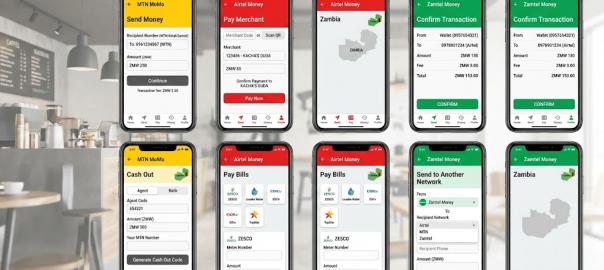
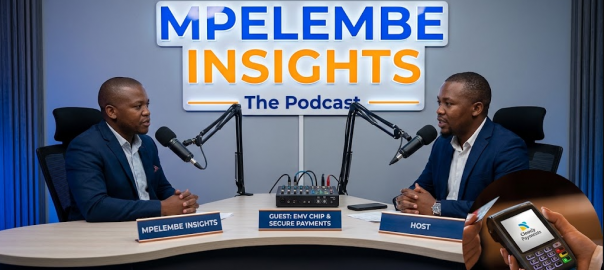
Tue Sep 08 2026 /Mpelembe Media/ — For a student entering the world of fintech, the African payment landscape can initially seem overwhelming. Unlike Western markets where credit cards are the standard, the African ecosystem is built on a “Hybrid Imperative.” In markets like Zambia, global tools like Stripe are often used for international billing, but they lack localized settlement and struggle with poor conversion rates due to bank-side fraud rules. To reach the actual local consumer, businesses must tap into the infrastructure that people already use: mobile money.The ecosystem is supported by three primary players:

  1. Mobile Network Operators (MNOs):  The foundational infrastructure providers that issue digital wallets and manage the movement of local currency.
  2. Payment Gateways:  Intermediaries that bridge the gap between global standards and local methods across multiple countries.
  3. Payment Aggregators:  Specialized “simplifiers” that bundle multiple mobile money connections into a single, developer-friendly interface.Learning Insight: The “So What?”  While credit and debit cards are the global gold standard for SaaS, they represent only a minor fraction of transactional volume in many African nations. In the retail ecosystem of Southern Africa, mobile money is the dominant force. Understanding how to connect to these networks is the key to unlocking the market.While these three pillars work together, the journey starts at the foundational “source”: the MNOs.

Continue reading

05Sep/26

Emmanuel Mwamba from statecraft to sedition

Diplomacy, Dissidence, and Digital Resistance: The Life and Career of Emmanuel Mwamba

Sat Sep 05 2026 /Mpelembe Media/ — Emmanuel Mwamba was born on April 18, 1971, in the mining hub of Luanshya within the Copperbelt Province of Zambia. He completed his secondary education at Roan Antelope Secondary School and subsequently earned a Diploma in Journalism and Public Relations from Evelyn Hone College. He expanded his qualifications globally, obtaining a Master of Business Administration from Edith Cowan University in Australia and a Master in Peace Studies from the Institute of Peace & Security Studies at Addis Ababa University. After initial employment at the Zambia National Commercial Bank, he entered the political arena as the administrative secretary and spokesperson for Zambia’s second president, Frederick Chiluba. During this time, Mwamba aggressively defended Chiluba against state-directed corruption prosecutions. This loyalty caused friction with the administration of Levy Mwanawasa, resulting in the termination of Mwamba’s probationary contract in October 2004, though he continued serving Chiluba in a private capacity. Following the reconciliation of Chiluba and Michael Sata in 2005, Mwamba transitioned his allegiance to the Patriotic Front (PF). Continue reading

04Sep/26

The strategy behind Zone Fam’s 12-year comeback

Fri Sep 03 2026 /Mpelembe Media/ — Zone Fam, a pioneering Zambian hip-hop supergroup formed in Lusaka in 2009, established a massive regional presence by blending traditional “Zed beats” with Western hip-hop arrangements and multilingual lyrics in English, Nyanja, Bemba, and Zulu. Composed of Jackson Banda (Jay Rox), Sam Sakala (formerly Dope G), Reginald Lube (Yung Verbal), and Timbwama Chisenga (formerly Thugga, now known simply as Tim), the collective rose from a local mixtape group into prominent continental stars. They captured national bestseller status with their 2011 debut album, The Business: Foreign Exchange, and signed an international deal with Taurus Musik of Kenya in 2012, eventually winning Best Group at the Channel O Music Video Awards for their hit song “Contolola”. Following the release of their single “Two Things” in September 2014, the group entered a prolonged hiatus, which was formalized when Tim officially departed on April 1, 2015, to pursue Christian hip-hop. Continue reading

03Sep/26

Zambia’s High Stakes Digital Money Revolution

The Digital Economy at a Crossroads

Thu Sep 03 2026 /Mpelembe Media/ — Zambia’s developmental trajectory currently faces a paradoxical challenge: the imperative to widen the domestic tax base versus the mandate to achieve universal digital financial inclusion. As the primary engine for the nation’s 2027 digital economy vision, mobile money provides the “last mile” infrastructure necessary to transition the informal sector into the formal economy. However, the introduction of a dedicated transaction levy creates a friction point that threatens to bifurcate the ecosystem. While fiscal authorities view the levy as a mechanism for equity, it risks introducing a regressive cost layer that could stall the momentum of Zambia’s most successful financial inclusion tool.Strategic Dilemma:  Policymakers must reconcile the immediate need for revenue with the long-term macroeconomic benefits of digital liquidity. The core risk is that aggressive fiscal extraction at this nascent stage may drive users back to cash, thereby eroding the Bank of Zambia’s visibility into the economy and increasing the cost of cash management.The current tension is a byproduct of Zambia’s rapid evolution from fragmented banking silos to a sophisticated, shared payment infrastructure. Continue reading

28Aug/26

Zambia’s Padlocked Courts and Treason Charges

A Fragile Stability Shaken: Suspicious Raid, Court Blockade, and Treason Charges Roil Zambia

Fri Aug 27 2026 /Mpelembe Media/ — The 2026 Zambian general election, held on August 13, resulted in the re-election of incumbent President Hakainde Hichilema of the United Party for National Development (UPND) with 60.49% of the vote, defeating his primary challenger Brian Mundubile of the Tonse Alliance’s National Reconciliation Party for Unity and Prosperity (NRPUP), who received 37.87%. While the Electoral Commission of Zambia (ECZ) declared Hichilema the winner, the contest was conducted on a deeply uneven playing field due to late-stage constitutional and legislative overhauls that structurally favored the ruling party. These included the Constitutional Amendment Act No. 13 of 2025 and the subsequent Electoral Processes Act No. 12 of 2026, which were passed in May 2026 during the week parliament dissolved, just three months prior to the election. This late enactment, combined with an opaque boundary delimitation exercise completed on April 16, 2026, which added 70 new constituencies largely favoring rural areas traditionally leaning toward the UPND, left minimal time for public education and structurally altered the legislative balance. Furthermore, international and domestic observer missions, including the European Union and the Christian Churches Monitoring Group (CCMG), raised serious concerns over the misuse of state resources, selective enforcement of campaign schedules, and parallel vote count discrepancies suggesting vote inflation in several constituencies. Continue reading

25Aug/26

Substantive Justice vs. Locked Gates: Chief Justice Malila and the Email That Shook Lusaka

The 2026 Constitutional Standoff: Bypassing Police Barricades with an Electronic Petition

Tue, Aug 25 2026 /Mpelembe Media/ — On August 24, 2026, a major constitutional crisis emerged in Zambia when state authorities physically closed the country’s superior courts—including the Supreme, High, and Constitutional Courts—citing unspecified security concerns. This unilateral administrative shutdown occurred on the final day of the strict seven-day window mandated by Article 105 of the Zambian Constitution to file a presidential petition challenging the August 13, 2026 election results. Incumbent President Hakainde Hichilema had been declared the winner with over 2.9 million votes against challenger Brian Mundubile’s 1.8 million votes. Across Lusaka and multiple provinces, court buildings were cordoned off with police tape and guarded by armed police units, physically blocking the opposition and other litigants from accessing judicial registries to file their challenges before the deadline. Continue reading

24Aug/26

Zambia’s election petition hits a padlocked court

Separation of Powers Fractured: Armed Forces Lock Down Zambian Courts as Inauguration Looms

Mon, Aug 24 2026 /Mpelembe Media/ — The general election in Zambia on August 13, 2026, concluded with the Electoral Commission of Zambia declaring incumbent President Hakainde Hichilema of the United Party for National Development (UPND) the winner with 60.49% of the vote, securing a second term over his chief opponent, Brian Mundubile of the National Reconciliation Party for Unity and Prosperity (NRPUP), who received 37.87%. Mundubile immediately rejected these results, citing serious irregularities, vote fraud, and significant ballot count discrepancies, which were echoed by independent parallel vote tabulations and international observer reports. Concerns were heightened by a temporary suspension of vote counting on August 14 and subsequent heavy military deployment at tallying centers, which observers noted compromised the transparency of the results process. Continue reading

21Aug/26

Blood and Copper in Zambia’s Stolen Election

Independent Audit Exposes Systematic Tallying Discrepancies in 30 Constituencies of Zambia’s Presidential Vote

Fri, Aug 21 2026 /Mpelembe Media/ — On August 18, 2026, the Electoral Commission of Zambia (ECZ) declared the re-election of incumbent President Hakainde Hichilema (United Party for National Development – UPND) to a second five-year term. The official results indicated that Hichilema won 60.49% of the vote (2,965,326 votes), while his primary challenger, Brian Mundubile of the National Reconciliation Party for Unity and Prosperity (NRPUP)—representing the Tonse-Pamodzi Alliance—secured 37.87% (1,856,222 votes). The ECZ reported an official voter turnout of 57.23% out of 8,786,300 registered voters. Hichilema praised the electorate for their trust, pledging to focus on national unity and development, while the opposition immediately rejected the results, alleging systematic irregularities and promising legal challenges. Continue reading

20Aug/26

Zambia’s Landslide Victory and Opposition Crackdown

From Democratic Beacon to Shadow State — President Hichilema’s Co-option of the Judiciary and Post-Election Security Crackdowns

Thu, Aug 20 2026 /Mpelembe Media/ — Zambia’s standing as a historically resilient multiparty democracy in Southern Africa has been severely tested by the events surrounding the August 13, 2026, general election, which critics argue represent a systematic campaign by President Hakainde Hichilema’s administration to dismantle the country’s democratic framework. Although Hichilema came to power in 2021 on a reformist “New Dawn” platform pledging to restore the rule of law and depoliticize the civil service, his administration has increasingly co-opted state institutions to eliminate political opposition and consolidate executive hegemony, fueling fears of an engineered “life presidency”. The run-up to the election was marked by rising authoritarianism, including the weaponization of the Cyber Crimes Act of 2025 to arrest independent journalists like MacPherson Mukuka and Thomas Allan Zgambo, as well as a proposed Non-Governmental Organizations Bill designed to grant the government excessive control over civil society groups. Tensions escalated further following the death of former President Edgar Lungu in June 2025, which fragmented the opposition, and the Constitutional Court’s retroactive disqualification of Lungu from contesting the 2026 elections. Continue reading

20Aug/26

Military raids and treason in Zambia

Democracy in Peril: Military Raid, High-Profile Arrests, and Disputed Ballots Shackle Zambia’s Post-Election Landscape

Thu, Aug 20 2026 /Mpelembe Media/ — Zambia’s general election, held on August 13, 2026, resulted in the re-election of incumbent President Hakainde Hichilema for a second five-year term. According to the Electoral Commission of Zambia (ECZ), Hichilema secured 60.49% of the vote, defeating his primary challenger, Brian Mundubile of the National Reconciliation Party for Unity and Prosperity (NRPUP), who received 37.87%. While Hichilema expressed gratitude to voters and committed his second term to national unity, economic expansion, and debt recovery, the electoral process was instantly marred by major disruptions. On August 14, the ECZ temporarily suspended vote counting and results tabulation nationwide, citing localized violence against polling staff and the theft of marked ballots. Although the suspension was lifted the same day, international observer groups, including the European Union and the Southern African Development Community (SADC), voiced concerns over an uneven playing field, late constitutional and legal reforms, extended pauses in results tabulation, and reports of political intimidation. Continue reading