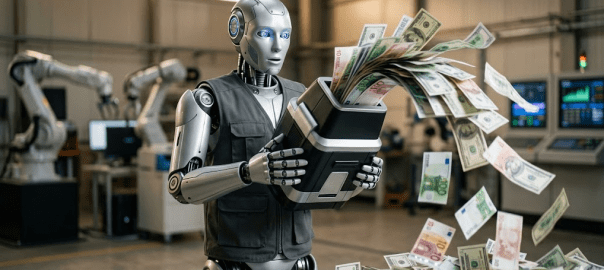
Jan. 6, 2026 /Mpelembe Media/ —The term petrodollar refers to the global system where crude oil is priced and traded exclusively in U.S. dollars. This system has been a cornerstone of American economic and geopolitical power for over 50 years. As of early 2026, the petrodollar system is facing its most significant challenges since its inception, with major shifts in Venezuela and the Middle East reshaping the global energy landscape. Continue reading
All posts by admin
Gemini Code Assistant Fixed The Error
Jan. 6, 2026 /Mpelembe Media/ — Trouble with dedugging code is that when you fix one issue and then end up creating more bugs. Gemini is a good coding assistant. Here is how Gemini fixed an error in under 5 minutes
Copyright infringement, artist compensation
Jan. 6, 2026 /Mpelembe Media/ — In 2025 and early 2026, the BBC Talking Business series and wider BBC reporting have extensively covered the transformative and controversial role of AI in the music industry. Continue reading
AI-Driven Aerial Symphony: 11,787 Drones Use Intelligent Control to Shatter World Record in Chongqin
Jan. 2, 2026 /Mpelembe Media/ — In June 2025, two Chinese organizations collaborated to produce a monumental light show in Chongqing that officially secured a Guinness World Record. Utilizing a fleet of 11,787 drones, the performance established a new benchmark for the largest aerial image ever created by multirotor aircraft. The event served as a celebration of the city’s 28th anniversary as a municipality while showcasing local advancements in low-altitude technology and tourism. Observers witnessed a series of massive glowing illustrations, including landscapes, animals, and human figures, that spanned the night sky. The sheer magnitude of the operation required multiple adjudicators to verify the achievement on-site. This spectacle highlighted the growing intersection of digital innovation and public art on an unprecedented scale. Continue reading
Financing the Future: Leveraging Capital Markets for Africa’s Energy Transition
Jan. 2, 2026 /Mpelembe Media/ —The Africa Capital Markets Report 2025 by the OECD evaluates the current state and future potential of financial systems across the continent. While some nations have made progress, the region generally struggles with low liquidity, fragmented regulations, and a lack of institutional investors. These limitations create significant hurdles for funding climate transition goals and supporting sovereign debt stability. To foster growth, the report suggests enhancing corporate governance, modernizing digital infrastructure, and encouraging regional integration. Ultimately, the document serves as a strategic guide for policymakers to build more resilient debt and equity markets. Continue reading
The AI Economy and Emerging African Business Trends
Jan. 1, 2026 /Mpelembe Media/ — China’s strategic framework for international cooperation is based on the four pillars of the Global Development, Security, Civilization, and Governance initiatives. These programs are presented as a comprehensive Chinese solution to modern crises, aiming to reform the global governance system while promoting a shared future for humanity. By focusing on a people-centered approach, the initiatives prioritize addressing poverty, resolving conflicts through dialogue, and respecting the diversity of cultures. The sources emphasize that these efforts particularly support the Global South by advocating for sovereign equality and a move away from unilateral hegemony. Ultimately, the text argues that these public goods provide a pragmatic roadmap for achieving lasting peace and universal prosperity through multilateral action. Continue reading
Mind the Gap: Why AI is Unlikely to Replace The Role and Influence of Think Tanks
Jan. 1, 2026 /Mpelembe Media/ —These sources collectively examine the multifaceted influence of think tanks as essential intermediaries between complex academic research and practical governmental action. They function as idea brokers that set political agendas, draft legislative blueprints, and provide neutral environments for high-level diplomatic and policy discussions. The documentation categorizes these organizations into academic, advocacy-based, or specialized sectors, illustrating how they utilize media outreach and direct consultation to impact public opinion. Furthermore, the texts highlight the role of these institutes in cultivating future political talent and validating government initiatives to reduce political risk. Modern challenges are also addressed, noting a shift toward financial transparency and active implementation to maintain credibility in polarized climates. Ultimately, the materials present think tanks as vital architects of the global policy ecosystem. Continue reading
Digital Rights & Algorithmic Transparency
Jan. 1, 2026 /Mpelembe Media/ — In 2026, you are protected by a new generation of laws—specifically Article 86 of the EU AI Act and Article 22 of the UK/EU GDPR. These laws give you a “Right to Explanation” when a “high-risk” AI (the kind used in the AI Economy for jobs, loans, or insurance) makes a decision about you. Continue reading
Understanding the AI Economy and Digital ID
Jan. 1, 2026 /Mpelembe Media/ — The “Fifth Industrial Revolution” (5IR), is a shift from tools that we control to environments that control themselves. It frames the future not as a collection of gadgets, but as a totalizing system—the “Cathedral”—where the infrastructure itself makes moral and economic decisions. The Dark Industrial Cathedral is built on surveillance, extraction, and algorithmic control. The primary task for 5IR leaders is “engineering ethics into infrastructure” by embedding human values directly into the code. Continue reading
Beyond Automation: AI as the Operating System of Human Civilisation
Dec. 31, 2025 /Mpelembe Media/ — As of 2025, the global economy is projected to reach approximately $115 trillion, even as it faces a staggering $338 trillion in total debt. Within this landscape, artificial intelligence has emerged as the foundational infrastructure of a Fifth Industrial Revolution, with the AI economy expected to contribute over $15.7 trillion to global GDP by 2030. This technological shift is characterized by the rise of AI sovereignty, where control over data and models defines geopolitical power. While automation and AI agents enhance productivity and business valuations, they also present significant risks regarding cybersecurity and the potential erosion of human identity. Ultimately, society faces a critical choice between using these tools to foster human dignity or allowing them to create a future defined by algorithmic surveillance and control. Continue reading