
Category Archives: Politics

17Aug/26

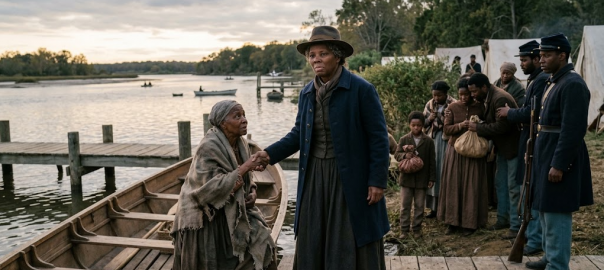
Harriet Tubman led a Civil War raid

Reclaiming the Classroom: How Carter G. Woodson Fought the Violence of Miseducation

Mon, Aug 17 2026 /Mpelembe Media/ —  The foundational struggle for racial equality in America is deeply rooted in the preservation and legitimization of Black history as an active tool of resistance. Carter G. Woodson, recognized as the “Father of Black History,” dedicated his life to establishing separate institutional structures like the Association for the Study of Negro Life and History in 1915 and Negro History Week in 1926 to counter the “miseducation” of African Americans. Woodson argued in his landmark 1933 book, The Mis-Education of the Negro, that the American educational system culturally indoctrinated Black students to accept an inferior status by white-washing their contributions to world culture and history. He observed that controlling a population’s thinking eliminates the need to police their physical actions, as individuals conditioned to believe they are outcasts will naturally find their way to the “back door”. This early twentieth-century battle to reclaim the narrative highlights that systemic control begins in the classroom, a reality that echoes in modern debates over how race and history are taught in public schools. Continue reading

17Aug/26

Zambia’s 2026 Election and 22-Hour Blackouts

The Defining Moments of Zambia’s 2026 Election

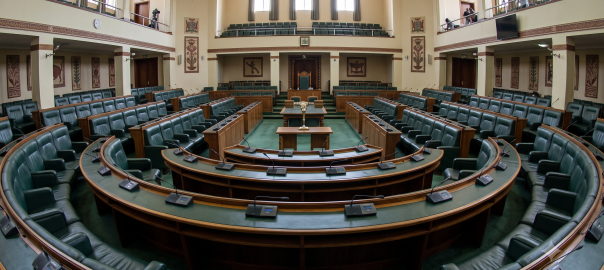
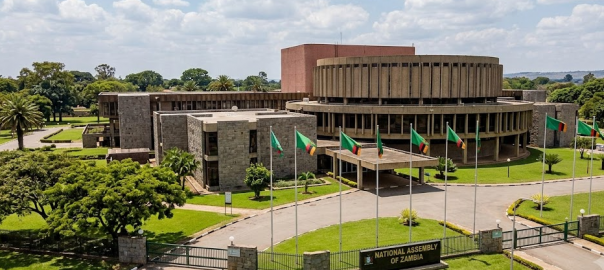
Mon, Aug 17 2026 /Mpelembe Media/ —  These sources provide a comprehensive look at the 2026 Zambian general election, covering the candidates, legal reforms, and shifting political alliances. Incumbent Hakainde Hichilema sought a second term against a fractured opposition, with Brian Mundubile emerging as his primary challenger representing the Tonse Alliance. The reports detail significant constitutional amendments that expanded the National Assembly and introduced a mixed-member proportional representation system. Analysts highlight concerns regarding legislative maneuvering, economic grievances like the high cost of living, and accusations of gerrymandering. Despite reports of isolated violence and a temporary pause in vote counting, the data indicates a high voter turnout among the nearly nine million registered citizens. Ultimately, the records illustrate a tense political landscape defined by regional voting blocks and the ongoing test of Zambia’s democratic institutions. Continue reading

15Aug/26

Zambia’s 2026 Election in the Dark

Zambia Suspends Election Count Amid Violence, Then Resumes
Sat , Aug 15 2026 /Mpelembe Media/ — Zambia’s Electoral Commission halted result announcements on August 14 after attacks on staff and stolen ballots in some areas, an unprecedented step under the Electoral Process Act. Incumbent President Hakainde Hichilema called for peace amid encouraging early signs, while challenger Brian Mundubile declared victory from his party’s tallies and warned of potential interference. The suspension lasted hours; counting resumed that evening with extra security, and partial results on August 15 showed Hichilema leading in key spots like Southern Province.

Continue reading

04Aug/26

Bond Rallies and Blackouts in Zambia

Zambia’s 2026 Election: A High-Stakes Two-Horse Race Decided by Economic Squeeze and Drought

Tue , Aug 04 2026 /Mpelembe Media/ — Zambia’s general election on August 13, 2026, represents a pivotal, alliance-driven contest that will test the country’s democratic resilience and economic direction. Although fourteen presidential candidates are officially cleared to run, the election is fundamentally a two-horse race between incumbent President Hakainde Hichilema of the United Party for National Development (UPND) and opposition challenger Brian Mundubile. Hichilema enters the race backed by an expanded 15-party UPND Alliance, leveraging the power of incumbency. His challenger, Mundubile—a 55-year-old lawyer, accountant, and former government chief whip—is running under the National Reconciliation Party for Unity and Prosperity (NRPUP) banner after unifying a highly fractured opposition under the Tonse–Pamodzi Alliance. Continue reading

04Aug/26

Five Elders Guarding Africa’s Borderless Future

Institutionalizing Peace: The African Union, NEPAD, and the Future of Continental Governance

Tue , Aug 04 2026 /Mpelembe Media/ —The provided sources collectively chronicle Africa’s historical journey from colonial subjugation toward liberation, heavily emphasizing the enduring spirit of Pan-Africanism. A central figure in this narrative is Dr. Kenneth Kaunda, the first president of Zambia, who led his nation to independence in 1964 and became a patriarch of the continent’s anti-colonial struggles. Through his philosophical framework of Zambian Humanism and the unifying national slogan “One Zambia, One Nation,” Kaunda sought to build a cohesive, multi-ethnic society free from the exploitation of man by man. Internationally, he—alongside contemporaries like Julius Nyerere and Kwame Nkrumah—offered crucial support to regional liberation movements fighting against apartheid and minority rule in Southern Africa. While Kaunda’s legacy involves complex debates regarding his period of one-party rule and post-colonial economic challenges, his published works, such as the seminal 1962 autobiography “Zambia Shall Be Free,” remain foundational texts that articulate the ethical and political defense of African self-determination. Continue reading

03Aug/26

The Memoir of Dr. Kenneth Kaunda

A Wake-Up Call for the Diaspora and Economic Sovereignty Institutionalizing Peace:

Mon, Aug 03 2026 /Mpelembe Media/ — The provided sources collectively chronicle Africa’s historical journey from colonial subjugation toward liberation, heavily emphasizing the enduring spirit of Pan-Africanism. A central figure in this narrative is Dr. Kenneth Kaunda, the first president of Zambia, who led his nation to independence in 1964 and became a patriarch of the continent’s anti-colonial struggles. Through his philosophical framework of Zambian Humanism and the unifying national slogan “One Zambia, One Nation,” Kaunda sought to build a cohesive, multi-ethnic society free from the exploitation of man by man. Internationally, he—alongside contemporaries like Julius Nyerere and Kwame Nkrumah—offered crucial support to regional liberation movements fighting against apartheid and minority rule in Southern Africa. While Kaunda’s legacy involves complex debates regarding his period of one-party rule and post-colonial economic challenges, his published works, such as the seminal 1962 autobiography “Zambia Shall Be Free,” remain foundational texts that articulate the ethical and political defense of African self-determination. Continue reading

03Aug/26

Zambia’s Debt Miracle and Democratic Backsliding

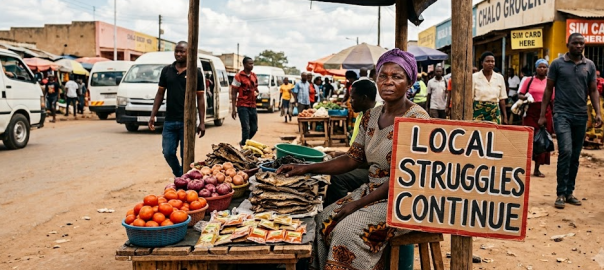
For Zambian voters, the 2026 election represents a critical choice balancing long-term macroeconomic recovery against immediate, severe household pressures. While President Hakainde Hichilema’s administration successfully restructured the nation’s default-era debt and introduced popular programs like universal free education, ordinary citizens are heavily squeezed by a high cost of living, rising food costs, and inflation exacerbated by a historic drought. A primary concern voters should watch out for is the post-election handling of the country’s structural electricity crisis. To avoid grueling 20-hour blackouts during the campaign cycle, the state utility ZESCO has relied on costly emergency regional power imports. Because this spending is fiscally unsustainable, voters face the high risk of a post-election fiscal correction, which will likely involve steep, inflation-inducing retail tariff hikes or a return to severe load-shedding. Furthermore, due to widespread grassroots dissatisfaction with local representation, there is a strong potential for split-ticket voting, meaning voters may back the incumbent president while actively rejecting sitting members of parliament and local councilors. Continue reading

03Aug/26

How Copper Debt Poisoned Zambian Democracy

From Reform to Repression: Zambia’s Authoritarian Turn Under the Shadow of Digital Neo-Colonialism

Mon, Aug 01 2026 /Mpelembe Media/ — The abrupt cancellation of RightsCon 2026 in Lusaka, Zambia, just days before its scheduled opening in May 2026, has exposed the profound intersection of foreign coercion and domestic democratic erosion. Although the Zambian government officially claimed the postponement was to ensure alignment with “national values,” organizers and independent reports revealed that the cancellation was directly triggered by immense pressure from the Chinese Communist Party. Chinese diplomats essentially leveraged their vast economic investments in the country to demand the exclusion of Taiwanese civil society delegates and the moderation of panels critical of Beijing’s digital authoritarianism. Because the conference was slated to be held in a facility donated by the Chinese government, and coincided with negotiations over critical development grants, the Zambian state capitulated to these extraterritorial censorship demands. Continue reading

01Aug/26

Zambia’s 2026 battle over development receipts

Sat, Aug 01 2026 /Mpelembe Media/ —  The 2026 elections are unfolding within a

new governance paradigm that prioritizes decentralized development and performance-based outcomes over traditional dynastic patronage and performative rhetoric. The unprecedented expansion of the Constituency Development Fund (CDF)—which increased allocations per constituency from K1.6 million in 2021 to K40 million in 2026—has made localized, tangible development the primary test of political legitimacy. Consequently, the path to public office in 2026 will likely be determined by a candidate’s proven record of local service, effective management of public resources, and engagement in evidence-based campaign discourse, rather than relying on hereditary claims or social media influence. Continue reading

30Jul/26

Fauci’s Diaries and the Federal Data Purge

Decoding the Fauci Diaries: Public Health, Private Doubts, and a Constitutional Crisis

Thu, July 30 2026 /Mpelembe Media/ — The July 2026 Senate Homeland Security and Governmental Affairs Committee hearing culminated in a bitter constitutional standoff, fundamentally driven by the recent public release of Dr. Anthony Fauci’s private, pandemic-era diaries. The 1,141-page document, retrieved from government computer servers by Health and Human Services Secretary Robert F. Kennedy Jr., provided the rhetorical foundation for the explosive congressional session. Released by Committee Chairman Rand Paul just days before the hearing, the journals were utilized to demonstrate a stark contrast between Dr. Fauci’s private thoughts and his definitive public statements regarding the COVID-19 pandemic. Analyzing the contents of these diaries reveals deep institutional fractures concerning scientific transparency, federal record-keeping, and the limits of congressional oversight. Continue reading