Category Archives: Politics

13Sep/26

The Struggle is One Zambia, One Nation: Kenneth Kaunda

The Political and Economic Legacy of Kenneth Kaunda: A Comprehensive Analysis

1. Introduction: The Architect of Modern Zambia

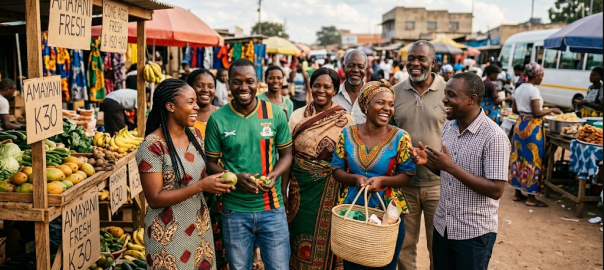
In October 1964, Kenneth Kaunda ascended to the presidency of the newly independent Republic of Zambia, executing a transition of immense strategic complexity. Navigating the metamorphosis of the former British protectorate of Northern Rhodesia into a sovereign Republic required not merely administrative acumen, but the navigation of a post-colonial state inheriting a dualistic economy characterized by enclave mineral extraction and structural dependency. Kaunda emerged as a primary architect of the region’s decolonial architecture, a role that earned him the reverential titles of “Pan-Africanist” and the “Baobab of African politics”—symbolizing a towering, resilient figure whose influence provided the essential canopy for regional liberation. His core mission, as distilled from the regional collective memory, was the reclamation of an African destiny where the continent’s inhabitants could chart their own socio-economic trajectory, finally ending the era where natural resources were plundered while the populace remained in structural poverty. This mission was predicated on a governance model that sought to harmonize indigenous values with the requirements of a modern state. Continue reading

10Sep/26

Trump Midterm Dividend Promise or Federal Bribe

Populist Promise vs. Fiscal Deficit: Unpacking the 2026 Midterm Cash Transfer Strategy

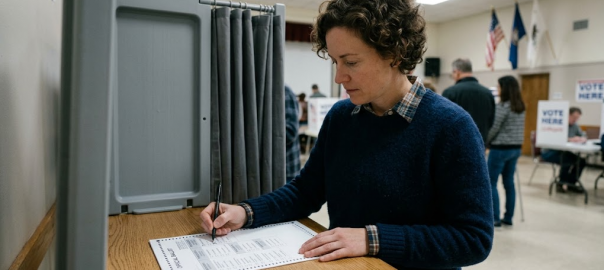
Thu Sep 10 2026 /Mpelembe Media/ — Amidst rising domestic energy inflation, record-setting August fuel prices, and mounting geopolitical tensions surrounding the military conflict in Iran, President Donald Trump unveiled an extraordinary campaign proposal known as the “Trump Dividend”. Delivered during a primary address at the Republican midterm convention in Dallas—informally dubbed “Trumpapalooza”—the policy promises a $5,000 direct cash payout to every adult American citizen on the strict condition that the Republican Party retains or secures control of both chambers of Congress in the 2026 midterm elections. Designed to counter historic electoral trends in which the sitting president’s party traditionally suffers congressional losses, the proposal seeks to directly incentivize voters amidst declining presidential approval ratings and widespread economic anxiety. Continue reading

05Sep/26

Emmanuel Mwamba from statecraft to sedition

Diplomacy, Dissidence, and Digital Resistance: The Life and Career of Emmanuel Mwamba

Sat Sep 05 2026 /Mpelembe Media/ — Emmanuel Mwamba was born on April 18, 1971, in the mining hub of Luanshya within the Copperbelt Province of Zambia. He completed his secondary education at Roan Antelope Secondary School and subsequently earned a Diploma in Journalism and Public Relations from Evelyn Hone College. He expanded his qualifications globally, obtaining a Master of Business Administration from Edith Cowan University in Australia and a Master in Peace Studies from the Institute of Peace & Security Studies at Addis Ababa University. After initial employment at the Zambia National Commercial Bank, he entered the political arena as the administrative secretary and spokesperson for Zambia’s second president, Frederick Chiluba. During this time, Mwamba aggressively defended Chiluba against state-directed corruption prosecutions. This loyalty caused friction with the administration of Levy Mwanawasa, resulting in the termination of Mwamba’s probationary contract in October 2004, though he continued serving Chiluba in a private capacity. Following the reconciliation of Chiluba and Michael Sata in 2005, Mwamba transitioned his allegiance to the Patriotic Front (PF). Continue reading

28Aug/26

Zambia’s Padlocked Courts and Treason Charges

A Fragile Stability Shaken: Suspicious Raid, Court Blockade, and Treason Charges Roil Zambia

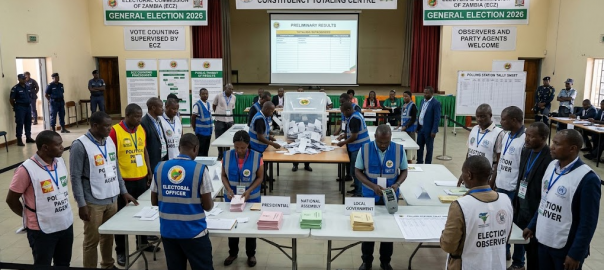
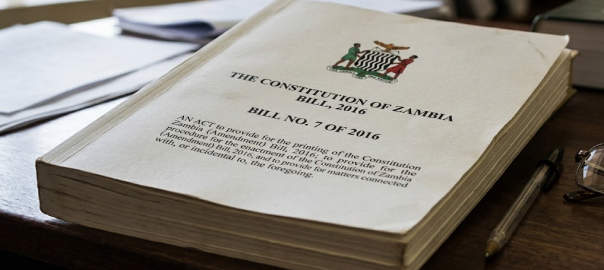
Fri Aug 27 2026 /Mpelembe Media/ — The 2026 Zambian general election, held on August 13, resulted in the re-election of incumbent President Hakainde Hichilema of the United Party for National Development (UPND) with 60.49% of the vote, defeating his primary challenger Brian Mundubile of the Tonse Alliance’s National Reconciliation Party for Unity and Prosperity (NRPUP), who received 37.87%. While the Electoral Commission of Zambia (ECZ) declared Hichilema the winner, the contest was conducted on a deeply uneven playing field due to late-stage constitutional and legislative overhauls that structurally favored the ruling party. These included the Constitutional Amendment Act No. 13 of 2025 and the subsequent Electoral Processes Act No. 12 of 2026, which were passed in May 2026 during the week parliament dissolved, just three months prior to the election. This late enactment, combined with an opaque boundary delimitation exercise completed on April 16, 2026, which added 70 new constituencies largely favoring rural areas traditionally leaning toward the UPND, left minimal time for public education and structurally altered the legislative balance. Furthermore, international and domestic observer missions, including the European Union and the Christian Churches Monitoring Group (CCMG), raised serious concerns over the misuse of state resources, selective enforcement of campaign schedules, and parallel vote count discrepancies suggesting vote inflation in several constituencies. Continue reading

27Aug/26

Restructuring Trump’s Second-Term Immigration Policy

The High Cost of Silence: Tracing the Economic Fallout and Political Volatilities of America’s New Deportation Model

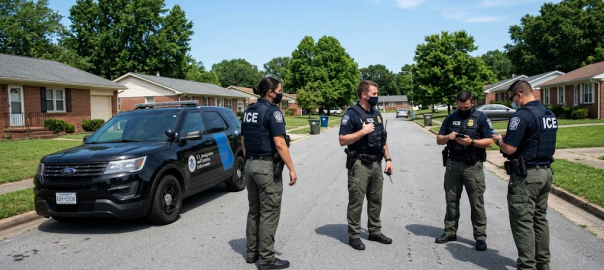
Thu Aug 27 2026 /Mpelembe Media/ — The second Trump administration initially launched its restrictive agenda with highly visible, militarized enforcement campaigns like “Operation Metro Surge” to project an uncompromising stance on domestic security. However, this overt, theatrical strategy hit an immediate crisis following a series of fatal enforcement errors, most notably the killing of Renée Nicole Macklin Good—an unarmed thirty-seven-year-old writer, poet, and U.S. citizen—by an ICE agent in Minneapolis on January 7, 2026. This tragedy, along with other fatal shootings, sparked nationwide protests, public outrage, and state-led lawsuits, inducing a major shift in public opinion. In response to this mounting political liability, the administration underwent a strategic restructuring: it replaced high-profile enforcers, removed Homeland Security Secretary Kristi Noem, and privately instructed congressional allies to drop the politically sensitive phrase “mass deportations” in favor of targeting violent criminals. Continue reading

27Aug/26

Trump’s Silverback Strategy and the Donroe Doctrine

A Weapon of Mass Disruption: Why the 2026 Iran War Exposed the Limits of American Might

Wed, Aug 26 2026 /Mpelembe Media/ — Donald Trump’s second term has transitioned into a highly volatile era characterized not by a passive “lame duck” status, but by what analysts call the “Silverback Presidency.” This statecraft style mirrors an aging mountain gorilla that, sensing its time is short and its dominance threatened, resorts to aggressive, unpredictable outbursts rather than yielding to institutional gridlock. Operating under a framework of personal grievance, vengeance, and an explicit rejection of the post-war rules-based order, Trump has openly asserted that his executive actions are limited only by his “own mind and morality”. Free from the perceived constraints of international law, the administration has launched high-stakes global maneuvers designed to forcefully project American power and secure a disruptive, nationalist legacy. Continue reading

24Aug/26

Zambia’s election petition hits a padlocked court

Separation of Powers Fractured: Armed Forces Lock Down Zambian Courts as Inauguration Looms

Mon, Aug 24 2026 /Mpelembe Media/ — The general election in Zambia on August 13, 2026, concluded with the Electoral Commission of Zambia declaring incumbent President Hakainde Hichilema of the United Party for National Development (UPND) the winner with 60.49% of the vote, securing a second term over his chief opponent, Brian Mundubile of the National Reconciliation Party for Unity and Prosperity (NRPUP), who received 37.87%. Mundubile immediately rejected these results, citing serious irregularities, vote fraud, and significant ballot count discrepancies, which were echoed by independent parallel vote tabulations and international observer reports. Concerns were heightened by a temporary suspension of vote counting on August 14 and subsequent heavy military deployment at tallying centers, which observers noted compromised the transparency of the results process. Continue reading

21Aug/26

Blood and Copper in Zambia’s Stolen Election

Independent Audit Exposes Systematic Tallying Discrepancies in 30 Constituencies of Zambia’s Presidential Vote

Fri, Aug 21 2026 /Mpelembe Media/ — On August 18, 2026, the Electoral Commission of Zambia (ECZ) declared the re-election of incumbent President Hakainde Hichilema (United Party for National Development – UPND) to a second five-year term. The official results indicated that Hichilema won 60.49% of the vote (2,965,326 votes), while his primary challenger, Brian Mundubile of the National Reconciliation Party for Unity and Prosperity (NRPUP)—representing the Tonse-Pamodzi Alliance—secured 37.87% (1,856,222 votes). The ECZ reported an official voter turnout of 57.23% out of 8,786,300 registered voters. Hichilema praised the electorate for their trust, pledging to focus on national unity and development, while the opposition immediately rejected the results, alleging systematic irregularities and promising legal challenges. Continue reading

20Aug/26

Zambia’s Landslide Victory and Opposition Crackdown

From Democratic Beacon to Shadow State — President Hichilema’s Co-option of the Judiciary and Post-Election Security Crackdowns

Thu, Aug 20 2026 /Mpelembe Media/ — Zambia’s standing as a historically resilient multiparty democracy in Southern Africa has been severely tested by the events surrounding the August 13, 2026, general election, which critics argue represent a systematic campaign by President Hakainde Hichilema’s administration to dismantle the country’s democratic framework. Although Hichilema came to power in 2021 on a reformist “New Dawn” platform pledging to restore the rule of law and depoliticize the civil service, his administration has increasingly co-opted state institutions to eliminate political opposition and consolidate executive hegemony, fueling fears of an engineered “life presidency”. The run-up to the election was marked by rising authoritarianism, including the weaponization of the Cyber Crimes Act of 2025 to arrest independent journalists like MacPherson Mukuka and Thomas Allan Zgambo, as well as a proposed Non-Governmental Organizations Bill designed to grant the government excessive control over civil society groups. Tensions escalated further following the death of former President Edgar Lungu in June 2025, which fragmented the opposition, and the Constitutional Court’s retroactive disqualification of Lungu from contesting the 2026 elections. Continue reading

20Aug/26

Military raids and treason in Zambia

Democracy in Peril: Military Raid, High-Profile Arrests, and Disputed Ballots Shackle Zambia’s Post-Election Landscape

Thu, Aug 20 2026 /Mpelembe Media/ — Zambia’s general election, held on August 13, 2026, resulted in the re-election of incumbent President Hakainde Hichilema for a second five-year term. According to the Electoral Commission of Zambia (ECZ), Hichilema secured 60.49% of the vote, defeating his primary challenger, Brian Mundubile of the National Reconciliation Party for Unity and Prosperity (NRPUP), who received 37.87%. While Hichilema expressed gratitude to voters and committed his second term to national unity, economic expansion, and debt recovery, the electoral process was instantly marred by major disruptions. On August 14, the ECZ temporarily suspended vote counting and results tabulation nationwide, citing localized violence against polling staff and the theft of marked ballots. Although the suspension was lifted the same day, international observer groups, including the European Union and the Southern African Development Community (SADC), voiced concerns over an uneven playing field, late constitutional and legal reforms, extended pauses in results tabulation, and reports of political intimidation. Continue reading