
11Jan/26

The King FIFA Forgot: Why Godfrey Chitalu’s 107-Goal Record Remains in the Shadows.

Jan . 11, 2026 /Mpelembe Media/ —
“In the history books of world football, the names Lionel Messi and Gerd Müller are synonymous with goal-scoring perfection. However, deep in the archives of African football lies a record that dwarfs them both. In 1972, a Zambian powerhouse named Godfrey ‘Ucar’ Chitalu reportedly found the net an incredible 107 times—a feat that should have made him an immortal icon. Yet, decades later, this staggering achievement remains unratified by FIFA, leaving fans to wonder: why was the greatest individual season in football history buried, and will the ‘King of Goals’ ever receive the global justice he deserves?” Continue reading

10Jan/26

From Classrooms to the Cloud: Pioneering the Agentic Era on Mpelembe.net

Jan. 9, 2026 /Mpelembe Media/ — Built on the power of the Google ecosystem, mpelembe.net is more than a platform—it is a bridge between the local excellence of Mpelembe Secondary School and the global tech frontier. Through real-time AI collaboration and cloud-driven social impact projects, we are turning the collaborative spirit of the Copperbelt into a world-class laboratory for human-centered technology. While they share a name and a deep history, mpelembe.edu.zm and mpelembe.net represent two different “dimensions” of the Mpelembe ecosystem. One is the physical foundation of education, while the other is the digital frontier of innovation. Continue reading

09Jan/26

Intent Recognition (The “Mood” Factor)

Jan. 9, 2026 /Mpelembe Media/ — When we talk about Grok in the context of physical robots (like Tesla’s Optimus humanoid), we aren’t just talking about a chatbot. We are talking about the “brain” that translates digital sentiment into physical action. The reason “mood swings” and sentiment analysis matter for robots is that they move AI from being a calculator to being a collaborator. For a robot to operate safely and naturally around humans, it must “grok” (deeply understand) the emotional context of its environment.  Continue reading

09Jan/26

The Persian Threshold: Tehran Teeters Between Total Collapse and a “Year of Blood”

Jan. 9, 2026 /Mpelembe Media/ — The Iranian regime is currently facing its most existential challenge since the 1979 Revolution. As of January 9, 2026, the situation has shifted from sporadic economic protests into a coordinated nationwide uprising. Continue reading

09Jan/26

The Thin Green Line: Federal Authority, Extremist Infiltration, and the New Rules of ICE Enforcement (2026)

Jan. 9, 2026 /Mpelembe Media/ — Given the complex overlap of federal authority, extremist infiltration concerns, and the evolving legal landscape of 2026, U.S. Immigration and Customs Enforcement (ICE) finds itself at the center of an unprecedented convergence of federal expansion and civil rights controversy. Following a historic 120% increase in manpower and the diversion of over 28,000 personnel from other federal agencies to enforcement operations, the agency has faced intense scrutiny regarding its vetting processes and the infiltration of far-right extremist ideologies. Continue reading

09Jan/26

The Gated Games: Why the 2026 World Cup is Losing its Soul

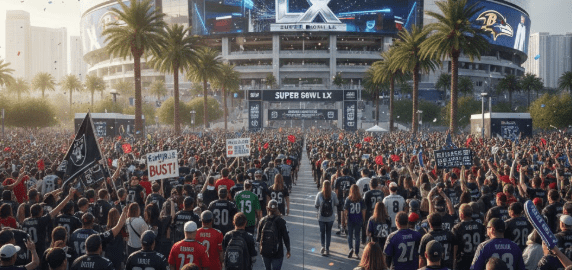
Jan. 9, 2026 /Mpelembe Media/ — The World Cup has always been more than a tournament; it is a quadrennial “Global Village” where the world puts aside its borders for ninety minutes at a time. But as we approach the 2026 kickoff, that village is being replaced by a fortress. The United States’ current immigration stance—marked by travel bans for 39 nations and “extreme vetting” for others—is fundamentally altering the spirit of the game. We are moving toward a “Two-Tier World Cup” where your ability to cheer for your national team is determined by the strength of your passport, not the depth of your passion. Continue reading

09Jan/26

A Divided Pitch: The Rise of “Fortress America” and the Death of the Global Fan

Jan. 9, 2026 /Mpelembe Media/ — The intersection of U.S. immigration policy and the 2026 FIFA World Cup has become a major flashpoint. The feasibility of a boycott and the “ruining” of the game are subjects of intense debate among human rights groups, fans, and governing bodies. Football without fans is like a movie without a soundtrack. You can still follow the plot, and the acting (the skill) is still world-class, but you lose the emotional crescendos that make you jump out of your seat. For a World Cup—an event built on the “unity” of humanity—a lack of fans doesn’t just change the score; it changes the soul of the event. Continue reading

09Jan/26

The Vigilance Blueprint: A Framework for Community-Led Counter-Surveillance

Jan. 9, 2026 /Mpelembe Media/ — This initiative, modeled on the Surveillance Watch concept, empowers citizens to transition from passive subjects of monitoring to active participants in privacy oversight. By leveraging a decentralized network of volunteers, the project creates a high-resolution, grassroots map of surveillance infrastructure—such as facial recognition cameras, license plate readers, and cell-site simulators. The framework addresses the inherent risks of community activism (such as data inaccuracy and volunteer safety) Continue reading

09Jan/26

Data, Deception, and the Death of Renee Nicole Good

Jan. 9, 2026 /Mpelembe Media/ — On January 7, 2026, the fatal shooting of 37-year-old Renee Nicole Good by an ICE agent in South Minneapolis ignited a national firestorm, exposing the lethal intersection of mass deportation policies and AI-driven surveillance. While federal officials, including President Trump and DHS Secretary Kristi Noem, have labeled Good a “domestic terrorist” who weaponized her vehicle, eyewitness accounts and independent video forensics suggest a far different reality: a U.S. citizen and mother of three attempting to steer her SUV away from a chaotic federal enforcement action. Continue reading

08Jan/26

2026 Risk Report: Zambia’s Economic & Political Outlook

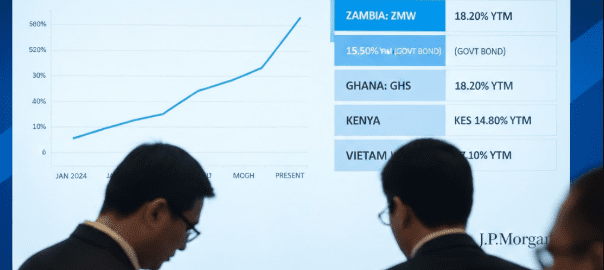
Jan. 8, 2026 /Mpelembe Media/ — In 2026, Zambia is positioned at a critical crossroads, transitioning from a period of climate-induced shocks (2024–2025) into a high-growth phase. The economy is projected to expand by 6.4%, a “rebound” driven primarily by a resurgence in the mining sector as copper production targets 1 million metric tons. This growth is supported by a more stable agricultural season and a strategic pivot toward renewable energy to mitigate future power deficits. Continue reading