
April 18, 2026 /Mpelembe Media/ — These sources analyze the shift toward precarious labor and contracting within the modern economy, with a particular focus on the technology sector. One report highlights the exploitation of data workers in the United States, revealing that those who train artificial intelligence often face low wages, unstable hours, and a lack of essential mental health benefits. Parallel research examines the broader gig economy, noting that while some high-skilled professionals choose independent contracting for its autonomy, many others are forced into these roles by restructuring or a lack of traditional opportunities. This transition often results in limited employer-provided training and the erosion of job security, creating a “race to the bottom” for workers across various demographics. Ultimately, the collection illustrates how algorithmic management and subcontracting are redefining the relationship between firms and employees, often prioritizing corporate flexibility and profits over worker stability. Continue reading
Tag Archives: India
TACO” (Trump Always Chickens Out) trade theory
Greedflation and the Global Market: How Empty Ultimatums are Costing the Consumer
April 9, 2026 /Mpelembe Media/ — The analysis explores the geopolitical and economic volatility surrounding the 2025–2026 trade policies of the Trump administration, specifically focusing on the “Taco trade” theory. This investment strategy, standing for “Trump Always Chickens Out,” suggests that markets often rally following aggressive tariff threats because traders anticipate a subsequent retreat or moderation. While some financial analysts view these maneuvers as negotiating tactics, macroeconomic reports warn of a “tax on certainty” that drives inflation and disrupts global supply chains. The texts also detail specific international frictions, such as 100% tariffs on Chinese goods and military tensions with Iran, which impact energy prices and strategic mineral control. Additionally, regional reactions are captured through public discourse in Louisiana regarding political monuments and legislative priorities. Collectively, the sources examine how authoritarian populism and executive discretion have transformed the global trade landscape into a transactional, high-stakes environment.
From AI Hype to Strategic Execution: The New Rules of the Global Labor Market
How is the U.S.-Israel-Iran conflict reshaping the global economy?
March 7, 2026 /Mpelembe Media/ — Geopolitical Risk Report: The 2026 West Asian Realignment and the Collapse of Regional Diplomacy
The U.S.-Israel-Iran conflict is triggering severe shocks across the global economy, primarily through disruptions to energy supplies, international trade routes, financial markets, and critical technology infrastructure.
Energy Market Upheaval The most immediate economic threat stems from rising energy prices due to the disruption of the Strait of Hormuz—a crucial maritime chokepoint that normally handles about one-fifth of the world’s oil and liquefied natural gas (LNG). Following Iranian threats, commercial shipping through the strait has slowed to a near-standstill, with tanker traffic dropping by about 90% and multiple insurance firms canceling coverage for Gulf vessels. Continue reading
How DNA and Smartwatches Rewrite Health Insurance
A Region on the Brink: Stranded Civilians, Evacuation Chaos, and Suspended Aid in the Middle East
Hundreds of Thousands Stranded: Middle East Airspace Shutdown and Strait of Hormuz Closure Paralyze Global Transit
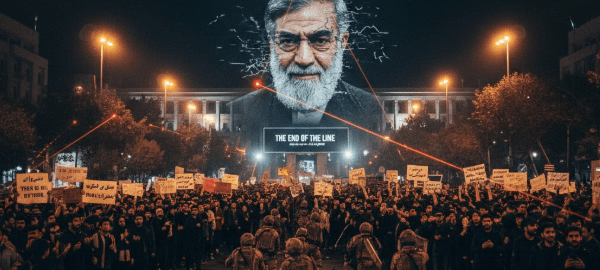
March 2, 2026 /Mpelembe Media/ — The United States and Israel launched a massive, coordinated military campaign—codenamed Operation Epic Fury and Operation Lion’s Roar—against the Islamic Republic of Iran. The coalition conducted nearly 900 strikes in the first 12 hours, targeting Iranian air defenses, missile production facilities, and IRGC command centers. The strikes successfully assassinated Supreme Leader Ali Khamenei and dozens of top Iranian military and government officials. In retaliation, Iran launched “Operation True Promise 4,” firing waves of ballistic missiles and drones at Israel and US military installations across the Persian Gulf, including bases in Qatar, Bahrain, Kuwait, and the UAE.
Global Transit in Chaos: War in Iran Triggers Massive Airspace Closures and Threatens Energy Markets
Middle East in Turmoil: US-Israeli Strikes Kill Khamenei, Triggering Iranian Retaliation and Global Transit Paralysis
March 2, 2026 /Mpelembe Media/ — On February 28, 2026, the United States and Israel launched a massive, coordinated military campaign against Iran, targeting the country’s leadership, nuclear facilities, and military infrastructure. The strikes resulted in the assassination of Supreme Leader Ali Khamenei and dozens of top Iranian military and government officials, severely degrading the regime’s command-and-control structure. Continue reading
India AI Impact Summit 2026: Shaping Global AI Governance, Securing Massive Investments, and Joining Pax Silica
The Center of Gravity Just Shifted: 5 Surprising Lessons from the India AI Impact Summit 2026
Feb 21, 2026 /Mpelembe media/ — For the past three years, the global conversation surrounding Artificial Intelligence has been dominated by a single, narrow theme: safety. From the Bletchley Park AI Safety Summit (2023) to high-level gatherings in Seoul (2024) and Paris (2025) , the focus remained fixed on “existential risk” and theoretical doomsday scenarios. While the West remained paralyzed by the “Alignment Problem,” the Global South has been focused on the “Access Problem.”The India AI Impact Summit 2026 , held from February 16–21 at Bharat Mandapam in New Delhi, decisively shifted the center of gravity. As the first global AI summit hosted in the Global South, the event pivoted from speculative risks to “Applied AI” —technology deployed today to solve real-world problems. Anchored in the philosophical foundation of the “Three Sutras” (People, Planet, and Progress) , the summit presented a human-centric alternative to the Silicon Valley narrative, prioritizing inclusive development over elite safety debates. Continue reading
The $33 Trillion Shift: 5 Surprising Realities Reshaping the Stablecoin Era
Stablecoins Come of Age: Navigating Landmark Regulations, Global Adoption, and the Rise of Yield-Bearing Tokens
Feb 19, 2026 /Mpelembe media/ — By late 2025 and early 2026, the global stablecoin market has transitioned from a niche crypto-trading utility into core financial infrastructure, processing trillions of dollars in annual transaction volume. This evolution is defined by the implementation of landmark regulatory frameworks—most notably the U.S. GENIUS Act and the EU’s MiCA regulation—which have established strict operational standards and legitimized the asset class. Simultaneously, the market has seen a surge in institutional adoption and a significant structural shift toward yield-bearing and synthetic stablecoin models. However, despite these advancements, recent market shocks underscore that systemic vulnerabilities, such as liquidity crunches and de-pegging risks, remain persistent threats. Continue reading
Mining Indaba 2026: Project Vault, Policy Reform, and the Push for African Industrialization
The Billion-Dollar Handshake: Why the World’s Diamond Giants are Finally Teaming Up
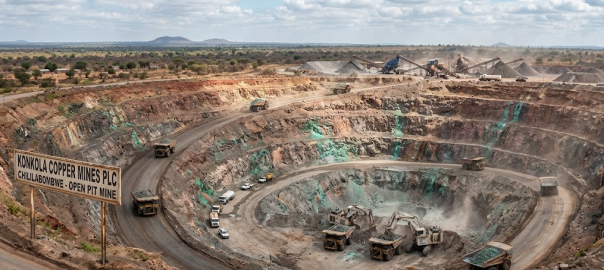
10 Feb. 2026 /Mpelembe Media — The 2026 Investing in African Mining Indaba is currently underway in Cape Town, South Africa, operating under the theme “Stronger Together: Progress Through Partnerships”. The event has attracted record attendance, including 58 government ministers and two heads of state, amidst an intensifying geopolitical race for critical minerals. Continue reading