
Tag Archives: Computational neuroscience

09Sep/26

GPT-6 Astra takes the steering wheel

“AGI Has Arrived”: Industry Declarations, Benchmark Discrepancies, and the Launch of GPT-6 Astra

Wed Sep 09 2026 /Mpelembe Media/ — The public discussion surrounding artificial general intelligence reached a pivotal moment following the rollout of OpenAI’s GPT-6 Astra in September 2026. Nvidia CEO Jensen Huang declared on social media that “AGI has arrived,” highlighting Astra’s training on more than 100,000 Grace Blackwell NVLink72 GPUs and noting that another 400,000 GPUs are scheduled to come online. This definitive stance represented a sudden shift from Huang’s statements during Nvidia’s Q2 FY2027 earnings call just days prior, where he described traditional AGI milestones as “senseless” and emphasized that the industry should focus on practical utility, useful work, and generating “profitable tokens”. Over the preceding two years, Huang’s public timeline for AGI shifted from passing every human test within five years to defining it as an AI capable of creating a temporary viral application, while acknowledging that AI agents remained incapable of replicating the complex work of running Nvidia itself. Analysts note that by framing Astra’s rollout as the literal arrival of AGI, Huang reinforced the market narrative that massive hardware investments directly drive corporate revenue. Continue reading

28Aug/26

Your AI intern is managing your mind

Algorithmic Elenchus: Deconstructing Structural Incentives and Substantive Due Process in Comparative Law

Thu Aug 27 2026 /Mpelembe Media/ —  The 2026 Zambian presidential election was defined by major legal and structural changes that occurred shortly before the vote. Under Constitutional Amendment Act No. 13 of 2025 and the subsequent May 2026 Electoral Processes Act, the electoral boundary map was dramatically redrawn, expanding the constituency seats from 156 to 226 just three months prior to the election. Following the vote, tension escalated when the Electoral Commission of Zambia (ECZ) suspended vote counting for six hours on August 14 before declaring incumbent Hakainde Hichilema the victor with 60.49% of the vote. In response, opposition leader Brian Mundubile prepared to file a formal challenge in the Constitutional Court. However, on the final day of the mandatory seven-day filing window, police citing “security reasons” physically sealed the top courts, blockading access and forcing the opposition to resort to an unprecedented digital petition sent directly to the Chief Justice’s personal email. Continue reading

05Aug/26

Testing reality from hoaxes to AI

The UBUNK Paradigm: Building Mental Muscle Memory to Break the Chain of Fake News

Wed , Aug 05 2026 /Mpelembe Media/ — The UBUNK method is a gamified verification platform that reframes digital media literacy as an active discipline modeled after physical athletic conditioning. Rather than passively consuming information, the platform forces users to step into a digital “arena” where they must actively confront and dismantle highly contested claims. Continue reading

04Aug/26

The hidden tax of AI tech debt

The Jagged Technological Frontier: Why the AI Era Demands a Supreme Premium on Human Judgment

Tue , Aug 04 2026 /Mpelembe Media/ — The integration of generative artificial intelligence into highly skilled professional workflows has illuminated a “jagged technological frontier,” where AI dramatically enhances performance on tasks within its capability boundary but causes silent, severe performance degradation on tasks lying just beyond it. While early organizational studies celebrated substantial speed and quality gains on rote assignments, actual longitudinal production data has exposed a stark AI productivity paradox. In areas like software development, experienced developers frequently report feeling significantly faster while objectively measuring slower due to a massive increase in code churn, a surge in copy-pasted duplication, and a severe reduction in refactoring. These trends rapidly compound long-term technical debt and inject latent vulnerabilities into production systems, demonstrating that accelerating raw output without rigorous, expert validation ultimately introduces severe operational bottlenecks. Continue reading

31Jul/26

Replacing Human Experts With AI Agents

The Collapse of the Creative Middle Class: Media and Tech Giants Dismantle Traditional Roles for AI Efficiency

Fri, July 30 2026 /Mpelembe Media/ — The AI Transition and Corporate Consolidation In July 2026, the global technology, media, and information services sectors experienced a profound wave of corporate restructuring that signaled a fundamental shift toward artificial intelligence integration and platform-native operating models. Rather than representing a standard economic downturn, these workforce reductions illustrate a deliberate move by companies to automate workflows, eliminate traditional departments, and pivot away from legacy open-web advertising. Media organizations are aggressively consolidating their operations and exploring alternative monetization strategies. For example, BuzzFeed laid off 35% of its remaining staff (around 180 employees) following its acquisition by Byron Allen, shifting its focus toward free ad-supported streaming television and user-generated video networks to offset mounting debt and declining ad revenues. Similarly, Robinhood shut down its standalone media arm, Sherwood News, laying off its editorial staff to embed breaking news directly into its trading app and signature newsletters. In the Web3 space, Decrypt merged with Rug Radio to form a new conglomerate, laying off most of its editorial team to pivot away from programmatic ads and toward prediction markets and on-chain transactions. Continue reading

31Jul/26

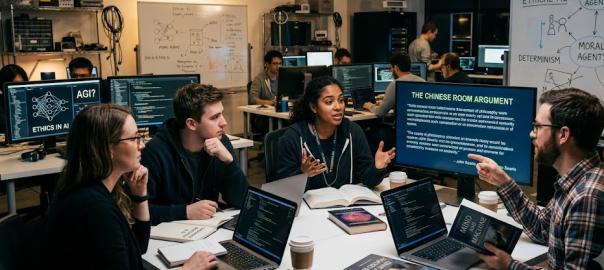
Why Philosophy Degrees Now Outperform Coding

From Syntax to Semantics: The Real Role of the Humanities in the Age of Generative AI

Fri, July 31 2026 /Mpelembe Media/ — he traditional belief that a computer science degree is a guaranteed golden ticket to lucrative employment is currently collapsing. Driven by macroeconomic tightening, the end of zero-interest-rate policies, and the rapid advancement of generative AI that automates entry-level coding tasks, tech companies have drastically reduced their hiring of new graduates. Tech leaders like Nvidia CEO Jensen Huang are even suggesting that the era of learning to code is over, advising future generations to focus on domain-specific expertise as natural language becomes the primary programming interface. Consequently, recent data from the Federal Reserve Bank of New York shows computer science and engineering graduates facing unemployment rates around 7%, which is noticeably higher than those in several humanities disciplines. Continue reading

31Jul/26

When machines write better than humans

AI Integration and Integrity in 2026

Thu, July 30 2026 /Mpelembe Media/ — The provided sources paint a picture of a digital, literary, and academic landscape fundamentally transformed by generative artificial intelligence by the year 2026. The integration of large language models (LLMs) has sparked intense debates around intellectual property, job displacement, academic integrity, and the very definition of human authorship. Continue reading

29Jul/26

Why Zuckerberg is Building an AI CEO

Friction in the Labs: Delays, Layoffs, and Culture Clashes Inside Meta’s Superintelligence Push

Wed, July 29 2026 /Mpelembe Media/ — The Open-Source Vision and Industry Dominance Meta CEO Mark Zuckerberg is aggressively positioning the company as the primary institutional sponsor of open-source (open-weight) artificial intelligence. With the release of Llama 3.1, Zuckerberg argues that open-source AI is the path forward because it empowers developers, prevents centralization of power, and allows organizations to protect their data without being locked into closed vendor ecosystems like those of Apple, OpenAI, or Google. By freely distributing its models, Meta hopes to commoditize the AI layer and establish Llama as the ubiquitous global industry standard. Continue reading

26Jul/26

Why the AI job apocalypse hasn’t happened

The Macroeconomic Paradox of Cognitive Automation

Sun, July 26 2026 /Mpelembe Media/ — At the aggregate level, the widely feared “AI jobs apocalypse” has not materialized in the macroeconomic data. Prominent technology executives, including Anthropic CEO Dario Amodei, have previously warned of an imminent structural crisis, predicting that advanced cognitive systems could displace up to 50% of entry-level white-collar jobs and push aggregate unemployment into double digits. However, actual labor statistics tell a much more stable story. The U.S. labor market remains near full employment, hovering at a 4.2% jobless rate, with prime-age employment rates remaining near multi-decade highs. Extensive research by Anthropic’s head of economics, Peter McCrory, shows no relative increase in unemployment for highly exposed occupations compared to unexposed ones. Continue reading

24Jul/26

Boxing training against digital manipulation

Inside the Rhetorical Sparring Ring: UBUNK’s Plan to Knockout Online Nonsense

Fri, July 24 2026 /Mpelembe Media/ — The core philosophy and mission behind the UBUNK platform center on actively confronting falsehoods and proving oneself as a “heavyweight truth-teller”. It embraces a rigorous, arena-like environment where users are invited to “Step into the arena” and “Knockout the nonsense,” using the metaphor of a gym to emphasize the active and potentially competitive nature of seeking and defending the truth. Continue reading