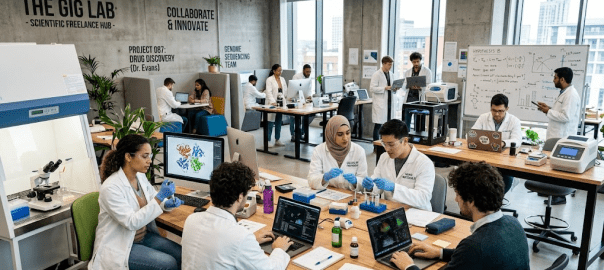
Oct. 30, 2025 /Mpelembe Media/ — AI Agents are autonomous software systems that use Artificial Intelligence (AI) to perceive their environment, reason, plan, and execute actions to achieve a specific goal on behalf of a user, often without continuous human oversight. They essentially act as intelligent, goal-driven software robots. Continue reading
Google Workspace: A Guide for Using AI at Work
Oct. 29, 2025 /Mpelembe Media/ — The Google Workspace guide details the integration and benefits of Artificial Intelligence (AI) across its suite of work applications. It asserts that Google is leading AI innovation and helping organisations enhance human potential through features built for security and scale. Continue reading
Startup Technical Guide: Building AI Agents on Google Cloud
Oct. 29, 2025 /Mpelembe Media/ — This document provides a comprehensive technical guide for startups and developers focused on building, deploying, and scaling AI agents on the Google Cloud ecosystem. It details the core components of agentic systems, including model selection, the use of tools for action, and various data architectures for agent memory. Continue reading
Gartner’s Top 10 Strategic Technology Trends for 2026
Oct. 29, 2025 /Mpelembe Media/ –The strategic imperatives that define success for technology leaders navigating the AI-powered, hyperconnected world are captured within the three themes of the Gartner Top 10 Strategic Technology Trends for 2026. These trends are considered strategic imperatives that demand thoughtful consideration and decisive action from technology leaders. Continue reading
Wirex Forecasts Stablecoin Payments Revolution Under MiCAR
A new whitepaper from Wirex, a global stablecoin payments platform, forecasts a €1 trillion stablecoin market in Europe. The report, titled ‘Status of Digital Payments: Italy and Europe under MiCAR’, predicts that the European Union’s new MiCAR regulatory framework will propel significant growth in euro-denominated stablecoins and facilitate the rise of “agentic payments”, which are AI- and smart-contract-driven autonomous transactions. Wirex argues that MiCAR will act as a catalyst for innovation, leading to the emergence of stablecoin-native neobanks that offer programmable accounts and combine the programmability of crypto with regulated finance. Continue reading
Nanomedicine Breakthrough Redefines Oncology Drug Delivery
This report focuses on a major shift in the oncology market toward advanced drug delivery systems, specifically nanomedicine. It highlights how poor bioavailability limits the effectiveness of traditional cancer drugs and presents Oncotelic Therapeutics Inc.’s Deciparticle platform as a solution designed to significantly increase drug absorption and reduce toxicity. The article details the platform’s versatility, its clinical momentum with the advancement of Sapu-003 (Deciparticle Everolimus) into human trials, and the projection that the nanomedicine market will surpass $500 billion by 2032, driven by delivery innovation. Continue reading
Miami Fashion Week 2025: Style, Sustainability, and Innovation
This week-long event celebrated the integration of style, sustainability, and technology, reinforcing Miami’s standing as a major global fashion hub. Key components included runway shows featuring international and Latin American designers, a high-profile gala benefiting the Miami Dade College Miami Fashion Institute, and a summit focused on the future of fashion. Furthermore, designers such as Naeem Khan and Nicole Miller were officially honoured for their contributions, and the week culminated in a spectacular event showcasing virtual fashion shows. Continue reading
Aligning University IT with Research Faculty Needs
This document addresses the growing complexity of research computing at universities and how many institutions lack the necessary tools and governance to align IT capabilities with faculty research goals. The advisory firm outlines a four-phase strategic approach for higher education IT leaders to evaluate their systems, translate findings into actionable initiatives using the MoSCoW method for prioritisation, and ultimately strengthen research outcomes by better supporting faculty. The resource aims to help institutions overcome issues like fragmented systems and funding challenges by providing a structured framework for improving research IT maturity. Continue reading
Iridium Unveils PNT ASIC for Global GPS Protection
This new chip is intended to offer comprehensive protection against the rising threat of jamming and spoofing of traditional Global Navigation Satellite Systems (GNSS), such as GPS, which has led to high-profile disruptions and significant economic risk. Measuring just 8mm by 8mm, the ASIC can integrate into a wide array of devices, receiving a secure signal from the Iridium satellite network that is 1,000 times more powerful than GPS. Iridium states that this device will democratise GNSS resilience and serve as a reliable alternative or primary source for PNT data across government, industrial, and consumer applications, with commercial availability planned for mid-2026. Continue reading
FAT1 Imaging Revolutionizes Essential Tremor Treatment
The study concerns a new imaging technique called FAT1, developed by consultant neurosurgeon Mr. Harith Akram, which is designed to improve the accuracy and outcomes of MR-guided focused ultrasound (MRgFUS) treatment for patients suffering from essential tremor. This technique, which fuses multiple MRI scan types, aims to overcome the difficulty of visualising the small target area in the brain (the Vim nucleus) during the non-invasive procedure. Continue reading