Claire Burchett, King’s College London
Police have arrested 25 people accused of planning to overthrow the German government in a series of raids across the country.


Claire Burchett, King’s College London
Police have arrested 25 people accused of planning to overthrow the German government in a series of raids across the country.
Matthew Sussex, Australian National University
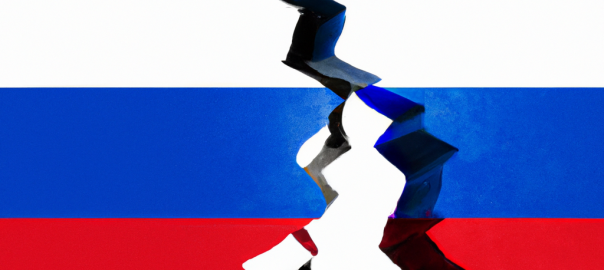
Among the many questions asked about Russia’s disastrous war against Ukraine, one of them is posed only very rarely: can Russia survive what seems increasingly likely to be a humiliating defeat at the hands of its smaller neighbour?

Patrick E. Shea, University of Glasgow
Countries across the world are drifting towards a debt crisis. Economic slowdowns and rising inflation have increased demands on spending, making it almost impossible for many governments to pay back the money they owe.
David Bach, International Institute for Management Development (IMD)
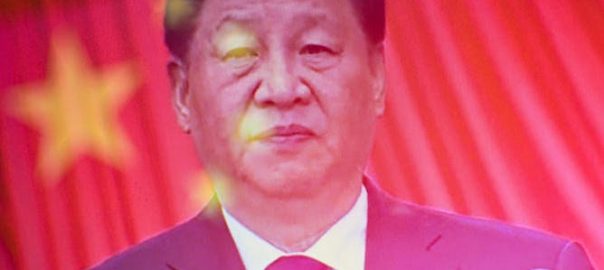
Chinese leader Xi Jinping’s recent speech to the Communist Party Congress could be one of the most consequential of the decade. He told the audience – and the world – that his economic growth-crushing zero-COVID policy is here to stay, and that Beijing is more determined than ever to reunify with Taiwan, peacefully if possible and by force if necessary.
Katharina Richter, University of Bristol; Alix Dietzel, University of Bristol, and Alvin Birdi, University of Bristol
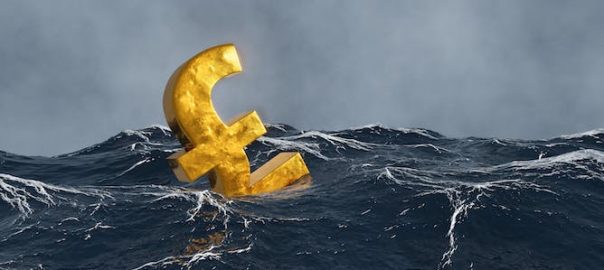
The day before new UK chancellor Kwasi Kwarteng’s mini-budget plan for economic growth, a pound would buy you about $1.13. After financial markets rejected the plan, the pound suddenly sunk to around $1.07. Though it has since rallied thanks to major intervention from the Bank of England, the currency remains volatile and far below its value earlier this year.

On the wooded hill above the Stan Terg lead and zinc mine in Kosovo, there is an old concrete diving platform looming over what was once an open-air swimming pool. Before the break-up of Yugoslavia, people who worked at the mine would bring their families here to swim, sunbathe on the wide terrace with its view across the valley, and picnic among the trees. Now the pool is slowly disappearing into the forest, the view obscured by birch saplings.

A ‘network state’ is ideologically aligned but geographically decentralised. The people are spread around the world in clusters of varying size, but their hearts are in one place.
In June 2022 Balaji Srinivasan, former chief technology officer of the Coinbase cryptocurrency exchange, published an ebook entitled The Network State: How To Start a New Country. It is the latest in a flurry of utopian visions by self-styled digital visionaries, crypto believers and web 3.0 evangelists who are lining up to declare the death of the traditional concept of countries and nationhood.
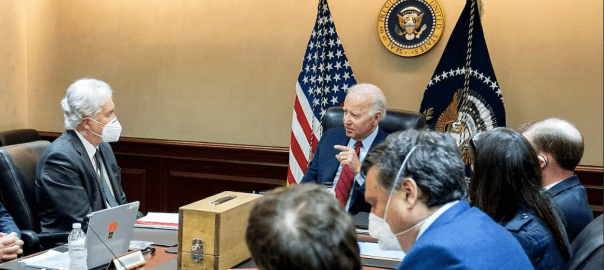
In the early 1990s, Senator Patrick Moynihan campaigned for the abolition of the CIA. The brilliant campaigner thought the US Department of State should take over its intelligence functions. For him, the age of secrecy was over.
In a New York Times opinion piece, Moynihan wrote:

Eleni Braat, Utrecht University and Ben de Jong, Leiden University
I was naked, tied to a hard chair with handcuffs. Three or four burly fellows in uniform are standing around me, one of them behind me with a truncheon… ‘Sie sind ein Verräter! [You are a traitor!],’ they snap.
People around the world are facing increasing pressures on their day-to-day lives. Food, energy bills and living costs are rocketing as inflation reaches record levels due to Russia’s invasion of Ukraine, the ongoing coronavirus pandemic and rising global instability.
The Thomson Reuters Foundation has spoken to people living in 18 countries around the world in an attempt to gauge the human impact of the crisis.
Continue reading