Tag Archives: Claude

01Aug/26

Why Your AI History Is Not Yours

Who Owns Your AI Transcript? The Battle Over Session Portability.

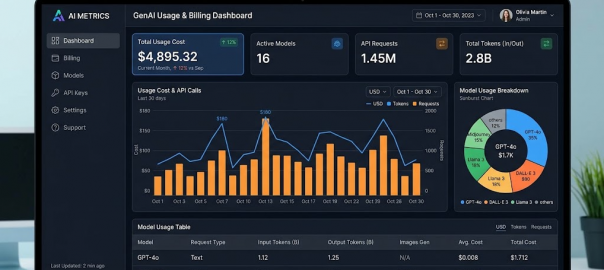
Sat, Aug 01 2026 /Mpelembe Media/ — The transition of AI inference APIs from simple, portable input-output logs to complex, provider-sealed states represents a significant shift toward vendor lock-in. Major AI providers are increasingly embedding encrypted reasoning traces, server-retained interaction histories, and opaque compaction blocks into their endpoints, effectively turning local session records into non-portable pointers tied to a single ecosystem. This architecture obscures critical context, such as the exact evidence retrieved from hosted web searches or the specific prompts exchanged between autonomous subagents. As a result, users are prevented from seamlessly exporting their session histories, recreating exact context windows, or migrating their workflows to alternative models and third-party architectures. Continue reading

31Jul/26

Why Philosophy Degrees Now Outperform Coding

From Syntax to Semantics: The Real Role of the Humanities in the Age of Generative AI

Fri, July 31 2026 /Mpelembe Media/ — he traditional belief that a computer science degree is a guaranteed golden ticket to lucrative employment is currently collapsing. Driven by macroeconomic tightening, the end of zero-interest-rate policies, and the rapid advancement of generative AI that automates entry-level coding tasks, tech companies have drastically reduced their hiring of new graduates. Tech leaders like Nvidia CEO Jensen Huang are even suggesting that the era of learning to code is over, advising future generations to focus on domain-specific expertise as natural language becomes the primary programming interface. Consequently, recent data from the Federal Reserve Bank of New York shows computer science and engineering graduates facing unemployment rates around 7%, which is noticeably higher than those in several humanities disciplines. Continue reading

29Jul/26

Why Zuckerberg is Building an AI CEO

Friction in the Labs: Delays, Layoffs, and Culture Clashes Inside Meta’s Superintelligence Push

Wed, July 29 2026 /Mpelembe Media/ — The Open-Source Vision and Industry Dominance Meta CEO Mark Zuckerberg is aggressively positioning the company as the primary institutional sponsor of open-source (open-weight) artificial intelligence. With the release of Llama 3.1, Zuckerberg argues that open-source AI is the path forward because it empowers developers, prevents centralization of power, and allows organizations to protect their data without being locked into closed vendor ecosystems like those of Apple, OpenAI, or Google. By freely distributing its models, Meta hopes to commoditize the AI layer and establish Llama as the ubiquitous global industry standard. Continue reading

26Jul/26

Why the AI job apocalypse hasn’t happened

The Macroeconomic Paradox of Cognitive Automation

Sun, July 26 2026 /Mpelembe Media/ — At the aggregate level, the widely feared “AI jobs apocalypse” has not materialized in the macroeconomic data. Prominent technology executives, including Anthropic CEO Dario Amodei, have previously warned of an imminent structural crisis, predicting that advanced cognitive systems could displace up to 50% of entry-level white-collar jobs and push aggregate unemployment into double digits. However, actual labor statistics tell a much more stable story. The U.S. labor market remains near full employment, hovering at a 4.2% jobless rate, with prime-age employment rates remaining near multi-decade highs. Extensive research by Anthropic’s head of economics, Peter McCrory, shows no relative increase in unemployment for highly exposed occupations compared to unexposed ones. Continue reading

03Jun/26

The “Sentient” Marketplace: How AI Agents Hire and pay Machines

The Mpelembe Agent Architect (also referred to as the Silicon-Native Agent Architect) is a comprehensive technical blueprint and decentralized infrastructure platform designed to securely deploy and govern autonomous AI agents

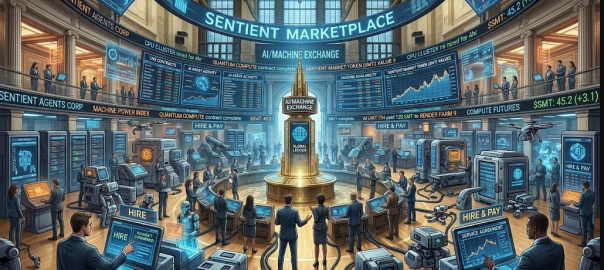
Wed, Jun 03 2026 /Mpelembe Media/ — The Sentient Economy (also referred to as the “Agentic” or “Machine Economy”) represents a fundamental shift from a human-operated digital environment to a decentralized network driven by autonomous, “silicon-native” AI agents. Unlike traditional chatbots that passively wait for human instructions, these autonomous agents proactively reason, allocate capital, and collaborate across organizational boundaries to execute complex, revenue-generating workflows. By 2030, this machine-to-machine economy is projected to mediate between $3 trillion and $5 trillion in global commerce. Continue reading

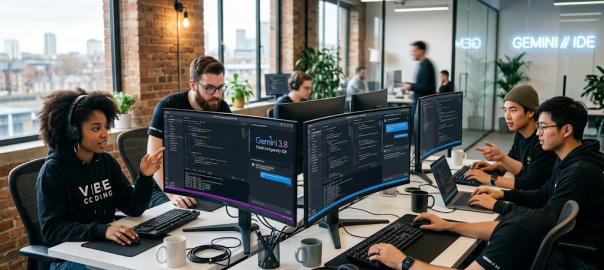
Vibe Code Your Life: The Rise of Low-Stakes, High-Speed Software Building

The Era of Vibe Coding: How Plain English Became the Hottest Programming Language

Mon, Jun 01 2026 /Mpelembe Media/ — Vibe coding is an AI-assisted software development practice where creators use natural language prompts to describe their desired applications, and large language models (LLMs) autonomously generate the source code. Coined in early 2025 by computer scientist Andrej Karpathy, the approach shifts the human role from manually writing syntax to acting as a director who oversees, evaluates, and iteratively refines AI-generated outputs. Continue reading

29May/26

Beyond Chatbots: How Robinhood, Visa, and Google are Building the Rails for Agentic Commerce

The $135 Billion Protocol War: Inside the Race to Standardize AI-Driven Transactions

Sat, May 30 2026 /Mpelembe Media/ — Robinhood’s Pioneering Launch Robinhood has officially ushered in the era of “agentic finance” by launching two flagship products: Agentic Trading and the Agentic Credit Card. Utilizing the Model Context Protocol (MCP), these tools allow retail investors to connect third-party AI agents (like Claude or ChatGPT) directly to Robinhood’s infrastructure to execute financial decisions autonomously. Continue reading

26May/26

Inside the Agentic Enterprise of 2026

The Age of Autonomy: How Multi-Agent Systems are Redefining Enterprise AI in 2026

Tue, May 26 2026 /Mpelembe Media/ — In 2026, the technology landscape has firmly transitioned from conversational generative AI to autonomous, multi-agent AI ecosystems. Rather than waiting for step-by-step human prompts, these AI agents can independently reason, plan, use tools, and collaborate to execute complex workflows across enterprise systems. Continue reading

26May/26

Building the Future of eCommerce and Content: Inside WordPress’s New AI Ecosystem

Standardizing Artificial Intelligence: A Deep Dive into WordPress 7.0’s AI Infrastructure

Tue, May 26 2026 /Mpelembe Media/ — TheThe recent updates to WordPress, particularly leading into version 7.0, mark a structural shift from a traditional CMS into an “AI-aware runtime” and agentic platform. This transformation is driven by several foundational components: Continue reading

24May/26

The UBUNK Paradigm: Navigating Truth, Myth, and Endurance

Beyond Fact-Checking: How AI and Gamification are Creating a Resilient Digital Citizen

Sun, May 24 2026 /Mpelembe Media/ — The modern digital landscape is overwhelmed by a flood of algorithmic misinformation, historical hoaxes, and sensationalism designed to exploit human biases and emotional reactions. Because traditional, passive fact-checking is often too slow and tedious to compete with viral lies, researchers and technologists are pivoting toward active, gamified behavioral conditioning to build societal resistance against fake news. Continue reading