Category Archives: Human Interest

21Sep/26

Ancient blueprints for living well

Beyond Consumerism: Ancient Blueprints for Tranquility in a Restless World

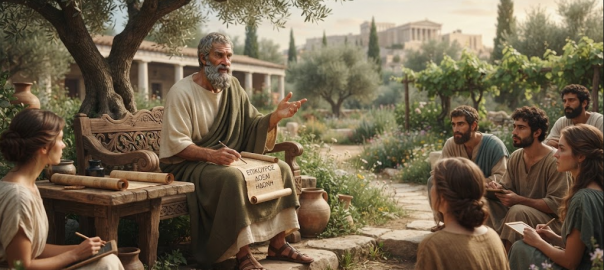
Mon 21 Sept 2026 /Mpelembe Media/ — Epicurus constructed a comprehensive, materialistic philosophy rooted in atomism to liberate humanity from psychological anxiety. By asserting that the universe consists solely of indestructible atoms moving and randomly swerving through empty space, he replaced mythological explanations with mechanistic natural laws. This physical worldview served a direct therapeutic purpose by demonstrating that divine beings do not interfere in human affairs or inflict punishment, and that the human soul—composed of fine physical particles—disperses entirely upon bodily death. Because consciousness ends permanently at death, Epicurus reasoned that death is nothing to us, freeing individuals from the existential dread that fuels irrational ambitions. Continue reading →

23Aug/26

Stoic Wisdom From Traffic to AI

The Healing Art of the Mind: How an Ancient Ruler Weaponized Kindness Against Outrage

Sun, Aug 23 2026 /Mpelembe Media/ — Marcus Aurelius’s private journals, written during military campaigns along the Danube frontier, serve as a deeply personal system of cognitive calibration and psychological preservation under the intense pressures of imperial administration. At the heart of his ethical philosophy is a profound cosmopolitan commitment rooted in Stoic physics, which conceptualizes the universe as a single, rational, living organism governed by the logos, or universal reason. Human beings, by virtue of possessing a fragment of this divine reason, are not isolated fragments but interconnected “members” (melos) rather than mere “parts” (meros) of this cosmic city. Within this framework, harming another person or turning away in resentment is seen as a violent act of self-mutilation that disrupts the natural order, precisely because what brings no benefit to the collective hive can bring none to the individual bee. Continue reading →

23Aug/26

Pancake Breakfasts and Satanic Bloodlines

Behind the Closed Door: Evaluating Religious and Political Critiques of the Masonic Family

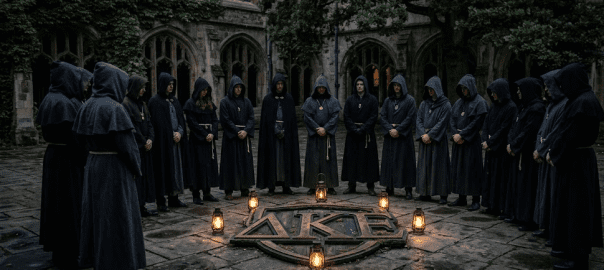
Sun, Aug 23 2026 /Mpelembe Media/ — The conspiracy literature surrounding global power structures often centers on the theory of elite secret societies and generational dynasties pulling the strings of world events. According to Fritz Springmeier’s Bloodlines of the Illuminati, a hidden cabal consisting of thirteen powerful, generational Satanic lineages secretly rules the world through a multi-layered network of secret societies, including Freemasonry and various occult councils. Proponents of this view argue that these families—including prominent names like the Astors, Rothschilds, Rockefellers, and Collinses—have amassed unchecked financial and political influence through intermarriage and the preservation of secret occult practices. Conspiracist narratives contend that these elite networks are responsible for massive historical manipulations, orchestrating major conflicts like the World Wars, setting up international institutions like the United Nations, and even controlling global illegal industries such as the narcotics trade. To hide their influence, these groups are alleged to operate through front companies, legitimate religious organizations, and systemic media censorship, maintaining a facade of normal civil society. Continue reading →

09Jul/26

Why your biology needs other people

The Stoic Philosophy of Friendship: Autonomy from Fullness

Thur, July 09 2026 /Mpelembe Media/ — Seneca’s moral essays resolve the apparent contradiction between radical mental self-sufficiency (autarkeia) and the human yearning for companionship. In Letter 9, Seneca distinguishes between “needing” others to patch over an internal void (which breeds fragile, “fair-weather” utility friendships) and “desiring” friends to share a life that is already complete. The Stoic sage possesses the ultimate psychological autonomy—relying on internal virtue rather than external Fortune. Yet, because humans are naturally social cosmopolitans, we seek friendship for its own sake. True friendship is an active theater for projecting virtue and kindness, beautifully summarized by Hecato’s timeless formula: “If you would be loved, love”. Practically, Seneca’s Letter 3 sets out a strict temporal blueprint for relationships: exercise rigorous, analytical judgment before admitting someone to your life, but once they are chosen, trust them unconditionally, removing all defensive barriers. This framing invites us to connect from fullness, rather than lack.

Continue reading →

07Jun/26

The Hidden History of the Cockney Accent

The Cockney Identity: A Cultural Heritage Profile

To the cultural historian, the “Cockney” represents one of the most enduring paradoxes of the London landscape. It is at once a  demonym —a fiercely localized geographic label—and a  linguistic marker  that has echoed through the city’s alleyways for over half a millennium. Unlike the class-bound tones of Received Pronunciation (RP) or the regionally distinct “Scouse” of Liverpool, the Cockney identity is a narrative of the soil, born from the laboring classes of the East End. It is a cultural stratigraphy that has survived the fires of 1666, the industrial soot of the Victorian age, and the high-explosive trauma of the Blitz. To truly understand the Cockney is to trace the evolution of the city itself, beginning with a medieval insult that grew into a badge of defiance. Continue reading →

07Jun/26

Faith, Flesh, and Forbidden Love

Faith, Love, and the “Falling” Narrative: A Study in Narrative Subversion

Sun, Jun 07 2026 / -Falling is a six-part British romantic drama created by BAFTA-winning writer Jack Thorne that premiered on Channel 4 in May 2026. The series stars Keeley Hawes as Anna, a cloistered nun of 20 years, and Paapa Essiedu as David, a progressive, community-focused Catholic priest. Continue reading →

01Jun/26

Why The Sunrise Reboots The Brain

The Healing Power of the Dawn: How Natural Light Wards off Depression and Resets Your Brain

Mon, Jun 01 2026 /Mpelembe Media/ — In our frantic modern age, many of us exist in a state of nocturnal chaos. We are severed from the rhythms of the earth by the relentless hum of digital noise and the intrusive glare of artificial light, leaving our internal clocks decoupled and drifting. We feel perpetually “out of sync,” wandering through days that lack a definitive beginning. Yet, the sunrise is far more than a mechanical rotation of the planet; it is a profound cosmological threshold and the ultimate “blank slate.”To the ancient eye, the dawn was the “unseen blush of the invisible,” a moment where the world was born anew. In the traditional monastic cycle, this is  Lauds , or “The Awakening Hour”—a sacred juncture where nature is seen to leap from the “tomb of sleep,” offering a daily invitation to a miniature resurrection. By reclaiming this hour, we transition from merely opening our eyes to the deeper process of truly waking up.
Continue reading →

09Apr/26

How helping others saves your life

From Isolation to Inclusion: How Volunteering Helps Us Feel Connected Again

April 9, 2026 /Mpelembe Media/ —  The “Helper’s High” and Physical Health Volunteering produces a documented physiological response known as the “helper’s high”. When individuals engage in acts of altruism, the brain releases a cascade of neurochemicals, including endorphins (natural painkillers that elevate mood), dopamine (which creates a sense of pleasure and reward), and oxytocin (the “bonding hormone” that fosters trust and empathy). Because of this biological response, volunteering actively reduces stress and anxiety, combats depression, lowers mortality rates, and can even lessen symptoms of chronic pain and heart disease. Continue reading →

09Apr/26

Between Invisible Loneliness and Suffocating Control

Invisible Prisons: Escaping High-Control Groups, Stalking, and Mental Abuse

April 9, 2026 /Mpelembe Media/ — Distinguishing loneliness from objective social isolation. This analysis highlights that you can experience profound loneliness even when surrounded by people. This often happens in environments like busy cities due to “stimulus overload,” where a constant barrage of noise and interactions causes people to emotionally withdraw to protect themselves. To combat this hollow feeling, humans rely on “shared reality”—the perception of having common feelings, beliefs, or attitudes with others about the world. Establishing a shared reality with even just one person helps reduce uncertainty and fosters a genuine sense of connection and meaning, which acts as a powerful buffer against the pain of loneliness.
Continue reading →