Matyáš Moravec, University of St Andrews
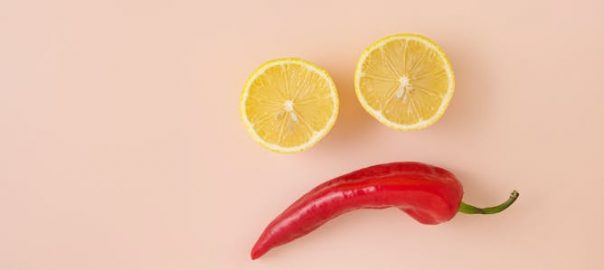
Are we free or are our actions determined by the laws of physics? And how much free will do we actually want? These questions have troubled philosophers for millennia – and there are still no perfect answers.
Matyáš Moravec, University of St Andrews
Are we free or are our actions determined by the laws of physics? And how much free will do we actually want? These questions have troubled philosophers for millennia – and there are still no perfect answers.
Chris Bryant, University of Bath
Vegetarians have around twice as many depressive episodes as meat-eaters, according to a new study.
The study, based on survey data from Brazil, chimes with earlier research that found higher rates of depression among those who forgo meat. However, the new study suggests that this link exists independent of nutritional intake.

Robert Young, Lancaster University
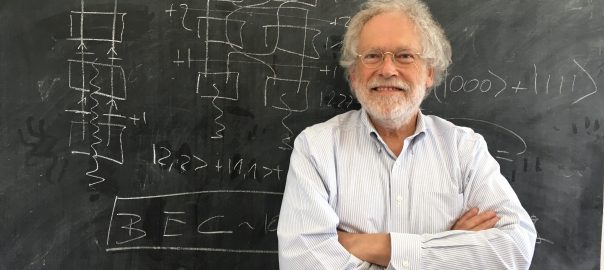
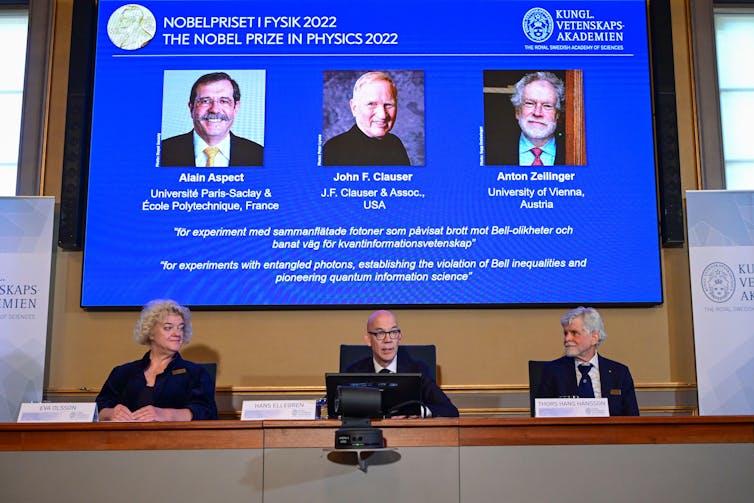
The 2022 Nobel prize for physics has been awarded to a trio of scientists for pioneering experiments in quantum mechanics, the theory covering the micro-world of atoms and particles.
Love Dalén, Stockholm University and Anders Götherström, Stockholm University
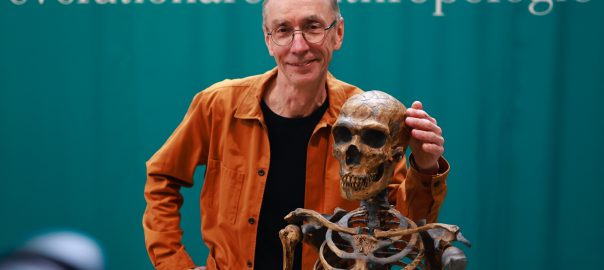
The Nobel prize in physiology or medicine for 2022 has been awarded to Svante Pääbo from the Max Planck Institute for Evolutionary Anthropology in Leipzig, Germany, “for his discoveries concerning the genomes of extinct hominins and human evolution”.
Katharina Richter, University of Bristol; Alix Dietzel, University of Bristol, and Alvin Birdi, University of Bristol
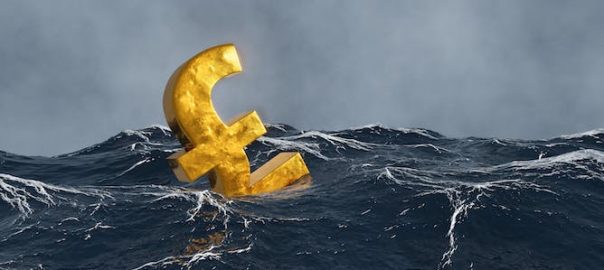
The day before new UK chancellor Kwasi Kwarteng’s mini-budget plan for economic growth, a pound would buy you about $1.13. After financial markets rejected the plan, the pound suddenly sunk to around $1.07. Though it has since rallied thanks to major intervention from the Bank of England, the currency remains volatile and far below its value earlier this year.
Clara Wilson, Queen’s University Belfast
Dogs have a long history alongside humans, giving them an amazing ability to read human cues. Dogs also possess an incredible sense of smell, which enables them to detect diseases, such as COVID and lung cancer, in humans from odour alone. Whether dogs’ capabilities extend to detecting odours associated with psychological states has been explored far less.
Tom Jackson, Loughborough University and Ian R. Hodgkinson, Loughborough University
More than half of the digital data firms generate is collected, processed and stored for single-use purposes. Often, it is never re-used. This could be your multiple near-identical images held on Google Photos or iCloud, a business’s outdated spreadsheets that will never be used again, or data from internet of things sensors that have no purpose.
George Newth, University of Bath
The rise of far-right politician Giorgia Meloni has left many outside Italy asking how her brand of what many argue is fascism can achieve such prominence in a country that has experienced life under the dictatorship of Benito Mussolini. The answer can be traced back to a recent normalisation of reactionary politics.
On the wooded hill above the Stan Terg lead and zinc mine in Kosovo, there is an old concrete diving platform looming over what was once an open-air swimming pool. Before the break-up of Yugoslavia, people who worked at the mine would bring their families here to swim, sunbathe on the wide terrace with its view across the valley, and picnic among the trees. Now the pool is slowly disappearing into the forest, the view obscured by birch saplings.
Phil Tomlinson, University of Bath; Andrew Burlinson, University of East Anglia; Catherine Waddams, University of East Anglia; Donald Hirsch, Loughborough University; Jean-Philippe Serbera, Sheffield Hallam University; Jim Watson, UCL; Jonquil Lowe, The Open University, and Steven McCabe, Birmingham City University
UK chancellor Kwasi Kwarteng has just launched the biggest package of tax cuts in half a century. This will involve around £45bn of reductions for people and businesses by 2027 – 50% more than anticipated before the mini-budget announcement.