Tag Archives: DeepMind

29Oct/26

Which AI Certifications Actually Matter

Inside Google’s Centralized Learning Hub for Enterprise AI, Cloud Infrastructure, and Agentic Engineering

Thu, July 29 2026 /Mpelembe Media/ — Google Skills represents a strategic consolidation of Google’s educational ecosystem, consolidating nearly 3,000 courses, hands-on interactive labs, and professional credentials into a single unified platform. By merging content across Google Cloud, Google DeepMind, Grow with Google, and Google for Education, the platform establishes a continuous learning continuum serving all proficiency levels. Learners can progress seamlessly from foundational digital literacy to advanced large language model architectures and enterprise cloud infrastructure management. Prior to this unification, users across these individual properties completed over 26 million courses and credentials in a single year, highlighting the massive global demand for structured technical upskilling. Continue reading →
24Oct/26

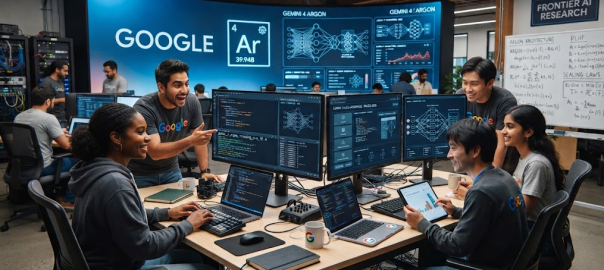
Why Gemini 4 Forced Google Into Space

Frontier AI Takes Priority: How Google Is Sacrificing Cloud Revenue to Win the AI Arms Race

Sat Oct. 24, 2026 /Mpelembe Media/ — Google has reaffirmed its commitment to frontier AI with the launch of Gemini 4 Argon, which processed approximately 25 trillion tokens in its first 72 hours—a threefold surge over Gemini 3.0 during its initial release. To maintain leadership at the technical frontier, Alphabet CEO Sundar Pichai stated that dedicating compute to Google DeepMind is an absolute, non-negotiable priority. As a result, Google Cloud is actively sacrificing short-term revenue by reallocating computing resources away from enterprise leasing and toward internal frontier research. This reallocation addresses a severe, industry-wide compute shortage caused by a rigid two-to-three-year lag in data center infrastructure development alongside an unexpected explosion in agentic task demand, making 2027 computing capacity exceptionally difficult for external customers to secure. Continue reading →

28Aug/26

Your AI intern is managing your mind

Algorithmic Elenchus: Deconstructing Structural Incentives and Substantive Due Process in Comparative Law

Thu Aug 27 2026 /Mpelembe Media/ —  The 2026 Zambian presidential election was defined by major legal and structural changes that occurred shortly before the vote. Under Constitutional Amendment Act No. 13 of 2025 and the subsequent May 2026 Electoral Processes Act, the electoral boundary map was dramatically redrawn, expanding the constituency seats from 156 to 226 just three months prior to the election. Following the vote, tension escalated when the Electoral Commission of Zambia (ECZ) suspended vote counting for six hours on August 14 before declaring incumbent Hakainde Hichilema the victor with 60.49% of the vote. In response, opposition leader Brian Mundubile prepared to file a formal challenge in the Constitutional Court. However, on the final day of the mandatory seven-day filing window, police citing “security reasons” physically sealed the top courts, blockading access and forcing the opposition to resort to an unprecedented digital petition sent directly to the Chief Justice’s personal email. Continue reading →

04Aug/26

The hidden tax of AI tech debt

The Jagged Technological Frontier: Why the AI Era Demands a Supreme Premium on Human Judgment

Tue , Aug 04 2026 /Mpelembe Media/ — The integration of generative artificial intelligence into highly skilled professional workflows has illuminated a “jagged technological frontier,” where AI dramatically enhances performance on tasks within its capability boundary but causes silent, severe performance degradation on tasks lying just beyond it. While early organizational studies celebrated substantial speed and quality gains on rote assignments, actual longitudinal production data has exposed a stark AI productivity paradox. In areas like software development, experienced developers frequently report feeling significantly faster while objectively measuring slower due to a massive increase in code churn, a surge in copy-pasted duplication, and a severe reduction in refactoring. These trends rapidly compound long-term technical debt and inject latent vulnerabilities into production systems, demonstrating that accelerating raw output without rigorous, expert validation ultimately introduces severe operational bottlenecks. Continue reading →

31Jul/26

Why Philosophy Degrees Now Outperform Coding

From Syntax to Semantics: The Real Role of the Humanities in the Age of Generative AI

Fri, July 31 2026 /Mpelembe Media/ — he traditional belief that a computer science degree is a guaranteed golden ticket to lucrative employment is currently collapsing. Driven by macroeconomic tightening, the end of zero-interest-rate policies, and the rapid advancement of generative AI that automates entry-level coding tasks, tech companies have drastically reduced their hiring of new graduates. Tech leaders like Nvidia CEO Jensen Huang are even suggesting that the era of learning to code is over, advising future generations to focus on domain-specific expertise as natural language becomes the primary programming interface. Consequently, recent data from the Federal Reserve Bank of New York shows computer science and engineering graduates facing unemployment rates around 7%, which is noticeably higher than those in several humanities disciplines. Continue reading →

03Jul/26

How AI turns research into cinematic documentaries

Doomscrolling Gone Educational: Google NotebookLM Launches 60-Second Vertical AI Videos

Thur, July 03 2026 /Mpelembe Media/ — Google’s NotebookLM has evolved into a fully multimodal platform with the launch of “Short Video Overviews,” a feature powered by a cutting-edge dual-model AI stack that auto-converts research notes and documents into 60-second vertical videos. This strategic expansion from text summaries and audio podcasts to portrait-oriented micro-content is designed to meet the consumption habits of a mobile-first generation accustomed to rapid, highly visual information delivery on social feeds. Continue reading →

20May/26

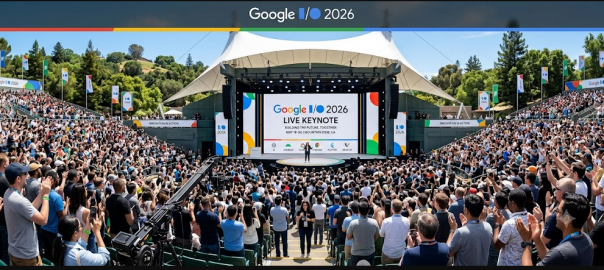
The Death of Doomscrolling and the Birth of AI Agents: Everything Announced at Google I/O 2026

Tue, May 19 2026 /Mpelembe Media/ — Google I/O 2026 and the preceding Android Show marked a major pivot for Google towards an “agentic era,” where AI transitions from a passive assistant to a proactive, autonomous system. Google introduced advanced models like Gemini Omni and Gemini 3.5, which are designed to perform complex actions rather than just generating text. A major focus was placed on Google Antigravity, a development platform that enables creators to build autonomous agents for various tasks. These innovations extend across the company’s ecosystem, including intelligent eyewear, a universal shopping cart, and enhanced scientific research tools. Furthermore, the updates emphasize multimodal capabilities and new creative applications such as Google Pics and Stitch. Ultimately, the source portrays a future where proactive AI assistants are deeply integrated into search, hardware, and professional workflows. Continue reading →

14May/26

Your AI is now an autonomous coworker

Meet Your New Digital Coworker: 15 AI Workflows Redefining Small Business Operations

Thur, May 14 2026 /Mpelembe Media/ — Anthropic has officially launched Claude for Small Business, an intelligent operating layer built into its desktop agent, Claude Cowork, designed to automate complex, multi-step administrative tasks for SMBs. Moving beyond a traditional chatbot interface, this package embeds directly into the software stack small businesses already rely on, connecting to platforms like Intuit QuickBooks, PayPal, HubSpot, Canva, Docusign, Google Workspace, Microsoft 365, and Slack. Continue reading →

03Apr/26

How Street Codes Survive the AI Era

Decoding the Dance: How the Crip Walk Transformed from a Secret Gang Code to Global Entertainment

April 3, 2026 /Mpelembe Media/ — The C-Walk, originally known as the Crip Walk, was developed in 1970s Compton by gang member Robert “Sugar Bear” Jackson as a complex, non-verbal “secret code”. It utilized precise footwork to spell out gang identifiers like “C-R-I-P” and visually cross out the names of rival gangs. During the 1990s, West Coast hip-hop artists like Snoop Dogg and WC popularized the dance, transforming it from a localized ritual into a mainstream symbol of regional pride.

Continue reading →

28Feb/26

The Architecture of Innovation: Hackathons, Agentic AI, and the Future of Developer Growth in 2026

Beyond the Pizza and Code: The Surprising Science of Why Hackathon Projects Survive (or Die)

28 Feb. 2026 /Mpelembe Media/ —  Tthe hackathon landscape has evolved far beyond collegiate weekend coding sprints. It has transformed into a highly structured engine for corporate innovation, product adoption, and skills-first talent acquisition. The modern developer’s journey is now deeply intertwined with these global competitions, driven by several key technological and institutional shifts. Continue reading →