
Tag Archives: Japan

29Mar/26

Navigating the Friendship Recession and the Cost of Connection

The Decline of the “Third Place” and the Rise of Global Isolation

March 30, 2026 /Mpelembe Media/ — The Core Issue: The “Friendship Recession” Modern society is experiencing a severe decline in social capital and interpersonal connections, a phenomenon widely referred to as the “friendship recession”. Data shows a quantifiable collapse in the size of our social networks: in 1990, 33% of Americans reported having 10 or more close friends, but by 2021, that number had plummeted to just 13%. Meanwhile, the percentage of individuals reporting zero close friends has quadrupled. This erosion of social capital—the “glue” that holds communities together through networks, trust, and reciprocity—is undermining both civic engagement and personal well-being.


Continue reading

27Mar/26

The UN Resolution on Slavery Reparations

UN General Assembly Makes History: Declares Transatlantic Slave Trade the “Gravest Crime Against Humanity”

March 27, 2026 /Mpelembe Media/ — On March 25, 2026, coinciding with the International Day of Remembrance of the Victims of Slavery and the Transatlantic Slave Trade, the United Nations General Assembly adopted a historic resolution declaring the transatlantic trafficking of enslaved Africans and racialized chattel enslavement as “the gravest crime against humanity”. Spearheaded by Ghana and heavily supported by the African Union and Caribbean Community (CARICOM), Resolution A/80/L.48 marks a significant shift in international human rights by calling for a comprehensive framework of reparatory justice.

Continue reading

15Mar/26

“Honoring Her Light: Meaningful Ways to Celebrate Mothers, Both Here and in Our Hearts”

March 15, 2026 /Mpelembe Media/ — These sources explore different ways of honoring mothers through personal expression and cultural traditions. The first source features lyrics from Tupac Shakur, who offers a raw, emotional tribute to his mother’s resilience and sacrifices while raising him in poverty. In contrast, the second source provides a comparative look at how Mother’s Day is observed in Zambia versus the United Kingdom, noting differences in calendar systems and cultural focus. While the song emphasizes personal gratitude for a mother’s strength during hardship, the article explains the global diversity of the holiday’s timing and meaning. Together, they illustrate that maternal appreciation is a universal sentiment expressed through both individual storytelling and regional customs. Continue reading

08Mar/26

Starlink Direct-to-Cell: Global Deployment and Performance Analysis

Your Smartphone’s Next Roaming Partner is 350 Miles Up: 5 Surprising Realities of Starlink’s “Cell Towers in Space”

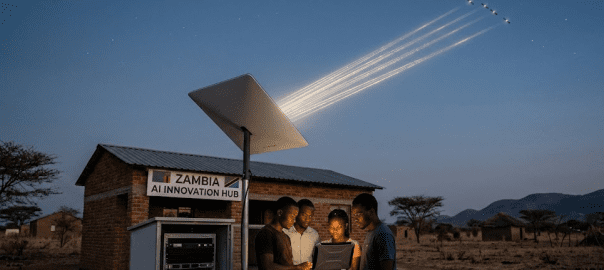
March 8, 2026 /Mpelembe Media/ — The provided sources examine the emergence and rapid expansion of Direct-to-Cell (D2C) technology, specifically focusing on Starlink’s efforts to provide Supplemental Coverage from Space (SCS). Research highlights that these satellite-based networks allow unmodified 4G LTE smartphones to connect directly to orbiting satellites, effectively eliminating terrestrial dead zones in remote areas like national parks. While initial commercial services in the United States and New Zealand focused on text messaging and emergency alerts, the technology is evolving to support voice, high-speed data, and IoT applications. Significant milestones include Airtel Africa and MTN Zambia partnering with SpaceX to launch services across the African continent, successfully piloting the first satellite-based fintech transactions. Despite technical hurdles like lower signal power and Doppler shifts, regulatory bodies worldwide are modernizing frameworks to accommodate this hybrid orbital-terrestrial model. Ultimately, these sources position D2C as a transformative tool for global digital inclusion, promising near-universal connectivity without the need for traditional ground infrastructure.

How does Starlink’s direct-to-cell technology work with unmodified smartphones?
What are the expected data speeds for satellite-to-mobile services?
How is this technology being used for emergency response and fintech?

Continue reading

07Mar/26

How is the U.S.-Israel-Iran conflict reshaping the global economy?

March 7, 2026 /Mpelembe Media/ — Geopolitical Risk Report: The 2026 West Asian Realignment and the Collapse of Regional Diplomacy

The U.S.-Israel-Iran conflict is triggering severe shocks across the global economy, primarily through disruptions to energy supplies, international trade routes, financial markets, and critical technology infrastructure.

Energy Market Upheaval The most immediate economic threat stems from rising energy prices due to the disruption of the Strait of Hormuz—a crucial maritime chokepoint that normally handles about one-fifth of the world’s oil and liquefied natural gas (LNG). Following Iranian threats, commercial shipping through the strait has slowed to a near-standstill, with tanker traffic dropping by about 90% and multiple insurance firms canceling coverage for Gulf vessels. Continue reading

03Mar/26

How DNA and Smartwatches Rewrite Health Insurance

March 2, 2026 /Mpelembe Media/ — By 2042, the global scientific community has undergone a profound transformation, shifting from a rigid, standardized “directed science” model to a “radically exploratory” paradigm. This evolution was catalyzed by a terrifying “crisis decade” (2026–2035) marked by intense political hostility, institutional stagnation, and the deadly resurgence of preventable diseases—like measles and whooping cough—due to declining vaccination rates. Forced to self-reflect, the scientific community rebuilt public trust by abandoning the pretense of absolute objectivity and instead embracing humility, uncertainty, and methodological pluralism.

Continue reading

23Feb/26

The Invisible Disaster: AI Replacement Dysfunction and Worker Anxiety

23 Feb. 2026 /Mpelembe Media — Researchers have identified a burgeoning psychological crisis labeled AI replacement dysfunction (AIRD), which stems from the pervasive fear of professional obsolescence. This condition manifests as a specific cluster of symptoms including insomnia, paranoia, and a loss of identity triggered by the constant threat of automated labor. While not yet an official medical diagnosis, experts argue that the existential anxiety caused by industry leaders predicting massive job losses constitutes an “invisible disaster.” Evidence suggests that high-profile layoffs at major tech firms are already validating these fears and negatively impacting employee mental health. To address this, the authors advocate for specialized clinical screening to distinguish technology-related distress from traditional psychiatric disorders. Ultimately, the source emphasizes that the societal shift toward AI requires new community and medical frameworks to support a vulnerable workforce. Continue reading

20Feb/26

The Great Tariff Refund: Navigating the Supreme Court Ruling

The $180 Billion Reversal: What the SCOTUS Tariff Ruling Actually Means for the Future

Feb 20, 2026 /Mpelembe media/ — On February 20, 2026, the U.S. Supreme Court issued a landmark 6-3 decision in the consolidated cases of Learning Resources, Inc. v. Trump and Trump v. V.O.S. Selections, Inc., striking down the sweeping global tariffs implemented by the Trump administration. Chief Justice John Roberts authored the majority opinion, which ruled that the International Emergency Economic Powers Act (IEEPA) does not grant the President the authority to unilaterally impose tariffs. The Court emphasized that while IEEPA allows the President to “regulate” commerce during national emergencies, it does not transfer Congress’s exclusive constitutional power to levy taxes and duties to the Executive Branch. Continue reading

The “Agentic” Era: How AI, Biometrics, and Shifting Demographics Are Rewriting the Global Travel Map by 2050

The Future of the Stay: A Student’s Primer on AI & IoT in Hospitality

Feb 18, 2026 /Mpelembe media/ — The travel industry is undergoing a structural metamorphosis driven by the transition from generative to “Agentic AI,” the rise of the Asia-Pacific (APAC) region as the dominant market, and a shift toward hyper-personalized, “zero-touch” experiences. While technology promises to erase logistical friction, it introduces new challenges regarding algorithmic bias, data privacy, and the “complexity tax” of managing massive scale. Continue reading

26Jan/26

Emotional Escapism: Global Destinations Redefining Romance for 2026

Jan. 26, 2026 /Mpelembe Media/ — A report from Travel And Tour World (TTW) identifying the top 50 global destinations for Valentine’s Day in 2026 highlights a significant shift in tourism, where couples prioritize shared experiences and “emotional escapism” over traditional material gifts. The list is organized into categories such as classic romance capitals, secluded beach escapes, and nature-driven retreats, with Verona, Italy claiming the top spot. Each featured location includes details on local romantic festivities, travel accessibility, and unique seasonal activities like the plum blossoms in Kyoto or pink salt lakes in Mexico. Ultimately, the report illustrates how the holiday has become a major economic driver for the international travel industry by offering diverse, memory-focused itineraries. Continue reading