Tag Archives: Soviet Union

01Nov/26

Zambia’s Space Race Hits the Stage

Beyond the Moon: Ryan Calais Cameron and Monique Touko on Ambition, Satire, and Zambia’s Space Dreams

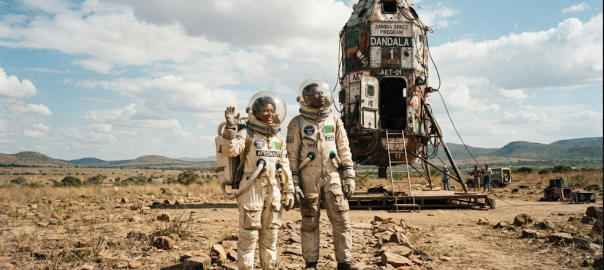
Sun, Nov 01 2026 /Mpelembe Media/ — In 1964, as Zambia emerged from British colonial rule, former schoolteacher and anti-colonial activist Edward Mukuka Nkoloso announced an audacious bid to beat the United States and the Soviet Union to the moon. Establishing the Zambia National Academy of Science, Space Research and Philosophy on an abandoned farm outside Lusaka, Nkoloso trained a cohort of aspiring astronauts—later known as the “Afronauts”—using unconventional methods such as rolling down hills in oil drums and swinging from ropes to simulate weightlessness. His plans included sending a 17-year-old girl named Matha Mwamba to Mars alongside two cats and a missionary. Although the programme never launched due to a lack of funding and institutional support, leaving Nkoloso vulnerable to public mockery, the venture endured as a contested, compelling fusion of sincere anti-colonial optimism and pointed satire. Continue reading →
01Nov/26

The Illusion of Democracy: Constitutional Manipulation and the Modern Dictator

How Modern Dictators Hold Absolute Power

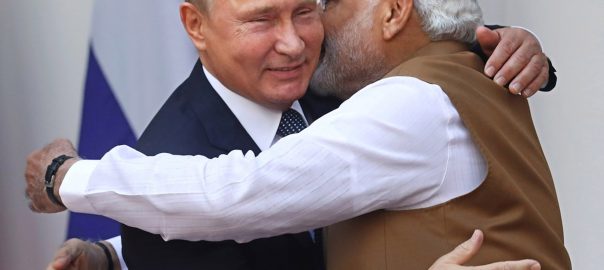
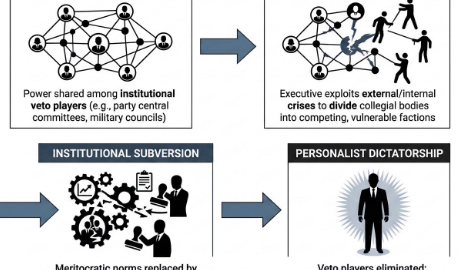
Sun, Nov 01 2026 /Mpelembe Media/ —A dictatorship is a system of governance where a single individual or political party wields absolute power, typically emerging during periods of severe social unrest or economic instability. Within these regimes, personal autonomy, political choice, and human rights are heavily suppressed, and democratic institutions as well as opposition parties are dismantled. Rulers maintain authority through coercion, intimidation, unlawful imprisonment, violence, and state apparatuses such as secret police or indefinite detentions. Furthermore, autocrats frequently manipulate legal frameworks to preserve control; for instance, constitutional amendments in Russia altered presidential term limits to allow Vladimir Putin to remain in power through 2036. While autocracies concentrate unchecked authority strictly within an individual—a category that historically encompassed benevolent rulers—dictatorships can disperse authority across a governing party or ruling circle and inherently feature severe abuses of power. Continue reading →

30May/26

Breaking Boundaries: How Beat Street and Breakin’ Exported Street Culture

The Phoenix of the Bronx: From 1970s Block Parties to the Olympic Games and Broadway

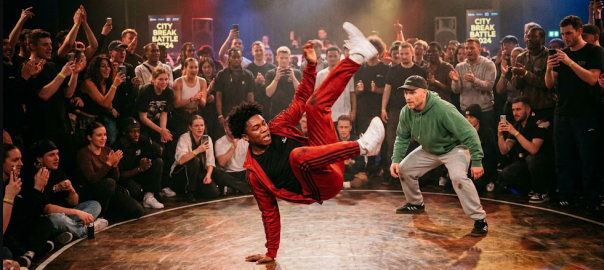
Sat, May 30 2026 /Mpelembe Media/ — The Origins of Street Dance Hip-hop dance originated in the 1970s as a powerful form of self-expression and community building for marginalized youth. In the South Bronx, African American and Puerto Rican teenagers developed breaking (b-boying/b-girling) as a creative outlet and a peaceful alternative to territorial gang violence. Concurrently, West Coast dancers in California independently invented “funk styles,” such as popping and locking, which were originally danced to funk music rather than hip-hop. Continue reading →

16Jul/24

How being shot might affect Donald Trump’s mental health – and that of millions of others

Simon McCarthy-Jones, Trinity College Dublin

After the attempted assassination of Donald Trump at his Pennsylvania campaign rally, there is much speculation about how this will affect the 2024 US election. However, no one is yet asking how these events may affect Trump himself.

Continue reading →

25Apr/24

Australia Is Number One Work Destination; London Tops List for Cities

Despite global challenges such as geopolitical tensions, widespread economic concerns, and emerging virtual mobility trends from the past several years, moving abroad for work remains a dream for many workers around the world, with 23% of professionals actively seeking jobs in other countries, and 63% expressing an overall willingness to do so. Continue reading

18Mar/24

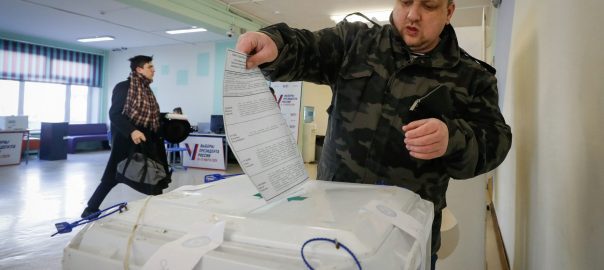
Half the world will vote in 2024, but how many elections will be fair?

Toby James, University of East Anglia and Holly Ann Garnett, Royal Military College of Canada

This year has been widely proclaimed to be the year of elections, with national elections expected in at least 64 countries. This means that half of the world’s population will have the opportunity to change their government, choose their representatives and indirectly shape policy. It began as a year of hope – and the prospect of democratic empowerment.

Continue reading →

15Apr/23

Why democratic countries around the world are not prepared to support Ukraine – and some are shifting closer to Russia

Jose Caballero, International Institute for Management Development (IMD)

After over a year of the Ukraine war, efforts at building a global consensus against Russia seem to have stalled, with many countries opting for neutrality.

The number of countries condemning Russia has declined, according to some sources. Botswana has edged towards Russia from its original pro-Ukraine stance, South Africa is moving from neutral to Russia-leaning and Colombia from condemning Russia to a neutral stance. At the same time, a large number of countries have been reluctant to support Ukraine.

Continue reading →

31Jan/23

Ukraine war: attitudes to women in the military are changing as thousands serve on front lines

Jennifer Mathers, Aberystwyth University and Anna Kvit, UCL

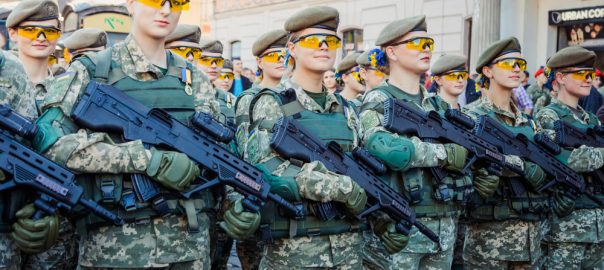
Thousands of women have voluntarily joined Ukraine’s armed forces since 2014, when Russia’s occupation of Crimea and territories in eastern Ukraine began. Over the past nine years, the number of women serving in the Ukrainian military has more than doubled, with another wave of women joining after Russia’s full-scale invasion in February 2022.

Continue reading →

01Nov/22

Could Russia collapse?

Matthew Sussex, Australian National University

Among the many questions asked about Russia’s disastrous war against Ukraine, one of them is posed only very rarely: can Russia survive what seems increasingly likely to be a humiliating defeat at the hands of its smaller neighbour?

Continue reading →