Tag Archives: France

29Oct/26

Why STIs Are Outsmarting Modern Medicine

Surging Cases and Superbug Strains: Inside Europe’s Escalating Sexual Health Crisis

Thu, July 29 2026 /Mpelembe Media/ — Bacterial sexually transmitted infections have reached record highs across Europe, led by a surge in gonorrhoea notifications that reached 106,331 cases in 2024—a 303% increase since 2015 and the highest level recorded since European surveillance began. Over the same decade, syphilis cases more than doubled to 45,577, while congenital syphilis cases nearly doubled in a single year to 140. Although men who have sex with men account for the majority of diagnoses (62% of gonorrhoea cases), infections are increasingly expanding into heterosexual populations and young adults, particularly women aged 20 to 24. Epidemiologists attribute this multi-pathogen resurgence to a complex interplay of post-pandemic behavioural shifts, declining condom usage, expanded HIV PrEP protocols that mandate routine screening and catch more asymptomatic cases, and structural healthcare barriers such as out-of-pocket testing fees required in 13 European countries. Continue reading →

27Oct/26

How AI Is Rewriting the News

Optimists, Pessimists, and Pragmatists: Navigating the Cultural and Ethical Realities of AI in African Journalism

Mon, July 26 2026 /Mpelembe Media/ — The JournalismAI initiative, hosted by Polis at the London School of Economics and Political Science (LSE) in partnership with the Google News Initiative, has undergone a major strategic transition to foster responsible artificial intelligence adoption across global newsrooms. Having trained thousands of media professionals through its initial JournalismAI Academy model, the initiative launched the JournalismAI Strategy Lab to shift the industry focus from basic tool experimentation toward structured institutional governance and workflow integration. Crucially, the program expanded its geographic mandate from Sub-Saharan Africa to a pan-African scope, encompassing North, West, East, Central, and Southern Africa. Delivered as a no-cost, five-week virtual initiative, the Strategy Lab guides non-technical newsroom decision-makers through five cumulative modules covering core AI concepts, workflow infrastructure, generative AI applications, ethical governance, and project implementation. Continue reading →

23Oct/26

How Failed US-Iran Talks Triggered War

Losing the Coalition: How Domestic Immigration Raids and Foreign Conflicts Alienated Key Voters

Fri Oct. 23, 2026 /Mpelembe Media/ — The Republican Party faces an intensifying political and governance crisis heading into the November 3, 2026 midterm elections, driven by President Donald Trump’s career-low approval ratings between 32% and 35%. Broad public disapproval stems from an unfulfilled campaign promise to avoid endless foreign conflicts and lower consumer prices. Instead, the ongoing war with Iran—now in its seventh month despite initial predictions of a four-to-five-week duration—has combined with a persistent domestic affordability crisis to severely weaken GOP majorities in Congress. Continue reading →

22Oct/26

Why Machiavelli Believed Rulers Need Dirty Hands

Power, Virtù, and Human Nature: A Multidisciplinary Synthesis of Machiavellian Pragmatism

Thu Oct. 22, 2026 /Mpelembe Media/ — Niccolò Machiavelli’s foundational political thought, articulated in The Prince (1513) and the Discourses on Livy (1517), marks a radical shift from classical teleological ethics and medieval Christian scholasticism toward empirical political realism. Rejecting idealized imaginary republics, Machiavelli sought the “effectual truth” of human behavior, asserting that effective governance must be guided by strategic necessity (necessità) and the preservation of state stability (ragione di stato) rather than abstract moral pieties. He redefined virtù not as moral goodness, but as the dynamic capability, drive, and tactical agility—symbolized by combining the courage of the lion with the cunning of the fox—required to master unpredictable circumstances (fortuna). Although critics historically viewed The Prince as an autocratic handbook and the Discourses as a defence of republican liberty, scholars emphasize that these works are complementary: princely authority is often necessary to establish order in a corrupted state, whereas a mixed republican constitution preserves long-term security, popular freedom, and civic vitality. Continue reading →

15Sep/26

Epstein’s Buried 1.5 Billion Dollar Money Trail

The Money Trail They Tried to Bury: 5 Shocking Takeaways from the Hidden Epstein Files

While the media was mesmerized by the lurid, horrific details of Jeffrey Epstein’s sex trafficking ring, a massive financial probe was being quietly smothered in the shadows. For nearly two decades, the public narrative focused on the man’s depravity, but the mechanisms of his empire—the money that moved the machinery of abuse—remained largely untouched.It is only now, through the “Epstein Files Transparency Act” of late 2025, that we are seeing the receipts of a systemic failure. These aren’t just files; they are a map of institutional complicity. The world is finally asking the right question: Why was a multi-billion dollar money-laundering investigation locked in a drawer while the victims were left to rot?Here are the five most shocking takeaways from the recently unsealed Epstein files. Continue reading →

10Sep/26

How African Filmmakers Reclaimed the Screen

Beyond the Colonial Shadow: The Financial Risk and Cultural Triumph of Love Brewed in the African Pot

From Objects to Authors: The Evolution of African Cinema

1. The Paternalistic Era: Cinema as a Colonial Tool (1900–1950s)

The history of cinema in Africa began not as an indigenous art form, but as a colonial novelty. In 1900, a French circus group projected the Lumière brothers’  L’arroseur arrosé  in a Dakar marketplace, a moment that marked the arrival of a medium that would be used for decades to document Europe’s “Other.” Early European cinema focused on newsreels and ethnographic studies that prioritized colonial solidarity, often erasing indigenous tensions to present a sanitized view of the continent.To control the African “gaze,” colonial administrations established dedicated film units. While their methods overlapped, their underlying motivations were distinct: Continue reading →

30Aug/26

Silicon Valley is rebranding eugenics

Scientific Racism’s Secret Backers: How Tech Wealth and Stolen Bio-Data Fuel a Discredited Pseudoscience

Sat Aug 29 2026 /Mpelembe Media/ — The contemporary landscape of reproductive medicine is witnessing the rapid commercialization of polygenic embryo screening (PES), a controversial technology that allows prospective parents to genotypically analyze and prioritize IVF-created embryos based on polygenic risk scores (PRSs). Driven by several well-funded US-based startups, this emerging industry offers to estimate the likelihood of chronic disease liabilities as well as quantitative, non-disease traits like eye color, height, and predicted intelligence. For instance, Orchid Biosciences markets whole-genome embryo sequencing at $2,500 per embryo to assess genetic predispositions to multi-gene health conditions like schizophrenia and cardiovascular diseases. In parallel, Nucleus Genomics has heavily marketed a $30,000 “IVF+” package to screen for over 2,000 traits, leveraging a high-profile New York City subway advertising campaign featuring slogans like “Have Your Best Baby” and “IQ is 50% Genetic”. The most controversial player in this market, Heliospect Genomics, charges wealthy couples up to $50,000 to screen up to 100 embryos for predicted intelligence and other behavioral traits using specialized algorithms. Continue reading →

27Aug/26

Trump’s Silverback Strategy and the Donroe Doctrine

A Weapon of Mass Disruption: Why the 2026 Iran War Exposed the Limits of American Might

Wed, Aug 26 2026 /Mpelembe Media/ — Donald Trump’s second term has transitioned into a highly volatile era characterized not by a passive “lame duck” status, but by what analysts call the “Silverback Presidency.” This statecraft style mirrors an aging mountain gorilla that, sensing its time is short and its dominance threatened, resorts to aggressive, unpredictable outbursts rather than yielding to institutional gridlock. Operating under a framework of personal grievance, vengeance, and an explicit rejection of the post-war rules-based order, Trump has openly asserted that his executive actions are limited only by his “own mind and morality”. Free from the perceived constraints of international law, the administration has launched high-stakes global maneuvers designed to forcefully project American power and secure a disruptive, nationalist legacy. Continue reading →

17Aug/26

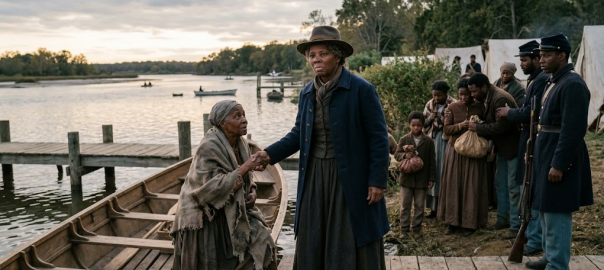
Harriet Tubman led a Civil War raid

Reclaiming the Classroom: How Carter G. Woodson Fought the Violence of Miseducation

Mon, Aug 17 2026 /Mpelembe Media/ —  The foundational struggle for racial equality in America is deeply rooted in the preservation and legitimization of Black history as an active tool of resistance. Carter G. Woodson, recognized as the “Father of Black History,” dedicated his life to establishing separate institutional structures like the Association for the Study of Negro Life and History in 1915 and Negro History Week in 1926 to counter the “miseducation” of African Americans. Woodson argued in his landmark 1933 book, The Mis-Education of the Negro, that the American educational system culturally indoctrinated Black students to accept an inferior status by white-washing their contributions to world culture and history. He observed that controlling a population’s thinking eliminates the need to police their physical actions, as individuals conditioned to believe they are outcasts will naturally find their way to the “back door”. This early twentieth-century battle to reclaim the narrative highlights that systemic control begins in the classroom, a reality that echoes in modern debates over how race and history are taught in public schools. Continue reading →

27Jul/26

Record Wildfires Paralyze France and Spain

The July 2026 Western European Wildfire Crisis

Mon, July 27 2026 /Mpelembe Media/ — The extreme wildfire emergency that swept across France and Spain in July 2026 represents a historic escalation of climate-driven natural disasters in Western Europe, displacing nearly 300,000 people in some of the largest peacetime evacuations in modern European history. Fueled by successive record-breaking heatwaves, dry vegetation, low relative humidity, and a deep hydrological drought, the concurrent megablazes overwhelmed national containment strategies and prompted massive international mobilization. Continue reading →