
Tag Archives: Nigeria

10Sep/26

How African Filmmakers Reclaimed the Screen

Beyond the Colonial Shadow: The Financial Risk and Cultural Triumph of Love Brewed in the African Pot

From Objects to Authors: The Evolution of African Cinema

1. The Paternalistic Era: Cinema as a Colonial Tool (1900–1950s)

The history of cinema in Africa began not as an indigenous art form, but as a colonial novelty. In 1900, a French circus group projected the Lumière brothers’  L’arroseur arrosé  in a Dakar marketplace, a moment that marked the arrival of a medium that would be used for decades to document Europe’s “Other.” Early European cinema focused on newsreels and ethnographic studies that prioritized colonial solidarity, often erasing indigenous tensions to present a sanitized view of the continent.To control the African “gaze,” colonial administrations established dedicated film units. While their methods overlapped, their underlying motivations were distinct: Continue reading
08Sep/26

African Payment Pitfalls and $25,000 Tax Traps

The Three Pillars of African Payments

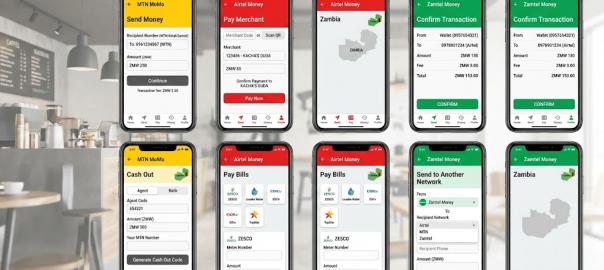
Tue Sep 08 2026 /Mpelembe Media/ — For a student entering the world of fintech, the African payment landscape can initially seem overwhelming. Unlike Western markets where credit cards are the standard, the African ecosystem is built on a “Hybrid Imperative.” In markets like Zambia, global tools like Stripe are often used for international billing, but they lack localized settlement and struggle with poor conversion rates due to bank-side fraud rules. To reach the actual local consumer, businesses must tap into the infrastructure that people already use: mobile money.The ecosystem is supported by three primary players:

  1. Mobile Network Operators (MNOs):  The foundational infrastructure providers that issue digital wallets and manage the movement of local currency.
  2. Payment Gateways:  Intermediaries that bridge the gap between global standards and local methods across multiple countries.
  3. Payment Aggregators:  Specialized “simplifiers” that bundle multiple mobile money connections into a single, developer-friendly interface.Learning Insight: The “So What?”  While credit and debit cards are the global gold standard for SaaS, they represent only a minor fraction of transactional volume in many African nations. In the retail ecosystem of Southern Africa, mobile money is the dominant force. Understanding how to connect to these networks is the key to unlocking the market.While these three pillars work together, the journey starts at the foundational “source”: the MNOs.

Continue reading

02Sep/26

Newsrooms fight for survival against AI

Ethics in Action: Preserving Human Judgment Amid the Rise of Generative News

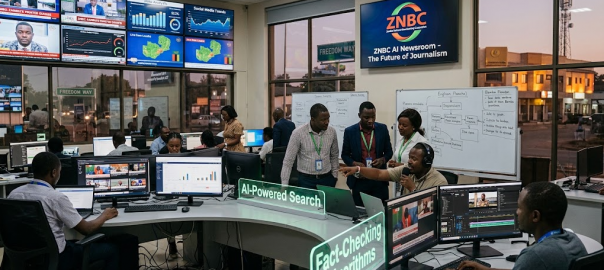
Tue Sep 01 2026 /Mpelembe Media/ — The global expansion of artificial intelligence has created a landscape of digital hegemony where standard-setting and economic benefits are heavily concentrated in the Global North, establishing a form of digital extractivism that mirrors historical colonial dynamics. Large technology conglomerates utilize content harvested from global networks to train proprietary models and sell them back as subscriptions. This extraction is accompanied by a severe decline in search referral traffic, which has collapsed by 50% to 60% in critical emerging markets like Brazil, South Africa, and Indonesia. This occurs because conversational search engines summarize copyrighted reporting directly on results pages, bypassing clicks to the original publisher. In response, major nations in the Global South are reframing the AI debate, moving from historical strategies of diplomatic non-alignment directly into the digital realm. Media leaders and policymakers in these regions argue that AI must not be treated as an isolated technical novelty, but as a critical national sovereignty, labor, and industrial policy issue that fundamentally impacts the health of local information environments. Continue reading

24Aug/26

Why joblessness and diamonds fuel civil war

The Dual Private Sector Dilemma: Why IMF Market-Led Growth Models Fail to Create Jobs in Fragmented African Economies

Mon, Aug 24 2026 /Mpelembe Media/ — The economic relationship between sub-Saharan Africa and the International Monetary Fund (IMF) has its roots in the 1944 Bretton Woods Conference, where the few developing nations present failed to secure explicit references to their development financing needs in the Articles of Agreement. From its inception, the IMF maintained a rigid, short-term balance-of-payments focus, famously denying Ethiopia’s first request for financial assistance on the grounds that its needs were neither immediate nor temporary. By the 1980s and 1990s, this short-term framework was formalized into neoliberal Structural Adjustment Programs (SAPs), which mandated strict conditionalities such as market deregulation, extensive privatization of state-owned enterprises, and rapid trade opening. Although promoted as pathways to long-term macroeconomic stability, these interventions frequently triggered severe adverse social consequences, including declining real wages, heightened poverty, and the systematic deterioration of basic health and social welfare systems. In response to widespread critique in the late 1990s, the IMF purported to shift its operational model, replacing traditional SAPs with the Enhanced Structural Adjustment Facility (ESAF) and, subsequently, various credit facilities under the Poverty Reduction and Growth Trust (PRGT). However, empirical evidence indicates that these contemporary programs represent “SAPs in disguise,” with loan conditionalities and stringency steadily rising, and core prescriptions of fiscal consolidation and state retrenchment remaining largely unchanged. Continue reading

23Aug/26

How holding a grudge breaks your body

Boundaries as Self-Preservation: The Crucial Clinical Distinction Between Forgiveness, Trust, and Reconciliation

Sun, Aug 23 2026 /Mpelembe Media/ — Forgiveness is a past-oriented, unilateral moral virtue and internal process where an injured individual chooses to let go of resentment, anger, and the desire for revenge. Because it takes place entirely within the victim’s own psychology, it requires no apology, change in behavior, or active participation from the offender to be fully achieved. Reconciliation, in contrast, is a present-oriented, bilateral relational process focused on restoring a damaged relationship and rebuilding mutual commitment. Reconciliation depends heavily on safety, accountability, changed patterns, and genuine remorse from the wrongdoer. Further distinct is trust, which is a future-oriented, conditional assessment of vulnerability based on a proven track record of predictable, benevolent behavior. Conflating these three concepts is clinically hazardous; it often leads to cheap forgiveness, secondary victimization, or intense emotional pressure on survivors to reconcile with unrepentant or unsafe actors. Continue reading

23Aug/26

AI Ethics Dumping and 2Africa Cables

Countering AI Ethics Dumping: African Nations Mobilize for True Digital Autonomy

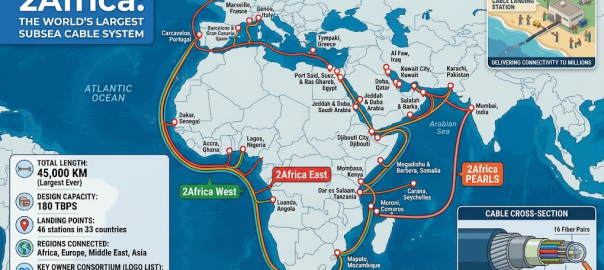
Sun, Aug 23 2026 /Mpelembe Media/ — Africa is undergoing a profound digital infrastructure revolution, shifting from historical neglect where international communications bypassed its coastlines to becoming a key hub of global data transit. This physical transformation is anchored by massive subsea cable projects driven by global technology giants. Foremost among these is Meta’s 2Africa cable system, the longest undersea telecommunications cable in the world at 45,000 kilometers, connecting 46 landing stations in 33 countries across Africa, Asia, and Europe. Boasting a design capacity of up to 180 Terabits per second, this project is expected to boost Africa’s cumulative GDP by $36.9 billion in its first few years of operation. Simultaneously, Google’s privately-funded Equiano cable runs along the western seaboard from Portugal to South South Africa, integrating space-division multiplexing to deliver 20 times the network capacity of previous regional cables. The economic impact of Equiano is massive, with projected GDP increases of $11.1 billion in Nigeria, $5.8 billion in South South Africa, and $290 million in Namibia. Continue reading

04Aug/26

Bond Rallies and Blackouts in Zambia

Zambia’s 2026 Election: A High-Stakes Two-Horse Race Decided by Economic Squeeze and Drought

Tue , Aug 04 2026 /Mpelembe Media/ — Zambia’s general election on August 13, 2026, represents a pivotal, alliance-driven contest that will test the country’s democratic resilience and economic direction. Although fourteen presidential candidates are officially cleared to run, the election is fundamentally a two-horse race between incumbent President Hakainde Hichilema of the United Party for National Development (UPND) and opposition challenger Brian Mundubile. Hichilema enters the race backed by an expanded 15-party UPND Alliance, leveraging the power of incumbency. His challenger, Mundubile—a 55-year-old lawyer, accountant, and former government chief whip—is running under the National Reconciliation Party for Unity and Prosperity (NRPUP) banner after unifying a highly fractured opposition under the Tonse–Pamodzi Alliance. Continue reading

08Mar/26

Starlink Direct-to-Cell: Global Deployment and Performance Analysis

Your Smartphone’s Next Roaming Partner is 350 Miles Up: 5 Surprising Realities of Starlink’s “Cell Towers in Space”

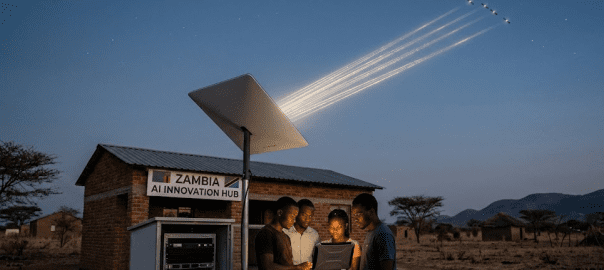
March 8, 2026 /Mpelembe Media/ — The provided sources examine the emergence and rapid expansion of Direct-to-Cell (D2C) technology, specifically focusing on Starlink’s efforts to provide Supplemental Coverage from Space (SCS). Research highlights that these satellite-based networks allow unmodified 4G LTE smartphones to connect directly to orbiting satellites, effectively eliminating terrestrial dead zones in remote areas like national parks. While initial commercial services in the United States and New Zealand focused on text messaging and emergency alerts, the technology is evolving to support voice, high-speed data, and IoT applications. Significant milestones include Airtel Africa and MTN Zambia partnering with SpaceX to launch services across the African continent, successfully piloting the first satellite-based fintech transactions. Despite technical hurdles like lower signal power and Doppler shifts, regulatory bodies worldwide are modernizing frameworks to accommodate this hybrid orbital-terrestrial model. Ultimately, these sources position D2C as a transformative tool for global digital inclusion, promising near-universal connectivity without the need for traditional ground infrastructure.

How does Starlink’s direct-to-cell technology work with unmodified smartphones?
What are the expected data speeds for satellite-to-mobile services?
How is this technology being used for emergency response and fintech?

Continue reading

09Feb/26

JPMorgan to Launch New Frontier Index as Investors Push for Zambia’s Inclusion

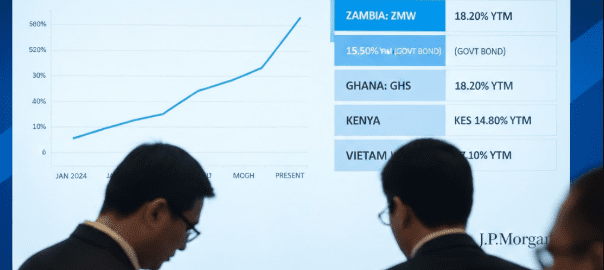
10 Feb. 2026 /Mpelembe Media  — New Frontier Benchmark JPMorgan is finalizing plans to launch a new frontier market local currency debt index, aiming to formalize investment in high-yield, developing economies. Expected to include 20 to 25 countries, the index focuses on nations such as Egypt, Vietnam, Kenya, and Nigeria, which are anticipated to carry the heaviest weightings. This launch addresses growing investor appetite for riskier debt, with analysis suggesting that frontier local markets have systematically outperformed mainstream emerging market indices over the last eight years. Continue reading

26Jan/26

How the Lusaka Securities Exchange is Driving its Record-Breaking Rally

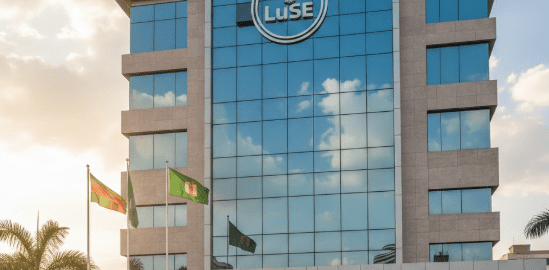
Jan. 26, 2026 /Mpelembe Media/ — The Zambian stock market is currently experiencing a significant period of growth, positioning it as the top-performing bourse in Africa. To capitalize on this momentum, the Lusaka Securities Exchange plans to introduce several initial public offerings and a new gold-linked exchange-traded fund throughout 2026. This strategic expansion aims to take advantage of rising precious metal prices while diversifying investment options for local and international participants. Additionally, market leadership intends to simplify regulatory requirements to lower barriers to entry for new issuers. By streamlining these processes, the exchange hopes to foster a more accessible financial environment and attract a wider variety of investors. These initiatives represent a concerted effort to modernize the nation’s capital markets and sustain its current economic trajectory. Continue reading