Tag Archives: Zimbabwe

13Sep/26

The Struggle is One Zambia, One Nation: Kenneth Kaunda

The Political and Economic Legacy of Kenneth Kaunda: A Comprehensive Analysis

1. Introduction: The Architect of Modern Zambia

In October 1964, Kenneth Kaunda ascended to the presidency of the newly independent Republic of Zambia, executing a transition of immense strategic complexity. Navigating the metamorphosis of the former British protectorate of Northern Rhodesia into a sovereign Republic required not merely administrative acumen, but the navigation of a post-colonial state inheriting a dualistic economy characterized by enclave mineral extraction and structural dependency. Kaunda emerged as a primary architect of the region’s decolonial architecture, a role that earned him the reverential titles of “Pan-Africanist” and the “Baobab of African politics”—symbolizing a towering, resilient figure whose influence provided the essential canopy for regional liberation. His core mission, as distilled from the regional collective memory, was the reclamation of an African destiny where the continent’s inhabitants could chart their own socio-economic trajectory, finally ending the era where natural resources were plundered while the populace remained in structural poverty. This mission was predicated on a governance model that sought to harmonize indigenous values with the requirements of a modern state. Continue reading

12Sep/26

How Military Generals Run Zambian Agribusiness

Thu Sep 10 2026 /Mpelembe Media/ — Brigadier General Laston Chabinga served as a flag officer in the Zambia Army, holding executive command of the 3 Infantry Brigade headquartered in Ndola, the administrative and industrial hub of the Copperbelt Province. As active Brigade Commander around March 2017, he directed the military’s strategic and operational envelope across critical regional defense and economic corridors. Continue reading

07Aug/26

From Zamrock to Internet Kill-Switches

The Rise of Zed Beats and the Digital Music Revolution

Fri , Aug 0& 2026 /Mpelembe Media/ — Zed Beats, which takes its name from the letter “Z” in Zambia, represents a dynamic hybrid music genre that emerged in the late 1980s. Young, self-taught producers began using affordable computer software to blend indigenous Zambian elements with popular global sounds like R&B, reggae, rap, hip-hop, Jamaican dancehall, Afrobeats, and amapiano. The rise of this digital movement was catalyzed by a major cultural void in the late 1980s and 1990s, when the devastating HIV/AIDS epidemic claimed the lives of a generation of veteran musicians who had anchored traditional live genres like Kalindula and Zamrock. To fill this void, which had left radio and television heavily dominated by foreign music, young enthusiasts utilized newly accessible computer technology to resurrect local music and forge a modern urban identity. Continue reading

30Jul/26

Lake Kariba and Zambia’s land rush

The Jeremiah Island Evictions

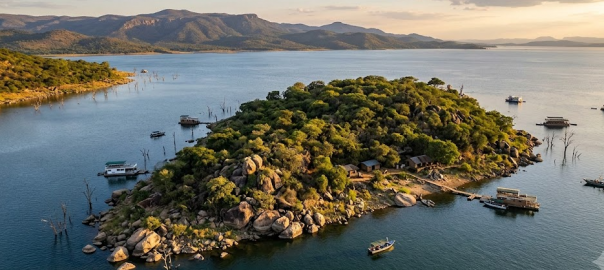
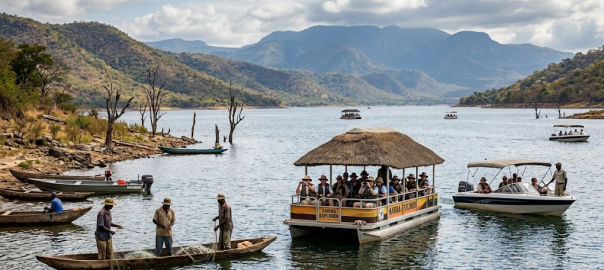
Thu, July 30 2026 /Mpelembe Media/ — This report documents and examines the ecological, social, and industrial landscape of Lake Kariba and the broader Zambian region, focusing on the tension between economic development and community welfare. One source highlights the area’s tourism and biodiversity, detailing the lake’s role as a massive man-made reservoir that supports both wildlife and hydroelectric power. In contrast, legal and technical reports address the displacement of rural populations and the necessity of protecting customary land rights through fair compensation and informed consent. Efforts to improve public health are also discussed, specifically through the creation of nutrient-dense fish-based food products to combat infant malnutrition. Finally, the sources document the importance of regulatory oversight, as evidenced by the closure of a major fish farm for violating environmental and sanitary standards. Together, these texts illustrate a complex regional effort to balance industrial growth with environmental protection and human rights. Continue reading

03Jul/26

From Student Prefects to Parliament: The Leadership Pipeline of Kitwe Boys High School

Building Zambia’s Engineers: The STEM Legacy and Academic Rigor of Kitwe Boys

Thur, July 03 2026 /Mpelembe Media/ — Kitwe Boys Secondary School, founded in 1957 during the peak of British colonial administration in Northern Rhodesia, reflects the broader social, political, and architectural transformations of the Copperbelt region. Spanning eras of strict racial segregation, rapid post-independence integration, and modern educational adaptation, the school’s history provides a powerful lens into the heritage of Zambia’s mining heartland. Continue reading

21Jun/26

Chinese debt and mining labor in Zambia

The Dragon and the Copper Belt: The Complex Realities of China-Zambia Relations

Fri, Jun 18 2026 /Mpelembe Media/ — The relationship between China and Zambia is deeply complex, evolving from historical solidarity into a modern partnership defined by massive economic investment, sovereign debt crises, and significant labor controversies. Continue reading

23May/26

When the world’s biggest dams run dry

Rising Tides and New Horizons: Lake Kariba’s Hydrological Recovery and Energy Revival

Sat, May 23 2026 /Mpelembe Media/ —  Recent developments around Lake Kariba highlight a remarkable hydrological, economic, and safety transformation for the region. Following a severe El Niño-induced drought that caused water levels to plummet to just 13% of usable capacity in 2024, above-average rainfall in the 2025/2026 season has driven Lake Kariba’s water levels up to 42.40% by mid-May 2026. This rapid recovery has allowed the Zambezi River Authority to allocate 30 billion cubic meters of water for hydroelectric power generation, paving the way to ease crippling load-shedding in Zambia and Zimbabwe and triple electricity output at facilities like the Kariba South Power Station. Continue reading

20May/26

Zambia Tames Its Deadly Gold Rush

From Copper to Gold: Zambia’s State-Led Blueprint for Formalizing Artisanal Mining

Wed, May 20 2026 /Mpelembe Media/ — Zambia is actively diversifying its mining economy beyond its traditional reliance on copper by executing a structural overhaul of its artisanal and small-scale gold mining (ASGM) sector. The primary catalyst for this shift was a massive, unregulated gold rush in the Kikonge area of Mufumbwe in mid-2025. The sudden influx of thousands of informal miners led to catastrophic safety failures, the emergence of illicit smuggling markets, and deadly clashes with state security forces. Recognizing that military intervention was an unsustainable fix for an economic problem, the Zambian government shifted toward a commercial integration strategy. Continue reading

17May/26

Zambia’s pivot from copper to conservation

Zambia’s Tourism Renaissance: Record Arrivals, Open Borders, and Economic Revival

Sun, May 17 2026 /Mpelembe Media/ — Booming Tourism and Economic Growth Zambia is experiencing a tourism renaissance, recording a historic 2.19 million international arrivals in 2024—a 35.3% increase from the previous year. The government has strategically positioned tourism as a primary engine for economic diversification away from copper mining, increasing the sector’s budgetary allocation by 281% since 2021. Continue reading

09Mar/26

The Political Economy of Crisis, War Finance, and Inflation

Why the “Money Printer Goes Brrr”: The Ancient Roots of Modern Inflation

March 9, 2026 /Mpelembe Media/ — Inflation, Hyperinflation, and the “Money Printer” Relying on the printing press to fund state expenditures has historically been a primary catalyst for inflation and, in extreme cases, hyperinflation. This phenomenon stretches back to the fall of the Roman Empire, where successive emperors debased the silver Denarius to pay for military and administrative costs, ultimately destroying public faith in the currency. Modern examples of hyperinflation—such as Weimar Germany in 1923, Zimbabwe in 2008, and Venezuela—demonstrate the devastating consequences of unchecked monetary expansion, which annihilates savings, causes basic necessities to become unaffordable, and forces citizens to resort to bartering or foreign currencies

Continue reading