Category Archives: World

24Oct/26

Zambia’s Rule of Law Paradox

Beyond the Composite Score: Bridging the Implementation Gap in Zambia’s Legal System

Sat Oct. 24, 2026 /Mpelembe Media/ — In the 2026 World Justice Project (WJP) Rule of Law Index, Zambia registers an overall composite score of 0.44 on a scale from 0.00 to 1.00, placing it 108th globally out of 143 surveyed countries. This performance marks a single-position drop in global standing and a minor 0.01 score contraction from the 0.45 baseline maintained between 2022 and 2025. Regionally, Zambia ranks 19th out of 34 Sub-Saharan African states, placing its score slightly below the regional benchmark of 0.45 and well beneath the global average of 0.55. Despite this global deficit, Zambia maintains a solid standing within its lower-middle-income cohort, outperforming regional neighbors such as Nigeria (120th) and Zimbabwe (122nd). Historically, Zambia reached a decade-high score of 0.48 in 2016 before political polarization eroded it to 0.44 in 2021; while the peaceful transfer of power in late 2021 stabilized scores at 0.45 through 2025, administrative bottlenecks led to the slight 2026 contraction. Continue reading →

23Oct/26

How Failed US-Iran Talks Triggered War

Losing the Coalition: How Domestic Immigration Raids and Foreign Conflicts Alienated Key Voters

Fri Oct. 23, 2026 /Mpelembe Media/ — The Republican Party faces an intensifying political and governance crisis heading into the November 3, 2026 midterm elections, driven by President Donald Trump’s career-low approval ratings between 32% and 35%. Broad public disapproval stems from an unfulfilled campaign promise to avoid endless foreign conflicts and lower consumer prices. Instead, the ongoing war with Iran—now in its seventh month despite initial predictions of a four-to-five-week duration—has combined with a persistent domestic affordability crisis to severely weaken GOP majorities in Congress. Continue reading →

23Oct/26

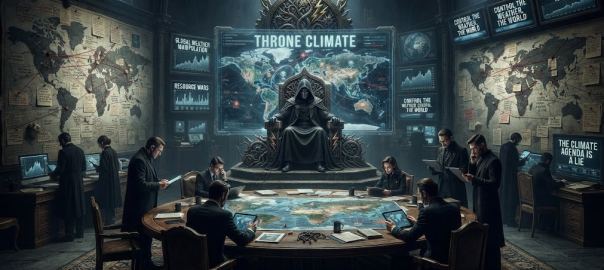
The Rothschild Weather Control Conspiracy

From STORMFURY to HAARP: Unpacking the Physical Limits of Geoengineering and the Spread of Weather Disinformation

Fri Oct. 23, 2026 /Mpelembe Media/ — The viral “THRONE CLIMATE” narrative functions as a grand super-conspiracy, falsely alleging that a secretive elite connected to the Rothschild family operated a worldwide network of 22 weather modification stations for 47 years to manufacture catastrophes like Hurricane Katrina and the 2010 Haiti earthquake. This online legend adapts 19th-century antisemitic tropes regarding Jewish financial control to modern anxieties about emerging geoengineering technologies, echoing recurring claims made by political figures regarding atmospheric manipulation and space-based weapons. To create false plausibility, the narrative relies on capability substitution—taking bounded, real-world technologies like localized cloud seeding and misrepresenting them as total atmospheric command—alongside pseudo-technical jargon and institutional scapegoating to offer simplistic explanations for complex global market and weather events. Continue reading →

23Oct/26

How War and Climate Break Supply Chains

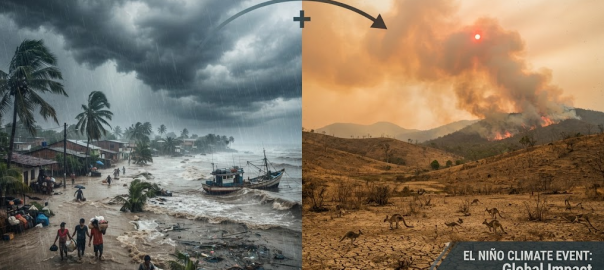
Global Economic Impacts of the 2026–2027 Super El Niño

The Severity of the Climate Shock in a Fragile Macro Context

Fri Oct. 23, 2026 /Mpelembe Media/ — The 2026–2027 El Niño climate event is developing into one of the most severe episodes on record, with equatorial Pacific sea-surface temperature anomalies projected to exceed +2°C to +3°C. Meteorological authorities assign a greater than 90% probability to a very strong event, with a 75% likelihood of exceeding the intensity of historical benchmarks recorded since 1950. Unlike previous cycles, this climate phenomenon collides with an exceptionally fragile macroeconomic environment characterized by historically elevated public debt, high interest rates, ongoing geopolitical tensions, and pre-existing supply chain frictions. Continue reading →

23Oct/26

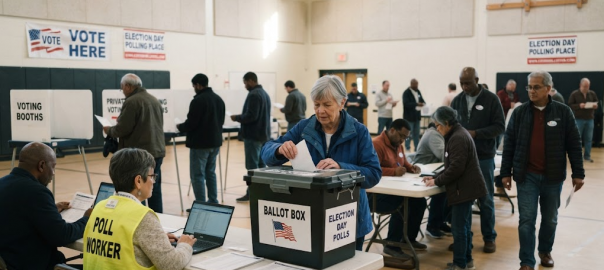
Why Modern Election Polls Fail

The Mirage of Precision: How Partisan Nonresponse and Evolving Electorates Reshaped Election Polling

Fri Oct. 23, 2026 /Mpelembe Media/ — Modern pre-election polling has encountered severe structural challenges over recent presidential election cycles, primarily driven by partisan nonresponse bias rather than declining response rates alone. Across three consecutive presidential contests in 2016, 2020, and 2024, public polls systematically underestimated Republican vote shares relative to Democrats, producing signed errors that overstated Democratic margins by 3.1, 4.6, and 2.7 percentage points, respectively. While response rates dropped below five to ten percent across the industry, lower participation only generates systemic error when nonresponse correlates with political behavior. Voter cohorts exhibiting lower levels of institutional and social trust—disproportionately conservative, working-class, and rural populations—have increasingly opted out of survey research, creating persistent coverage gaps in raw polling samples. Continue reading →

22Oct/26

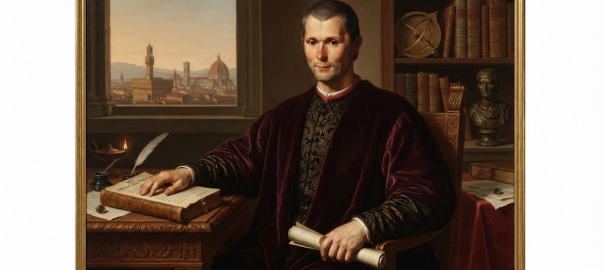
Why Machiavelli Believed Rulers Need Dirty Hands

Power, Virtù, and Human Nature: A Multidisciplinary Synthesis of Machiavellian Pragmatism

Thu Oct. 22, 2026 /Mpelembe Media/ — Niccolò Machiavelli’s foundational political thought, articulated in The Prince (1513) and the Discourses on Livy (1517), marks a radical shift from classical teleological ethics and medieval Christian scholasticism toward empirical political realism. Rejecting idealized imaginary republics, Machiavelli sought the “effectual truth” of human behavior, asserting that effective governance must be guided by strategic necessity (necessità) and the preservation of state stability (ragione di stato) rather than abstract moral pieties. He redefined virtù not as moral goodness, but as the dynamic capability, drive, and tactical agility—symbolized by combining the courage of the lion with the cunning of the fox—required to master unpredictable circumstances (fortuna). Although critics historically viewed The Prince as an autocratic handbook and the Discourses as a defence of republican liberty, scholars emphasize that these works are complementary: princely authority is often necessary to establish order in a corrupted state, whereas a mixed republican constitution preserves long-term security, popular freedom, and civic vitality. Continue reading →

21Oct/26

Art Law and the Architecture of Violence

The Monopoly on Force: Why the Legal Order Prohibits Daggers but Legalizes Poverty

Systemic Violence, Patriarchy, and Bourgeois Law

Wed Oct. 21, 2026 /Mpelembe Media/ — In Me-ti: Buch der Wendungen, Bertolt Brecht exposes a fundamental contradiction in how state jurisprudence defines and penalizes violence. Brecht observes that while the state strictly outlaws direct, interpersonal physical assault—such as stabbing someone with a dagger—it routinely permits, legalizes, and institutionalizes indirect, systemic forms of destruction, including economic starvation, medical neglect, hazardous housing, lethal workplace exploitation, and imperialist war. Though all these mechanisms produce identical fatal outcomes by destroying human life, bourgeois law selectively criminalizes only direct physical trauma. This selective prohibition occurs because overt individual violence threatens public order, disrupts commodity exchange, and challenges the state’s monopoly on legitimate physical force. Conversely, systemic socio-economic lethality is mediated through market contracts, real estate commodification, and state bureaucracy, allowing the legal system to mask systemic mortality as “perpetratorless” or natural market outcomes. Continue reading →

18Oct/26

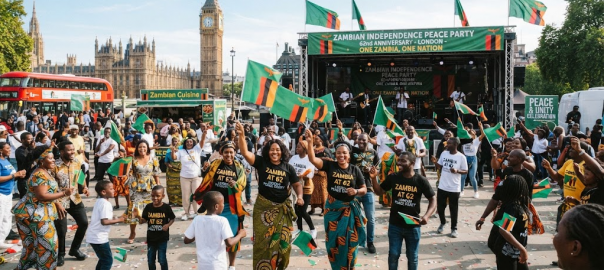
How Zambian Music Became the New Parliament

Sun Oct. 18, 2026 /Mpelembe Media/ — Maiko Zulu has used conscious reggae music, public demonstrations, institutional leadership, and independent political campaigns to challenge political authority and demand structural justice in Zambia. Continue reading →

17Oct/26

Lily Mutamz Takes On the Zambian Government

From Munali to the UK Diaspora: The Evolution of Lillian Mutambo’s Transnational Advocacy

Sat Oct. 16, 2026 /Mpelembe Media/ — Lillian Mutambo’s political career began with direct community-level organizing in Zambia ahead of the 2021 General Election. After returning from the UK, she sought the UPND nomination for the Munali Constituency under the campaign slogan “Shape You Munali,” engaging in local economic empowerment initiatives such as distributing eggs to help youth and women start small businesses. Following intra-party selection disputes and friction within the UPND, Mutambo broke away to contest the seat as an Independent candidate in 2021, marking her formal entry into parliamentary politics. Continue reading →

17Oct/26

U.S. immigration: National Interest Waivers, and Consular Strategies for Zambian Travelers

Navigating Proclamation 10998: What the 2026 U.S. Travel Restrictions Mean for Zambian Passport Holders

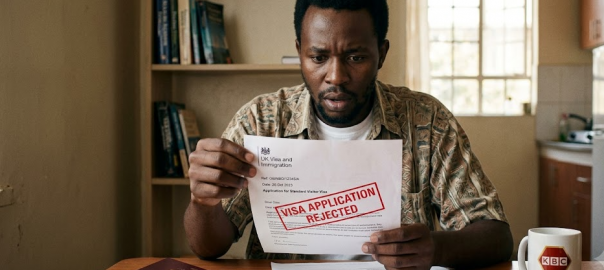
Sat Oct. 16, 2026 /Mpelembe Media/ — Effective January 1, 2026, Presidential Proclamation 10998 placed Zambia into a partial suspension tier that restricts entry and visa issuance for its passport holders. Under this executive directive, Zambian nationals who were outside the United States without a valid visa on the effective date are barred from obtaining immigrant visas as well as B-1/B-2 visitor visas, F academic student visas, M vocational student visas, and J exchange visitor visas. The United States government justified Zambia’s inclusion by citing Department of Homeland Security metrics showing a 10.73 percent overstay rate for B-1/B-2 visitor visas and a 21.02 percent overstay rate for student and exchange visitor categories. For nonimmigrant visa classifications that remain open, such as employment-based H-1B, L-1, and O-1 visas, consular officers are instructed to shorten validity periods, typically limiting approved visas to three months with single-entry authorization. The proclamation explicitly preserves existing valid visas issued prior to January 1, 2026, and provides categorical exemptions for U.S. lawful permanent residents, dual nationals traveling on an unrestricted passport, qualifying diplomatic personnel, and athletes participating in major international sporting events. Continue reading →