
Tag Archives: Japan

17Jun/26

The Tactics and Mythos of England’s 1966 World Cup Victory

The Mythos of 1966: Sir Alf Ramsey, the Fire Horse, and the 60-Year Wait for World Cup Glory

Wed, Jun 17 2026 /Mpelembe Media/ — The psychological landscape of competitive sports is a high-stakes environment where the difference between victory and defeat often rests on an athlete’s ability to manage intense pressure and fluctuating emotions. In the quest for an edge, athletes frequently adopt specific behaviors to navigate this stress. These behaviors generally fall into two categories: those grounded in technical preparation and those rooted in “magical thinking.””Superstition is a behavior which does not have a clear technical function in the execution of skill, yet which is believed to control luck and/or other external factors. Rituals comprise magical thinking, belief in specific sayings, and ritualized behavior.”While the desire for victory is universal, the specific paths athletes take to achieve readiness vary wildly. Have you ever wondered why an elite striker insists on a specific pair of socks, or why a goalkeeper talks to the goalposts? Understanding the distinction between irrational rituals and professional routines is the first step in moving from a mindset of luck to a mindset of logic. Continue reading

17Jun/26

How bulldozers beat Operation Epic Fury

The 2026 US-Iran Interim Peace Agreement and Its Fallout

Wed, Jun 17 2026 /Mpelembe Media/ — In June 2026, the United States, under the Trump administration, and Iran agreed to an interim peace deal to halt a devastating four-month conflict that began in February. While the White House has attempted to frame the ceasefire as a victory that will reopen the Strait of Hormuz, geopolitical analysts and international media overwhelmingly characterize the war as one of the greatest strategic blunders in modern US history. The conflict cost the US an estimated $30 billion, resulted in the loss of advanced military hardware, and caused over 7,000 deaths, primarily in Iran and Lebanon. Continue reading

09Jun/26

The Political War Over Equality Laws

Tue, Jun 09 2026 /Mpelembe Media/ — Kemi Badenoch argues that equality legislation like the Public Sector Equality Duty (PSED) has inadvertently created a culture where public authorities are so terrified of career-ending accusations of racism that they replace common sense and critical thinking with bureaucratic box-ticking. She claims this deep-seated fear has caused institutions to withhold information, avoid difficult conversations, and become “institutionally incompetent” when dealing with issues of race and identity. Continue reading

04Jun/26

The Tactics and Mythos of England’s 1966 World Cup Victory

Thur, Jun 04 2026 /Mpelembe Media/ — These sources offer a multifaceted preview of 2026, primarily focusing on its identity as the Year of the Fire Horse in the Chinese zodiac. Authors explore the cultural symbolism and astrological significance of this rare sixty-year event, noting its reputation for intense energy, unbridled passion, and global upheaval. Historical analysis links the upcoming year to past milestones, most notably England’s 1966 World Cup victory, which is examined through both tactical innovations and its enduring national legacy. The collection further extends into sports psychology and gambling, investigating how pre-performance rituals mitigate athlete anxiety and how historical betting data shapes expectations for the 2026 World Cup. Together, these texts blend ancient tradition with modern analysis to project a year defined by competitive spirit and transformative change Continue reading

01Jun/26

Why The Sunrise Reboots The Brain

The Healing Power of the Dawn: How Natural Light Wards off Depression and Resets Your Brain

Mon, Jun 01 2026 /Mpelembe Media/ — In our frantic modern age, many of us exist in a state of nocturnal chaos. We are severed from the rhythms of the earth by the relentless hum of digital noise and the intrusive glare of artificial light, leaving our internal clocks decoupled and drifting. We feel perpetually “out of sync,” wandering through days that lack a definitive beginning. Yet, the sunrise is far more than a mechanical rotation of the planet; it is a profound cosmological threshold and the ultimate “blank slate.”To the ancient eye, the dawn was the “unseen blush of the invisible,” a moment where the world was born anew. In the traditional monastic cycle, this is  Lauds , or “The Awakening Hour”—a sacred juncture where nature is seen to leap from the “tomb of sleep,” offering a daily invitation to a miniature resurrection. By reclaiming this hour, we transition from merely opening our eyes to the deeper process of truly waking up.
Continue reading

30May/26

Semiconductor Chokepoints and Google Willow

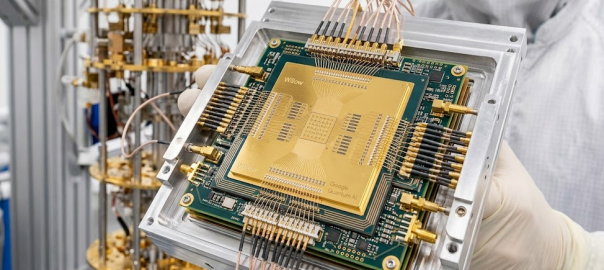
King’s College London Pioneers UK Quantum Research with Access to Google’s 105-Qubit Processor

Sat, May 30 2026 /Mpelembe Media/ — Technical Breakthroughs and Error Correction: Google’s Willow is a 105-qubit processor that represents a major milestone in hardware stability. Its most significant achievement is in quantum error correction—demonstrating that as the system scales and adds more qubits, the error rate exponentially decreases. Leveraging a new algorithm called Quantum Echoes, Willow achieved “verifiable quantum advantage” by modeling complex physical experiments 13,000 times faster than the world’s best classical supercomputers. Continue reading

30May/26

Breaking Boundaries: How Beat Street and Breakin’ Exported Street Culture

The Phoenix of the Bronx: From 1970s Block Parties to the Olympic Games and Broadway

Sat, May 30 2026 /Mpelembe Media/ — The Origins of Street Dance Hip-hop dance originated in the 1970s as a powerful form of self-expression and community building for marginalized youth. In the South Bronx, African American and Puerto Rican teenagers developed breaking (b-boying/b-girling) as a creative outlet and a peaceful alternative to territorial gang violence. Concurrently, West Coast dancers in California independently invented “funk styles,” such as popping and locking, which were originally danced to funk music rather than hip-hop. Continue reading

22May/26

Why Quantum Computing Starts in the Dirt

Vying for Quantum Supremacy: National Strategies of the US, UK, and China

Fri, May 22 2026 /Mpelembe Media/ — The global race for quantum technology is a high-stakes competition poised to revolutionize major industries, including healthcare, finance, clean energy, and national defense. This “second quantum revolution” relies on principles like superposition and entanglement to solve highly complex optimization problems exponentially faster than classical supercomputers. However, the technology also presents profound national security risks, particularly the potential to eventually break the cryptographic infrastructure that currently secures global communications and financial data. Continue reading

09Apr/26

Leading Global Teams with Cultural Intelligence

Managing the World’s Biggest Tournament: A Guide to the Absurdities of ‘Twenty Twenty Six’

April 9, 2026 /Mpelembe Media/ —  Twenty Twenty Six is a six-part mockumentary comedy series created by John Morton, serving as a spiritual sequel to his previous comedies Twenty Twelve and W1A. The series follows the return of the amiably vexed Ian Fletcher (Hugh Bonneville), who takes on a new role as the incoming director of integrity and head of the oversight team for the world’s largest football tournament. Due to legal reasons, the words “Fifa” and “Cup” are bleeped out throughout the show.

Continue reading

29Mar/26

Navigating the Friendship Recession and the Cost of Connection

The Decline of the “Third Place” and the Rise of Global Isolation

March 30, 2026 /Mpelembe Media/ — The Core Issue: The “Friendship Recession” Modern society is experiencing a severe decline in social capital and interpersonal connections, a phenomenon widely referred to as the “friendship recession”. Data shows a quantifiable collapse in the size of our social networks: in 1990, 33% of Americans reported having 10 or more close friends, but by 2021, that number had plummeted to just 13%. Meanwhile, the percentage of individuals reporting zero close friends has quadrupled. This erosion of social capital—the “glue” that holds communities together through networks, trust, and reciprocity—is undermining both civic engagement and personal well-being.

Continue reading